Public values and risks in Strasbourg

The birth of Public Risk Management Organisation (PRIMO)

Jack Kruf* | May 2005

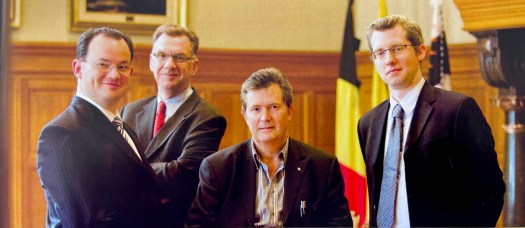
Last month, on April 1, 2005, the Executive Committee of UDITE, the network of local government Chief Executives across Europe, met in Strasbourg to discuss ‘public risk management’ as a new idea. City managers from across Europe looked forward to a newly proposed approach, which Alan Vendelbo, president of UDITE, put at the top of the agenda.

It was clear from the start that they believed it could strengthen their role and function in supporting politics, society, and their organisations. Current events, social attacks, and out-of-control budgets or projects have raised the importance of proactive thinking about public values, targets, and their risks. Here is a short personal impression. I was there on this day.

Lees verder

Resilience of what to what?

Jack Kruf | April 2024 (update from August 2016)

What is resilience? Well, there is no simple answer to this. Especially not regarding a city’s ecosystem. The concept, you might say, is in development across different sciences and has recently entered the public governance domain related to society’s social-ecological system.

Can resilience be measured as an indicator of an ecosystem’s state? How are the living and non-living factors of the measured system calculated? Can it create true insight into the tone of the city, society, and nature?

Resilience is the new buzzword among public leaders and managers, but it has played an essential role in natural ecosystems for millions of years. It was launched in 2013 with 100 Resilient Cities as a relatively new concept of thinking and acting from the government’s perspective. But what is it about? The ability to endure stress and still perform, or the capacity to recover after a catastrophe? Maybe both.

Lees verder

The Undoing Project

A Friendship that Changed the World

Michael Lewis | 2017, W.W. Norton & Company

This is the extraordinary story of the two men whose ideas changed the world. Daniel Kahneman and Amos Tversky met in war-torn 1960s Israel. Both were gifted young psychology professors: Kahneman, a rootless son of Holocaust survivors who saw the world as a problem to be solved, and Tversky, a voluble, instinctual blur of energy.

In this breathtaking new book, Michael Lewis tells the extraordinary story of a relationship that became a shared mind: one which created the field of behavioural economics, revolutionising everything from Big Data to medicine, from how we are governed to how we spend, from high finance to football.

Lees verder

Value & Risk Dictionary

PRIMO Res Public

To understand what is happening, make sense of the publications (from different sciences and schools), interpret the frameworks and translate the myriad of languages related to public governance of value and risk, it is wise to reduce the dictionary with concepts as are starting points of our organisation and for our members and network.

It serves as a compass in diagnosis, design, and decision-making. These tools are theoretical concepts and practical aids that help to get not lost in translation. Especially the dictionary of risk is a thick one with hundreds of interpretations. Many pretend to be or want to be the standard.

Lees verder

Lessons from Archery

What can a governor learn from an archer?

Jack Kruf | April 2019

What can the world of public governance learn from archery? Archery is a mature sport that has developed dramatically since its inception. Because of this, the sport itself has undergone many changes and improvements.

De Lieksa-vlag (Lieksa lippu) is de officiële vlag van de Finse stad Lieksa (bron: Wikipedia)

In governance and public administration, we may learn from the archery world to select and curate the basic skills perceived as essential by professional archers. After all, governance is a form of archery, metaphorically spoken.

There are parallels:  a good governor has the skills of a good archer in effectively reaching the target. After all, both professions are about precision. Here, we focus on the archer. I collected some skills from the archery world. I leave it to the reader to find similarities with the governance world.

A summary of skills

Archery is a broad set of fundamental skills necessary to be an experienced archer. Among the skills and abilities archers need are mental strength, aerobic endurance, balance and coordination, reaction time, motivation & self-confidence, skill/technique, agility, flexibility, strength & power.

The most obvious is the need for a high level of upper body strength and flexibility. An archer needs to be able to shoot arrows accurately and repeat that action without suffering fatigue. We elaborate on some of the skills.

Lees verder

Sources of Power

How People Make Decisions

Gary Klein | 1999, MIT Press

Anyone who watches the television news has seen images of firefighters rescuing people from burning buildings and paramedics treating bombing victims. How do these individuals make the split-second decisions that save lives? Most studies of decision-making based on artificial tasks assigned in laboratory settings view people as biased and unskilled.

Gary Klein is one of the developers of the naturalistic decision-making approach, which views people as inherently skilled and experienced. It documents human strengths and capabilities that have been downplayed or ignored so far.

Lees verder

PreMortem

Method of Risk Assessment

Gary Klein | December 2007 (by Jack Kruf)

According to Klein (2007), “Projects fail at a spectacular rate. One reason is that too many people are reluctant to speak up about their reservations during the all-important planning phase. By making it safe for dissenters who are knowledgeable about the undertaking and worried about its weaknesses to speak up, you can improve a project’s chances of success.”

The Harvard Business Review article: “In a premortem, team members assume that the project they are planning has just failed—as so many do—and then generate plausible reasons for its demise. Those with reservations may speak freely at the outset, so that the project can be improved rather than autopsied.”

Lees verder