Public Sector Report 2009

The effects of the downturn

Philippe Auzimour, Sabrina Boshuizen en Jack Kruf | July 2009

In mid-2009, Alarm, Marsh, and PRIMO Europe joined forces by presenting the results of different surveys and round tables, which focused on the public risks companies and governments faced due to the downturn. This article combines this report’s highlights (selected by the editor). The extended survey gave an in-depth look at perceptions and actual risks directly after a massive financial crisis emerged.

The survey shows that risk complexity has increased: over 75% of participants reported that the volume and complexity of risks within their organisation have increased over the last 5 years. 700 Organisations were interviewed, spanning twelve countries and seven industry sectors. Of these organisations, 101 were in public entities. PRIMO Europe interviewed several people from public entity organisations and sent out a survey to public entities, to which 112 people responded. Also, two round tables were held, one in Amsterdam and one in Bournemouth. The results of all interviews, survey responses, and roundtables are included in this report.

Lees verder →
PRIMO Risk Management Award 2009

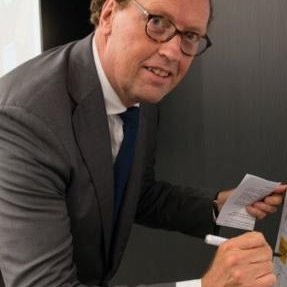
The Darlington Borough Council received the PRIMO Risk Management Award 2009. The borough’s approach demonstrates a holistic view of public values and their risks and government services to citizens. It links the government to its partners, is excellent at working, and is highly effective in delivering success. In Darlington, an innovative model has proved popular and introduced a common approach to managing risk within the Authority and all partnerships. It has also raised the risk management profile within the decision-making process for partnerships and improved service delivery.

One Darlington, Perfectly Placed

Interview with George Cornforth, Risk and Insurance Manager Darlington Borough Council

Inge Sebregts | December 2009

Partnership working and building relationships to improve the future is now fundamental in public service delivery. ‘One Darlington: Perfectly Placed’, Darlington’s Sustainable Community Strategy sets out a vision for Darlington, with partnership working key to its delivery. However, partnership working involves risks as well as opportunities and embedding risk management within the culture of partnerships and developing effective governance arrangements are therefore vital for their success.

Lees verder →

PPP is a mindset, not a way of building

Harry Sterk* | april 2010

The major differences between traditional and PPP projects, according to Harry Sterk, lie in how costs are defined and how building plans are developed. In a PPP project, total costs are assessed in light of the project’s lifecycle.

Harry Sterk

Traditionally, the focus is on initial construction costs and omits, for instance, maintenance and other ‘post-initial’ costs. The initiator doesn’t make a detailed plan but instead formulates what has to be done within a certain framework: the output specifications.

Lees verder →

Risk management territorial

Se doter de compétences spécifiques et/ou créer une nouvelle fonction ?

PRIMO France | décembre 2009

Le Directeur général de collectivité est confronté au quotidien, avec et aux côtés des élus,  à  toutes sortes de risques qu’il doit hiérarchiser, prévenir et gérer avec ses équipes. Ces risques  sont multiples: juridiques, financiers, sociétaux, naturels, industriels ou technologiques.

Au-delà de la bonne connaissance que le DGS doit avoir des problématiques “risques”, se pose la question du niveau de compétences de  l’ensemble de ses collaborateurs et de la nécessité d’affecter ou non un collaborateur à la gestion des risques dans ses aspects transversaux.

Lire la présentation de la conférence

Télécharger la présentation.

L’implication des organisations publiques dans la gestion des risques

PRIMO France | septembre 2009

PRIMO a présenté, au Congrès des Directeurs Généraux de collectivités territoriales à Lille, le rapport réalisé en coopération avec Marsh et PRIMO Europe.

Un sondage conduit auprès de 200 entités publiques en Europe révèle que la nécessité de mieux gérer les risques majeurs et les risques liés aux grands projets focalise la gouvernance publique vers la gestion des risques.

“La crise subie par l’économie a été rapide et sévère. Elle soulève d’importantes questions sur la façon dont les organisations gèrent leurs affaires, et notamment sur leur mode d’évaluation et de gestion des risques.

Lees verder →

The PRIMO Risk Management Award 2008

The award goes to the city of Saint-Étienne.

Gérard Combe | 2008

The city of Saint-Étienne has taken a renewing initiative to arm itself (the workforce) against the risk of a pandemic flu. This initiative is a pilot, a remedy to improve the processes. The initiative can be fully integrated into all running projects. Such a system aims to maintain an optimal level of services and simultaneously protect the workforce despite the risk of a lack of functioning.

Coat of Arms City of Saint-Étienne.

The challenge of this project consists of the ability of the employees to deal with a shortage of personnel. Moreover, the workforce has to anticipate being overburdened by the crises and a decrease in the risk of an epidemic spreading by leaving affected people at home. Communities are the first to deal with the consequences of such a crisis.

Lees verder →

Risicomanagement: Het is geen hogere wiskunde – Het is veel ingewikkelder

John Adams | Mei 2007 *

In de populaire verbeelding is hogere wiskunde het toonbeeld van wetenschappelijke complexiteit. Als vooraanstaand Brits academisch expert op het gebied van risico’s wil ik hier betogen dat risicomanagement in feite veel complexer is. Met andere woorden, de wetenschapper die turbulentie bestudeert: “de wolken reageren niet op wat de weerman of natuurkundige over hen zegt”. De risicomanager moet echter niet alleen omgaan met risico’s die door de wetenschap worden waargenomen, maar ook met virtuele risico’s – risico’s waarover de wetenschap geen uitsluitsel geeft en waarover mensen dus “vrij zijn om te redeneren en te handelen op basis van vooraf vastgestelde overtuigingen, vooroordelen en bijgeloof”.

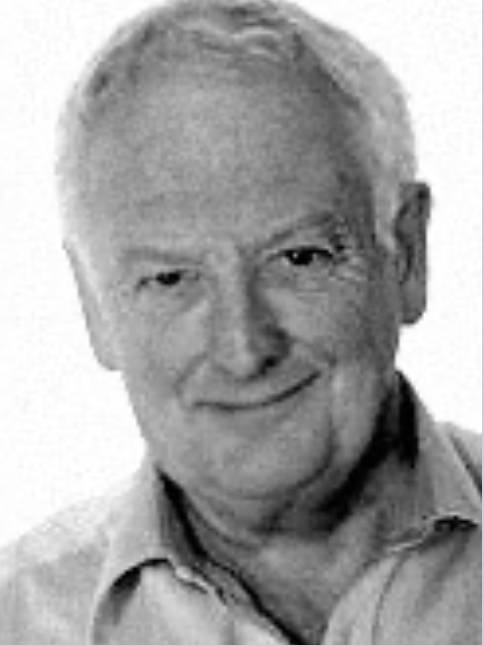
Professor John Adams.

De welvarende wereld verdrinkt in risicobeoordelingen. Bijna iedereen heeft nu een “zorgplicht” om alle mogelijke risico’s voor zichzelf of voor anderen formeel in kaart te brengen en aan te tonen dat hij alle redelijke maatregelen heeft genomen om deze risico’s te “beheersen”. Het is niet duidelijk of degenen die deze zorgplicht opleggen, zich bewust zijn van de omvang en de moeilijkheid van de taak die zij zich hebben gesteld.

Lees verder →