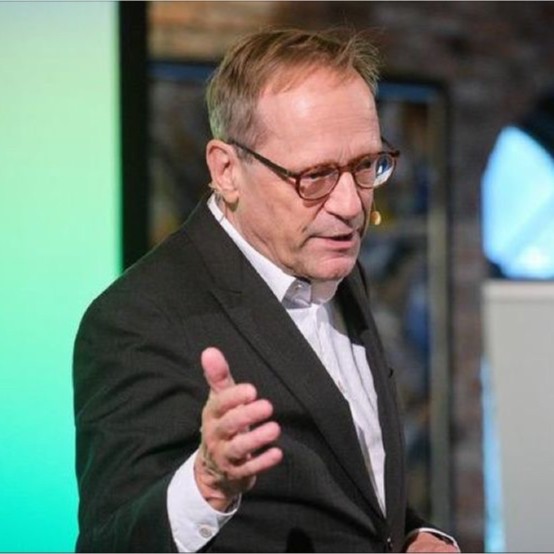
Uitgereikt te Rotterdamop 18 september 2020 aan Paul Hofstra.
The board of PRIMO Netherlands and the board of PRIMO Europe have awarded the PRIMO Risk Management Award 2019 to Paul Hofstra for his courage and leadership at the intersection of public value, public risk and governance.
Paul Hofstra
The award is based, on the one hand, on his mature leadership as a board member and director of the Rotterdam Court of Audit and, on the other, on his professional contributions to the precise and essential application of the principles of risk management, as set out, for example, in the reports Heat Without a Pipeline and Public Value Under Pressure.
In April 2019, in consultation with BNG Bank, the annual PRIMO/UDITE meeting of the ‘From Global to Local’ think tank took place. Around 15 public-sector leaders met with BNG Bank to discuss the challenges facing local authorities.
The cracks in the local authority’s financial system are clearly visible.
The recently published Global Risks Report 2019 by the World Economic Forum and a presentation by the City of Delft revealed cracks in the financial situation. Is the financial resilience of the city and region at risk?
Transitions require investment, whilst the council’s solvency is under pressure.
The City of Delft presented its ambitious long-term investment strategy. Investments totaling at least 1.4 billion euros are planned through 2040, of which the council will have to cover approximately 25%.
PRIMO is organising the 6th ‘From Global to Local’ Think Tank in The Hague on Friday, 5 April 2019, in close collaboration with BNG Bank and UDITE. The findings, based on a survey of our members, are consistent with national and international reports: we are witnessing a combination of societal transitions. These are taking place simultaneously and genuinely call for reflection and a reassessment of financial strategy in the public sector.
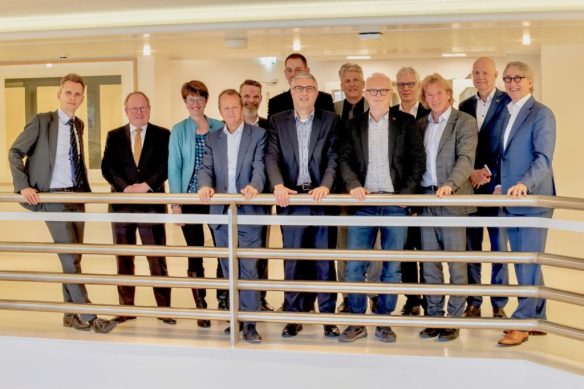
De Denktank 2019. V.l.n.r. Gido ten Dolle (Delft), Tom Schulpen (Noord-Brabant), Henriëtte de Jong (Groningen), Ad Verbakel (Eindhoven), Teun Eikelboom (Ministerie BZK), Johan de Kruijf (Radboud Universiteit), Hans van Lent (Ede), Hans Krul (Delft), Jan Willem Dijk (Assen), Bert Hummel (BNG Bank), Caspar Boendermaker (BNG Bank), Jaap Zwaan (Medemblik) en Jack Kruf (PRIMO).
These include transitions in the social sector, the Environment Act, digital transformation (cybersecurity, privacy, artificial intelligence, big data), the energy transition, the circular economy and climate change. They are placing significant pressure on financial resources in terms of maintaining society’s resilience. It appears to be a systemic issue.
The recent letter from Seth Klarman to investors is on the table. Klarman is a hedge fund manager, CEO and portfolio manager of the Baupost Group. To put it mildly, he draws attention to the growing problem of government debt.
Above all, it is clear that there is a great need for innovation in the form of practical and concrete financial instruments. It would appear that sound financial governance and management once again form the foundation of our future. Hence, a 2019 PRIMO think tank that delves into the status quo, scenarios and concrete tools, exploring both administrative ambition and financial realism. Looking in the rear-view mirror and peering under the bonnet are important, but no longer sufficient. Ex post democratic accountability is essential, but ex ante financial architecture – which actually works and can be linked to scenarios – is certainly becoming a critical success factor.
De titel vormde één van de kernvragen in de Denktank From Global to Local van 5 april j.l. Kijkend naar de voorliggende transities, de toename van risico’s in het publieke domein en het geleidelijk oplopen van achterstanden in beheer en onderhoud, kwam deze vraag nadrukkelijk op tafel. Dus hoe staan we financieel er eigenlijk voor in Nederland? Een eerste verdieping. Minder rooskleurig? Haarscheurtjes? Niet echt hersteld van de kredietcrisis, nu 10 jaar geleden? De serie financiële tegenvallers inzake de transitie van het sociaal domein is nog niet ten einde en trekt diepe sporen. Zijn wij pessimisten? Nee, geenszins, realisten. Niet meer dan dat. De eerste krijtlijnen.
Kengetallen en basiscijfers
Gemeenten en provincies in Nederland hanteren sinds 2016 een set vaste kengetallen om de financiële positie te beoordelen. We belichten solvabiliteit, netto schuldquote ongecorrigeerd en EMU-schuld. Bronnen zijn Centraal Bureau voor de Statistiek, waarstaatjegemeente.nl en Planbureau voor de Leefomgeving.
The title was one of the key questions raised at the ‘From Global to Local’ think tank on 5 April. Given the transitions currently underway, the rise in risks within the public sector and the gradual accumulation of backlogs in management and maintenance, this question was brought to the fore. So what is the actual financial situation in the Netherlands? An initial exploration. Less rosy? Hairline cracks? Not really recovered from the credit crisis, now 10 years ago? The series of financial setbacks regarding the transition of the social sector is not yet over and is leaving deep scars. Are we pessimists? No, not at all; realists. Nothing more than that. The first outlines.
Key figures and basic statistics
Since 2016, local authorities and provincial councils in the Netherlands have been using a set of fixed key figures to assess their financial position. We highlight solvency, the unadjusted net debt ratio and EMU debt. Sources include Statistics Netherlands, waarstaatjegemeente.nl and the Netherlands Environmental Assessment Agency.
PRIMO organiseert, te Den Haag, op vrijdag 5 april 2019, van 10:00 – 14:00 uur (inclusief lunch), in nauwe samenwerking met BNG Bank en UDITE, de 6e Denktank ‘From Global to Local’. De bevindingen, op basis van de rondgang langs onze leden, liggen in lijn met die uit (inter)nationale rapporten: er is sprake van een combinatie van maatschappelijke transities. Zij voltrekken zich tegelijkertijd en vragen echt om bezinning en herijking van de financiële strategie in het publieke domein.
De Denktank 2019. V.l.n.r. Gido ten Dolle (Delft), Tom Schulpen (Noord-Brabant), Henriëtte de Jong (Groningen), Ad Verbakel (Eindhoven), Teun Eikelboom (Ministerie BZK), Johan de Kruijf (Radboud Universiteit), Hans van Lent (Ede), Hans Krul (Delft), Jan Willem Dijk (Assen), Bert Hummel (BNG Bank), Caspar Boendermaker (BNG Bank), Jaap Zwaan (Medemblik) en Jack Kruf (PRIMO).
Genoemd worden de transities sociaal domein, omgevingswet, digitale transformatie (cyber, privacy, kunstmatige intelligentie, big data), energietransitie, circulaire economie en klimaatverandering. Zij geven grote druk op de financiële middelen in perspectief van het behoud van resilience van de samenleving. Een systeemvraagstuk, zo lijkt het.
De recente brief van Seth Klarman aan beleggers ligt op tafel. Klarman is hedge fund manager, CEO en portfolio manager van de Baupost Group. Hij vraagt, eufemistisch geformuleerd, aandacht voor de oplopende schuldenproblematiek bij overheden
Vooral blijkt dat de behoefte aan innovatie van werkbare en concrete financiële instrumenten groot is. Goed financieel bestuur en management bevinden zich wederom aan de basis van onze toekomst, zo lijkt het. Een PRIMO denktank 2019 dus met verdieping op status quo, scenario’s en concrete handvatten. Die bestuurlijke ambitie en financieel realisme verkent. De achteruitkijkspiegel en een blik onder de motorkap zijn belangrijk, maar niet meer voldoende. Democratische verantwoording ex post is essentieel, maar financiële architectuur ex ante, die echt werkt en verbonden kan worden met scenario’s, wordt zeker een kritische succesfactor.
Energietransitie: De noodzaak van bestuurlijke aandacht voor omgang met onzekerheid.
Jack Kruf en Koos van Houdt | april 2018.
PRIMO organiseerde op 20 april 2018 te Den Haag in nauwe samenwerking met UDITE en BNG Bank de 5e Denktank ‘From Global to Local’.*
Welkom
BNG Bank, aldus Pauline Bieringa, directeur Public Finance, in haar welkomstwoord, voelt zich zeer betrokken bij het thema van de energietransitie. De bank beschikt over een Energie Transitie Faciliteit, een fonds dat wordt beheerd in samenwerking met het Ministerie van Economische Zaken en Klimaat en de Universiteit van Tilburg.
Pauline Bieringa.
Allerlei projecten in het kader van de energietransitie en het stimuleren van zonne-energie en windenergie kunnen bij de Energie Transitie Faciliteit mogelijk financiering vinden. Zij ziet het partnerschap met PRIMO als zeer waardevol, omdat de kruisbestuiving van kennis en ervaringen tot wederzijds voordeel strekt.
Hoogleraar Bastiaan Zoeteman opent zijn keynote als volgt: “Nederland loopt achter in Europa energietransitie. Nederland is lui geworden. In de jaren tachtig van de vorige eeuw werd onder leiding van ministers als Winsemius en Nijpels (beiden van de VVD) internationaal het goede voorbeeld gegeven waar het ging om milieu, energie en klimaat. Maar Nederland had ook het aardgas. Een relatief schoon geachte bron van fossiele energie. Daardoor is ons land beleidsmatig wat de energietransitie betreft achterop geraakt. Nu het moet en het winnen van aardgas gaat stoppen, bungelen we samen met België onderaan in de Europese Unie.”