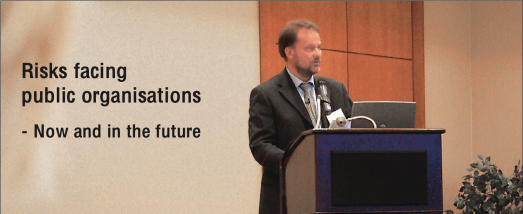
Are there differences between risk management in the public and private sectors? As a professor who has spent time in both public administration and business administration programs, I have had several opportunities to think about both sides of the debate.
Professor Peter Young
On one side, we have those who argue that management is management and that differences in the public and private sectors are modest (“if only government were run like a business”). Opponents of the “management is management” point of view argue that the public sector is so different from the private sector that it is a distinctly separate thing and, thus, requires different knowledge and management skills.
In early 2021, the Netherlands Environmental Assessment Agency published the first Integrated Circular Economy Report (ICER 2021). The report outlines the progress of the transition to a circular economy in the Netherlands. I have summarised this comprehensive, highly informative report, with a focus on the major risks articulated by the authors.
The Dutch government aims to have achieved a fully circular economy by 2050. Monitoring the progress of this transition is essential. The ICER 2021 report is a significant milestone in this process. It highlights the interventions undertaken by the Dutch government to initiate and accelerate the transition to a circular economy, as well as the actions taken by civil society organisations.
Delft, 20 januari 2022. De tweede Professor dr.ir. Roelof A.A. Oldeman Lezing* door Mr. J. (Hans) Krul, gemeentesecretaris en algemeen directeur van de Gemeente Delft.
Hij belicht vanuit zijn functie en rol in het knooppunt van het gemeentelijk verkeer, hoe vanuit lokaal perspectief voorliggende complexe opgaven kunnen worden benaderd. Thorbecke en Oldeman zijn daarbij behulpzaam in denken en handelen.
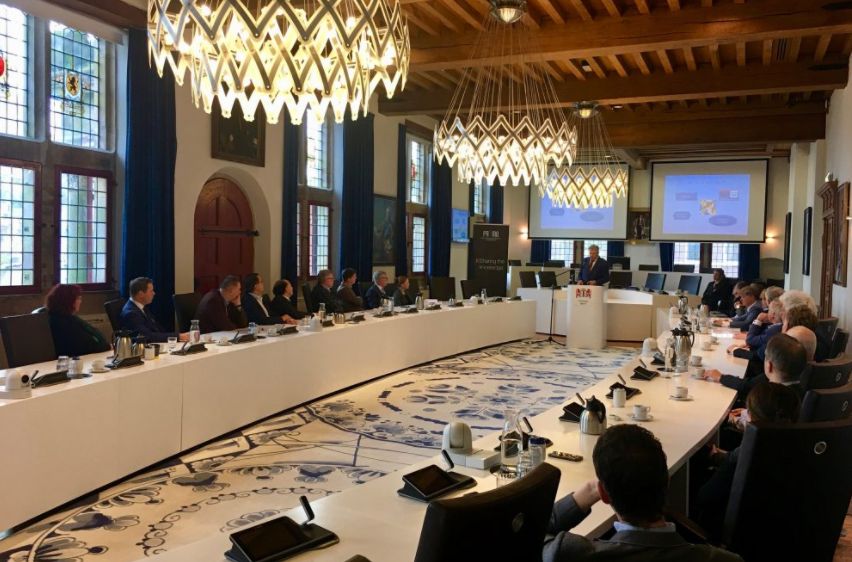
Hans Krul spreekt de 2e Professor Oldemanlezing uit in de raadszaal van de gemeente Delft.
De lezing
“Hartelijk welkom in de raadszaal van dit mooie historische stadhuis van Delft, een van de jongste leden van het PRIMO netwerk. Het is een eer dat ik vandaag in deze voor mij zo vertrouwde omgeving van de Delftse raadszaal de Oldeman Lezing uit mag spreken.
Ik ga dan ook mijn uiterste best doen u niet teleur te stellen waarbij ik in de eerste plaats terugval op mijn ruim 40-jarige werkervaring bij de overheid. Mijn lezing zal zich via de volgende stations voltrekken:
Presentation by Jack Kruf with co-presentation by Leen Paape | March 2021
Jack Kruf
What have we learned from 2020? A reflection as a farewell lecture. Farewell. I felt a bit of resistance whilst shaving this morning. I’m not really one for goodbyes. But anyway, here I am.
Jack Kruf
This will be a plea to give the field of public risk management a boost. But answering the question? That’s not so simple. Geert Mak said it at the launch of his book Great Expectations: “Interpreting history isn’t easy when you’re still in the thick of it.”
With many friends and colleagues watching on TV, and with my family here at home. It’s lovely to have you all here. I’ll try to shed some light on things. Together with Professor Leen Paape. An honour. It will be a three-part series, taking turns. Three questions are central, followed by a brief conclusion:
What is the issue at the start of 2021?
What is the intervention?
What is the associated governance?
LeenPaape
Professor at Nyenrode following a career that alternated between the public and private sectors. Started at the Military Academy in Breda and, after the Ministry of Defence, briefly worked at KPMG, then KLM, PwC and finally Nyenrode. I have served on an Audit and Risk Committee for the Municipality of Rotterdam and the Ministry of Infrastructure and the Environment, and I now oversee an insurer, a pension fund and a large school organisation.
Leen Paape
My driving forces are accountancy, risk management and corporate governance issues. I have seen quite a few things go wrong and would like to help prevent that from happening.
Flooding, school fires, unemployment, urban development and IT safety are some of the large and complicated risk issues for public organisations. These issues are essential to any public CEO who is faced with risks that not only involve the organisation itself but often the whole community. Still, what is the best way to address these significant risks? Should public risk management aim to minimise risks at all times? Or will this approach keep the public organisations from innovating? Although tight budgets in the public sector often set a limit for a proactive approach, the fact that risks have many facets and also positive aspects cannot be ignored.
Allan Vendelbo, President UDITE
These views were repeatedly brought up and recognised by practitioners and experts at the PRIMO conference in Copenhagen on 25 November 2005. Although the conference offered no straight answers to the questions, their importance was clear to everybody.
150 participants from 10 European countries and the US joined the first international PRIMO conference. Some of PRIMO Denmark’s private partners presented their expertise in risk management at pitches in the breaks between the conference talks. Pull-ups flashed colourful logos of insurance, HR, IT and finance companies.