WRRScientific Council for Government Policy | 2008
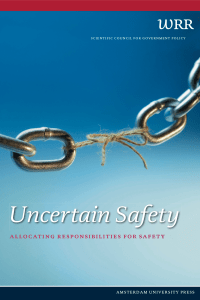
In view of the vulnerability of humans, society and the natural environment, a proactive approach to uncertainties is required. A precautionary approach will create new responsibilities for the government, the private sector and consumers, as well as new activities. In its report Uncertain safety (Report no. 82, 2008), the WRR recommends inserting the new precautionary principle in the Constitution.
Not so much risks as uncertainties
The classical risk approach has limitations as a result of social developments (food safety, new technologies and climate change, for example) and progressive scientific insights. Society is not so much confronted with risks as with uncertainties. These uncertainties have to be addressed in an organised manner.
A framework by International Risk Governance Council
Ortwin Renn, with annexes by Peter Graham | 2005
In this comprehensive white paper Risk Governance: Towards an integrative approach – coordinated and edited by Professor Ortwin Renn – the International Risk Governance Council (IRGC) brought together: “an integrated analytic framework for risk governance which provides guidance for the development of comprehensive assessment and management strategies to cope with risks, in particular at the global level. The framework integrates scientific, economic, social and cultural aspects and includes the effective engagement of stakeholders.”
In this article the headlines are summarized. In the light of history this framework is noteworthy and marks the next phase in thinking of the risk concepts. It focuses on “the improvement of risk governance strategies for risks with international implications and which have the potential to harm human health and safety, the economy, the environment, and/or the fabric of society at large.”
For those who listen in various sectors, the picture quickly emerges that risk management is not successful in practice. And that despite all the investments made and the energy that has been put into it in recent years. If risk management does indeed bring so much good (as is usually claimed), how is it possible that line managers do not flock to training and conferences? Why don’t they queue up to learn more about all those wonderful concepts and tools (including the many impressive software applications)? As a management system, has it sold so badly or can it simply not deliver what is promised? Perhaps it is a combination of both. It’s time for something better. As far as I am concerned, the end of conventional risk management is near. I refer to the instrumental approach from a separate staff function. The limited enthusiasm for this usual setup is due to several factors. I will mention a number of observations from the consultancy practice.
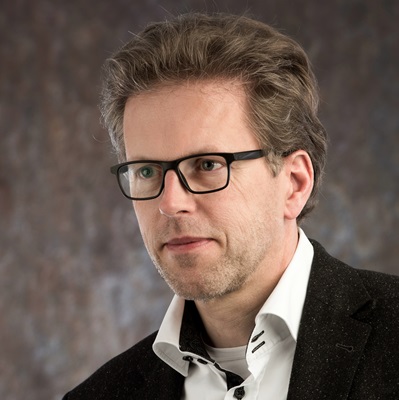
Marinus de Pooter
Usually, risk management is invested in a separate function or in different specialised functions such as Security, Quality and Safety, et cetera. This easily leads to responses from line managers along the lines of: “We hired you to take care of those (information security) risks!” Regulators have devised the creation of a separate Risk Management department (or even a separate CRO function) as a counterbalance to the overthrown ambitions of line managers. However, just because of the differences in personalities, its effectiveness can only be limited. If you do something about risk management, because your supervisor requires it or because the head office requires it from you, it will not easily be embedded in your day-to-day operations. If you use it as an accountability tool, it will at most help to give supervisors a sense of (false) security.
Dit artikel is tot stand gekomen in opdracht van en samenspraak tussen Frank Janse (BNG Bank) en Jack Kruf (PRIMO & UDITE)
Prof. Dr. Bastiaan Zoeteman[1] | 2018
De denktank ‘From Global to Local’[2] te Den Haag op 20 april 2018 is erop gericht de inventiviteit te verbeteren van lokale gemeenschappen in het omgaan met op hogere schaalniveaus spelende onzekerheden met veel impact. Daartoe worden uitkomsten van relevante onderzoeken verbonden met het risicomanagement rond de uitdagingen die deze onzekerheden oproepen voor het regionale en lokale bestuur.
Dergelijke onzekerheden worden niet alleen door rampen en crises opgeroepen maar ook door al dan niet terechte verwachtingen over het handelen van de overheden bij dergelijke situaties en over het te verwachten verloop van gebeurtenissen in de toekomst.
Door het zichtbaar maken van zulke onzekerheden in combinatie met een thema, in dit geval het thema van de energietransitie ter voorkoming van verdergaande klimaatverandering, wordt het mogelijk om gerichte handelingsperspectieven te ontwerpen die uitvoerbaar zijn en het vertrouwen in de overheid ondersteunen.
De Raad van Europa heeft 12 principes voor goede besturing vastgesteld. Zij dienen als uitgangspunten, randvoorwaarden en richtlijnen bij het effectief handelen in publieke zaken. Het is een nobele set van principes en een aansporing voor bestuur, bestuurder, organisatie, manager en medewerker.
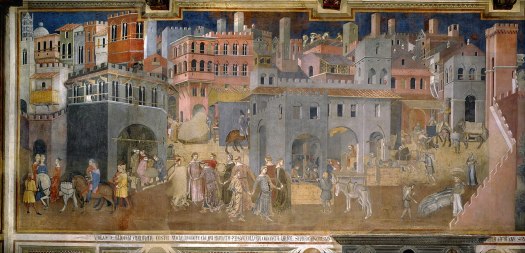
Ambrogio Lorenzetti (1338 – 1339). De effecten van goed bestuur. [Deel uit ‘De allegorie van goed en slecht bestuur’]. Siena, Sala dei Nove.
Deelname, vertegenwoordiging, eerlijk verloop van verkiezingen.
Responsiviteit.
Efficiëntie en effectiviteit.
Openheid en transparantie.
Rechtsstaat.
Ethisch handelen.
Competentie en capaciteit.
Innovatie en openheid voor verandering.
Duurzaamheid en langetermijnvisie.
Deugdelijk financieel beheer.
Mensenrechten, culturele diversiteit en sociale cohesie.
Verantwoordingsplicht.
De overlevering leert ons dat hiervoor een hoog organiserend vermogen nodig is van de bestuurders en managers die de principes geacht worden te hanteren. Siena werd in de veertiende eeuw – toen een staat, geen stad – erg goed geleid. Persoonlijke kwaliteiten dus. Anders gezegd: Siena kwam tot bloei omdat er goede bestuurders zaten. Het is spannend om te weten waar mechanismen van bijsturing zitten en hoe deze werken, indien niet voldaan wordt aan één of meer van de principes.
Wat was hun geheim, wat hun competenties? Een addendum bij deze principes inzake de noodzakelijke competenties is eigenlijk gewenst. Wij weten: zonder goede mensen, geen succes.