Lors de la conférence sur les risques dans les collectivités locales, tenue le 17 janvier 2018 au siège du gouvernement provincial à Utrecht, un groupe d’experts a débattu des aspects clés de la gouvernance et du contrôle au sein des organisations municipales.
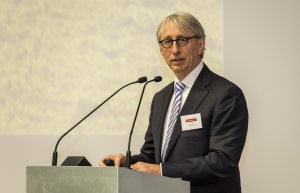
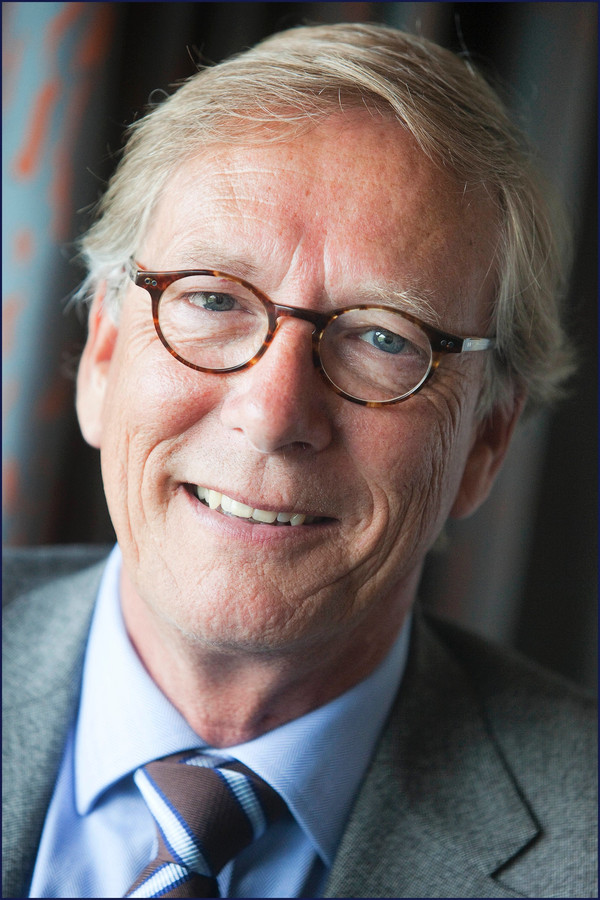
Jack P. Kruf lors de son discours d’ouverture au bâtiment du gouvernement provincial à Utrecht. (2018), Risk & Compliance Platform Europe
Dans son discours d’ouverture, Jack Kruf a plaidé en faveur d’un lien beaucoup plus fort entre le contenu des politiques et leur orientation. Compte tenu de la multitude d’intérêts et de parties prenantes, de la segmentation de l’expertise et des niveaux de gouvernement, ainsi que de la fragmentation des connaissances sur les enjeux, il estime que les autorités locales auraient tout intérêt à consacrer plus de temps à une clause de gouvernance ex ante.
Quels risques pour les collectivités ? – Compte-rendu d’atelier / Towards e-citizenship and e-government: What are the risks for local authorities? – Workshop report
Gérard Combe* et Thomas Graiff** | 1 decembre 2016
L’édition 2016 du Congrès du Syndicat National des Directeurs Généraux des Collectivités Territoriales a permis à PRIMO France de présenter et rappeler lors d’un atelier l’importance des cyber-risques et les enjeux majeurs qu’ils représentent dans le secteur public, en partenariat avec Marsh France. • The 2016 edition of the National Union of Local Authority Chief Executives Congress provided PRIMO France with an opportunity to present and highlight, during a workshop, the importance of cyber risks and the major challenges they pose in the public sector, in partnership with Marsh France.
Le 14 octobre dernier, l’association PRIMO France et le courtier en assurances Marsh, étaient présents au 76ème Congrès du Syndicat National des Directeurs Généraux des Collectivités Territoriales à Antibes. Pendant l’atelier 16 « Vers de nouvelles pratiques : le citoyen, acteur du service public ? », modéré par Madame Fabienne Ihidope, DGS de la commune d’Hasparren, PRIMO et Marsh ont pu exposer aux directeurs présents les différentes manifestations du numérique dans les pratiques citoyennes ainsi que les enjeux des cyber-risques au sein des collectivités locales.
•On 14 October, the PRIMO France association and insurance broker Marsh attended the 76th Congress of the National Union of Local Authority Chief Executives in Antibes. During workshop 16, ‘Towards new practices: citizens as public service stakeholders?’, moderated by Ms. Fabienne Ihidope, Chief Executive Officer of the municipality of Hasparren, PRIMO and Marsh presented to the directors in attendance the various manifestations of digital technology in citizen practices, as well as the challenges of cyber risks within local authorities.
An analysis from both a value and a risk perspective
Jack Kruf | June 2016
In this essay, I examine the refugee issue from the perspective of values and risks. I arrive at several reflections. In my view, the issue at hand concerns our collective willingness and capacity to receive refugees and integrate them into our society. The issue moves us deeply.
Jack Kruf
The dynamics are intense. Our democratic system is creaking at the seams. Society is voicing its views on the literal and figurative boundaries. This is also a political and administrative issue. The public value of ‘balance and cohesion in society’ is coming under pressure due to the large influx. Politicians and administrators speak of public risks and how we need to do things differently.
Values and risks
Mark Moore defines public value as ‘the value that the government creates for its citizens and that citizens value’. These values are enshrined not only in the Dutch constitution but also, for example, in the Geneva Conventions, the Universal Declaration of Human Rights, and Roosevelt’s Four Freedoms.
This is where the connection lies. Public risks are linked to public values. Potential deviations from (public) values in the future are interpreted as risks. In this case, one could say: human devaluation in the broadest sense and social instability or disruption. Risk management in relation to our theme is therefore aimed at safeguarding the underlying values. And that, in turn, concerns the quality of reception, care for fellow human beings, streamlined procedures, and tackling the root causes of migration.
In the global discourse on identifying societal ‘risks’, the World Economic Forum ranks ‘large-scale involuntary migration, caused by conflicts, disasters, environmental or economic reasons’ among the top five. Refugee issues are long-term in nature, as they are closely linked to international conflicts between countries, state failure, climate change, and water crises.
It seems somewhat as though we have entered a new period of major population movements (the previous one was between 400 and 1000 AD). According to the Forum, the issue of ‘the refugee’ is taking on a structural character. It is here to stay… And that creates structural risks. In my view, the drivers of this are:
Protracted conflicts: 80% last longer than 10 years. The longer people are away from their homeland, the harder it is to return. They can no longer make a living ‘at home’, often lose family ties and their possessions, and suffer a loss of dignity. The lack of effective integration policies in most countries leads to the emergence of ghettos and isolated communities on the fringes of society, resulting in frustration, disillusionment and even radicalisation.
Lack of international commitment: many countries have either not signed the Geneva Convention or do not adhere to it. There is no enforcement mechanism for ‘refugee status’. Without this status, refugees find it much harder to find work, are not entitled to social assistance, or have no access to travel documents. They are second-class citizens.
Segregation and deliberate bureaucracy: many societies are unable to achieve the integration and inclusion of refugees and keep them at a distance in reception camps. Procedures are often lengthy and formal, and discouraging for refugees.
Lack of effective governance and failing infrastructure: migrants in developing countries with weak social and governance systems are in a particularly difficult position. In 2014, 86% of refugees lived in developing countries and 12% in less developed countries. Refugees place a significant strain on the national budget (up to 7%); only 2% reach the wealthy West.
Reflections
If we were to prioritise value-driven action by governments, combined with sound risk management, ideally the rest would follow naturally. In this context, risk management means working from ‘the intention’, focused on human dignity, respect and balance in society. This requires administrative leadership and professional management, particularly at the local authority level, as the ‘first line of government’.
In this context, administrators, managers and also care workers are, in fact, the frontline risk managers. They stand for decent hospitality in procedures, humane reception and support for refugees, and optimal communication with and transparency towards society.
It may also require us to think one step further, drawing on our own history. After all, many of our ancestors who later became successful were once refugees themselves. New blood in Dutch society also means new opportunities for us as a host society; with a boost to the economy through increased demand, an influx of knowledge and a rise in international contacts. This fits with the tradition of our entrepreneurial spirit. If we take the human being in all their dignity as our starting point, we must be able to manage the risks of migration…
Bibliography
Translated from original publication: Kruf, J. (2016). Over publieke waarden en risico’s: Een andere kijk op het vluchtelingenvraagstuk. WagenaarHoes Magazine, nummer 32.
City of Utrecht: university and local council assess success
Eric Frank and Jack Kruf | | January 2016
The City of Utrecht is a member of PRIMO Netherlands. In the run-up to this special event, there have been extensive discussions about integrating risk management into the approach. When the project organisation was first set up in September 2014, Eric Frank (PRIMO Netherlands) and Jack Kruf (PRIMO Europe and WagenaarHoes), in close consultation with Ilhan Tekir (financial adviser to the City of Utrecht) and Martijn van Hulsteijn (project director for the Grand Départ), organised a round-table discussion for the City of Utrecht’s project team.
The round table discussion focused on three main areas:
The actual risks and uncertainties associated with the event itself.
The risks relating to the project organisation in terms of its composition, working style, internal communication and positioning in relation to the regular line organisation of the Municipality of Utrecht.
The risk model and methodology to be applied in the areas of risk analysis and mitigation, as well as quality assurance within the project.
The round table in June 2014 was a very open discussion involving all members of the project organisation as it was being established. It led to a shared analysis, a more rigorous focus on and permanent embedding of risk management throughout the project organisation, and a clear allocation of tasks and responsibilities, both at the administrative and management levels.dding van risicomanagement in het geheel van de projectorganisatie én een heldere belegging c.q. toebedeling van taken en verantwoordelijkheden, zowel ambtelijk als bestuurlijk.
An interview with Yves de Boer, a member of the Provincial Governing Council of North Brabant, offers an open insight into the relevant trends and developments concerning the governance of the public (provincial) sector. Many of the insights shared by the governor remain relevant today. The interview offers lessons on strengthening governance capabilities.
Governor Yves de Boer
Our conversation with him reveals a leader who instinctively connects with all stakeholders in often complex issues. It is this conviction about the desire to connect that has grown within him over many years of experience and wisdom. The driving forces behind bringing people together have become ingrained in his immediate thinking and actions within the public sphere of governance. An open conversation with a true connector and a sharp analyst.
PRIMO Res Publica is focused on ‘Public Value & Risk Guidance’. It has ‘building trust‘ as its mission to create, maintain, and protect public values and mitigate the risks attached to these values.
PRIMO, the ‘Public Risk Management Organisation’, was founded in 2005 and developed into an international association, PRIMO Europe, in 2007, based in Brussels with chapters in various European countries, such as Denmark, France, Malta, the Netherlands and Flanders. In 2024, a transition took place in which financial resources were transferred to the University of Twente to support professional education and to the umbrella organisations of the municipal secretaries involved.
The original databases of related organisations with publications and rights to the portfolio were handed over to Jack Kruf, one of the founders of PRIMO Europe and PRIMO Nederland. He founded PRIMO Res Publica, an organisation to maintain, curate and expand this library towards its original focus: the governance of public values and the hereto related public risks (being ‘possible harms to these values’). The website now contains a selection of sources of inspiration, meetings, masterclasses, and publications spanning a period of more than 70 years. Many new publications have been added since its foundation.
At the same time, a new international association was established, focusing specifically on risk leadership: the Strategic Risk Leadership Association: “The SRLA is a pan-European expert network aimed at advancing knowledge and use of risk management for strategic decision-making in European national and local governments, comprising the public sector at large, and it links to private enterprise.”
Jack Kruf, Eric Frank and Ronny Frederickx | april 2014
Idea
Gérard Combe and Jack Kruf, board members of the international association PRIMO Europe, proposed during their meeting in Brussels in May 2013 that global developments be brought to the attention of local authorities through a think tank model.
The Union des Dirigeants Territoriaux de l’Europe (UDITE), the leading professional network for directors and senior managers in the public sector in Europe, and the Public Risk Management Organisation (PRIMO), the leading international network for the development of products and the dissemination of knowledge and strategic information for the public sector in Europe, have joined forces to establish the ‘From Global to Local’ think tank. This is regarded as a formal joint project of both organisations. It was developed and implemented at the first think tank held in Amsterdam.