PRIMO Risk Management Award 2009

The Darlington Borough Council received the PRIMO Risk Management Award 2009. The borough’s approach demonstrates a holistic view of public values and their risks and government services to citizens. It links the government to its partners, is excellent at working, and is highly effective in delivering success. In Darlington, an innovative model has proved popular and introduced a common approach to managing risk within the Authority and all partnerships. It has also raised the risk management profile within the decision-making process for partnerships and improved service delivery.

One Darlington, Perfectly Placed

Interview with George Cornforth, Risk and Insurance Manager Darlington Borough Council

Inge Sebregts | December 2009

Partnership working and building relationships to improve the future is now fundamental in public service delivery. ‘One Darlington: Perfectly Placed’, Darlington’s Sustainable Community Strategy sets out a vision for Darlington, with partnership working key to its delivery. However, partnership working involves risks as well as opportunities and embedding risk management within the culture of partnerships and developing effective governance arrangements are therefore vital for their success.

Lees verder

PPP is a mindset, not a way of building

Harry Sterk* | april 2010

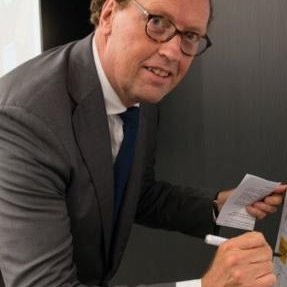
The major differences between traditional and PPP projects, according to Harry Sterk, lie in how costs are defined and how building plans are developed. In a PPP project, total costs are assessed in light of the project’s lifecycle.

Harry Sterk

Traditionally, the focus is on initial construction costs and omits, for instance, maintenance and other ‘post-initial’ costs. The initiator doesn’t make a detailed plan but instead formulates what has to be done within a certain framework: the output specifications.

Lees verder

The PRIMO Risk Management Award 2008

The award goes to the city of Saint-Étienne.

Gérard Combe | 2008

The city of Saint-Étienne has taken a renewing initiative to arm itself (the workforce) against the risk of a pandemic flu. This initiative is a pilot, a remedy to improve the processes. The initiative can be fully integrated into all running projects. Such a system aims to maintain an optimal level of services and simultaneously protect the workforce despite the risk of a lack of functioning.

Coat of Arms City of Saint-Étienne.

The challenge of this project consists of the ability of the employees to deal with a shortage of personnel. Moreover, the workforce has to anticipate being overburdened by the crises and a decrease in the risk of an epidemic spreading by leaving affected people at home. Communities are the first to deal with the consequences of such a crisis.

Lees verder

A Brief History of Public Risk Management 

Towards a holistic approach 

Finn Kjaer Jensen | February 2007

It certainly is true that governments have practiced risk management, in a general sense of the term, for thousands of years. Ancient cities that built walls to keep out invaders were practicing an elementary (but sound) form of risk management. Indeed, risk management is a fundamental purpose of government – government is, to a considerable degree, risk management. Further, there are numerous activities in the public sector that can be characterized as risk management (immunization programs, defense policy), but which are entwined with other functions of government.

The Categories of Public Sector Risk Management 

To better appreciate the historical process that has led to the present risk management environment, it is useful to first understand the general framework of risk management in the public sector. 

Lees verder

PRIMO Nederland founded

Risk management: the Achilles heel of local government

Jos Moerkamp (2006), translation Jack Kruf)| December 2006

The greatest risk faced by public authorities is realising, after the event, that risks have been overlooked. Managing risks not only reduces the likelihood of a disaster but, more importantly, makes it visible. That is why risk management belongs at the heart of the municipal organisation. That is precisely what PRIMO Nederland aims to achieve. It was formally founded in The Hague on the 6th of October 2006.

Anyone who associates local authorities and provincial councils with risks thinks first and foremost of financial debacles (the Ceteco affair in South Holland, local authorities acting as banks, construction fraud on a national scale) and, of course, disasters. New legislation (such as the Fido Act, which has curbed the risks taken by local authorities in investing and borrowing) and substantial investments by government inspectorates in enforcement and supervision have undoubtedly helped reduce risks.

Nevertheless, risk management is currently causing quite a stir. At the end of September 2006, during the annual conference of the Association of Municipal Secretaries, PRIMO Nederland was launched. PRIMO stands for Public Risk Management Organisation; PRIMO Nederland is part of PRIMO Europe, with members from fifteen countries.

Why is risk management on the rise in local and regional government? In other words, what is so new about it? Hasn’t risk assessment been part of policy-making and implementation for ages?

Jack Kruf, chair of PRIMO Nederland and municipal secretary of Roosendaal, does not deny this. ‘Seen in this light, you could view the history of humanity as the management of risks. For the Netherlands, this translates primarily to this day into managing the risks posed by water to our survival. It is no coincidence that water management is perhaps the most developed form of risk management we know. Constructing the right dykes is a complex science. We can calculate exactly what a dyke must look like to limit the risk of flooding or a breach to a predetermined probability. Managing the risks posed by water is in our DNA.’

In many other areas, however, risk management within the government is still in its infancy, according to Kruf. ‘We do not always look at it systematically or at the right level. Governments make numerous decisions without systematically calculating the risks beforehand. It is only during implementation that the risks come to light. Whereas risk management should take place at the strategic level of the organisation.’ An increasing number of managers and directors within local authorities shared this observation. All the more so as risks at the local level have increased further in recent years. With the introduction of dualism, the concept of ‘governance’ also became a topic of discussion.

Transparency in governance, oversight and accountability are central

‘This requires well-considered risk management,’ says Kruf. ‘The alderman is now much more accountable to the council, whereas before the dualism system, he was an extension of it. Expectations regarding day-to-day administration – and therefore also of the civil service organisation that supports it – have changed drastically. The alderman must be ‘in control’, delivering results and meeting schedules. There is no longer any room for ‘talking one’s way out of things’. All of this is only possible if you can properly assess the risks in advance.’

A second ‘boost’ to risk management in local authorities is the decentralisation of tasks. ‘Local authorities have been given significantly more policy and financial responsibilities. Usually, task transfer occurs without the resources being transferred on a one-to-one basis. Add the new policy areas with limited resources to the need to drastically adapt our organisations to these developments, and you can see significant risks looming.’ Add to this the increased complexity of projects, the growing interdependence between policy areas, and the expanding chain of responsibility for social issues, and it is clear that, certainly at the local level, the need for risk management is increasing significantly.

Moreover, this list makes it clear that risk management is not solely the preserve of controllers. On the contrary. ‘Society also demands politicians and administrators who stick their necks out, who listen more closely to what citizens want. That desire calls for administrators who dare to take risks. The challenge is to support administrators so they take calculated risks. You want to show the councilor that everything has been mapped out, that the risks have been analyzed, that, of course, things can still go wrong, but that he does know in advance what he is getting into.’

Bibliography

Moerkamp J. (2006). PRIMO Nederland established: Risk management – the Achilles’ heel of decentralised government. B&G Magazine, October 2006.

Canon of PRIMO

A selection of the key publications chosen, curated, published, and utilised by PRIMO in its portfolio of educational and advisory services. They are organised by language area – in this case, the Dutch-speaking region – in chronological order. This list can be regarded as a canon of the organisation and its sources of inspiration. Each publication is accompanied by a summary followed by an explanatory note.

This page is currently under construction and is updated regularly.

Lees verder

Managing the unexpected (2001)

Assuring high performance in an age of complexity

Karl Weick and Kathleen Sutcliffe | 2001

One of the significant challenges any business or organisation can face is dealing with the unexpected. While traditional managerial practices such as planning are designed to manage unexpected threats, they often worsen things. How do you organise for high performance in a setting with overwhelming potential for error and disaster?

In this book, the authors look to high-reliability organisations (HROs)—aircraft carriers, nuclear power plants, firefighting crews, and others—for the answer. HROs have developed ways of acting that provide a template for all organisations that want to be more reliable in managing the unexpected. This book shows executives and upper-level managers how to manage under trying conditions.

The authors reveal how HROs create a collective mindfulness that enhances the ability to discover and correct errors before they escalate into a crisis. By discussing this principle and the practices that can be applied, the authors show how to anticipate and respond to threats with flexibility rather than rigidity.

Their practical, solutions-oriented approach includes numerous case studies demonstrating “mindful” practices and enables readers to assess and implement mindfulness in their organisations. 


Bibliography 

Weick, K. E., & Sutcliffe, K. M. (2001). Managing the unexpected: Assuring high performance in an age of complexity. San Francisco: Jossey-Bass.