Resilience of what to what?

Jack Kruf | April 2024 (update from August 2016)

What is resilience? Well, there is no simple answer to this. Especially not regarding a city’s ecosystem. The concept, you might say, is in development across different sciences and has recently entered the public governance domain related to society’s social-ecological system.

Can resilience be measured as an indicator of an ecosystem’s state? How are the living and non-living factors of the measured system calculated? Can it create true insight into the tone of the city, society, and nature?

Resilience is the new buzzword among public leaders and managers, but it has played an essential role in natural ecosystems for millions of years. It was launched in 2013 with 100 Resilient Cities as a relatively new concept of thinking and acting from the government’s perspective. But what is it about? The ability to endure stress and still perform, or the capacity to recover after a catastrophe? Maybe both.

Lees verder →

Monitor Veerkracht in Bospolder-Tussendijken

Vijf jaar onderzoek naar sociale veerkracht

Gemeente Rotterdam | maart 2024

In de Rotterdamse wijken Bospolder en Tussendijken heeft de afgelopen vif jaar een innovatieve vorm van wijkontwikkeling plaatsgevonden. Met het programma Veerkrachtig BoTu 2028 is ingezet op versterking van het sociaal kapitaal van de wijk om onder meer sociale en ruimtelijke problemen het hoofd te bieden, en om de wijk beter bestand te maken tegen toekomstige risico’s.

Hoe kan de wijk omgaan met een pandemie of met een energiecrisis? Hoe kan de wijk meer verantwoordelijkheid nemen? Welke vorm van bestuur past hierbij? En wat is de rol van de overheid? Hoe kan aanspraak gemaakt worden op specifieke vaardigheden van bewoners? En op welke manier bewaak je de continuiteit van zo’n system?

Lees verder →

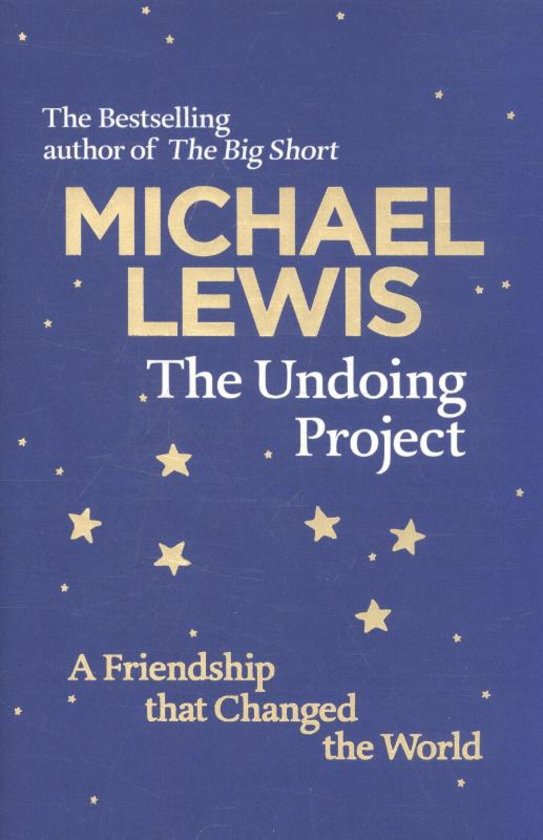
The Undoing Project

A Friendship that Changed the World

Michael Lewis | 2017, W.W. Norton & Company

This is the extraordinary story of the two men whose ideas changed the world. Daniel Kahneman and Amos Tversky met in war-torn 1960s Israel. Both were gifted young psychology professors: Kahneman, a rootless son of Holocaust survivors who saw the world as a problem to be solved, and Tversky, a voluble, instinctual blur of energy.

In this breathtaking new book, Michael Lewis tells the extraordinary story of a relationship that became a shared mind: one which created the field of behavioural economics, revolutionising everything from Big Data to medicine, from how we are governed to how we spend, from high finance to football.

Lees verder →

Delftse aanpak risico’s in beeld

Gemeente Delft | oktober 2017

Begin 2017 is het raadsonderzoek naar de grote projecten afgerond. Naast het onderzoeksrapport is door de onderzoekscommissie de “Ingrediëntennotitie voor een Regeling Risicovolle Projecten” opgesteld. In beide rapporten zijn aanbevelingen gedaan om tegenwicht en tegenspraak in de gemeentelijke organisatie te verbeteren. Om deze aanbevelingen naar de toekomst toe te borgen heeft de raad het college verzocht een regeling risicovolle projecten op te stellen.

Met deze notitie doet het college een voorstel aan de raad voor een aanpak om in Delft zorgvuldig met risico’s om te gaan. De aanpak is niet nieuw. Deze bouwt voort op de maatregelen die het college al sinds 2014 heeft genomen op het dieptepunt van de financiële crisis.

Lees verder →

Value & Risk Dictionary

PRIMO Res Public

To understand what is happening, make sense of the publications (from different sciences and schools), interpret the frameworks and translate the myriad of languages related to public governance of value and risk, it is wise to reduce the dictionary with concepts as are starting points of our organisation and for our members and network.

It serves as a compass in diagnosis, design, and decision-making. These tools are theoretical concepts and practical aids that help to get not lost in translation. Especially the dictionary of risk is a thick one with hundreds of interpretations. Many pretend to be or want to be the standard.

Lees verder →

De kansen van het regeerakkoord

Geert Haisma, Robert ’t Hart en Jack Kruf * | april 2007

Den Haag, Parkhotel, 13 april 2007. Dit essay bespreekt de uitkomsten van de ronde tafel georganiseerd om te spreken – vanuit gemeentelijk perspectief – over de uitvoerbaarheid van het nieuwe regeerakkoord Samen Werken, Samen Leven. Immers in dit akkoord wordt ‘de gemeente’ 49 keer genoemd.

Den Haag, Parkhotel,

Tijdens de ronde tafel is er door een vijftiental gemeentesecretarissen, VNG-directeur Ralph Pans en VGS-voorzitter Piet Buijtels onder leiding van Yourie Albrecht openlijk gediscussieerd. De algemene bevinding van de bijeenkomst is dat, bij de huidige wettelijke en financiële afspraken tussen kabinet en gemeenten, circa een kwart van de voornemens niet en een kwart moeilijk uitvoerbaar is.

Lees verder →

Lessons from Archery

What can a governor learn from an archer?

Jack Kruf | April 2019

What can the world of public governance learn from archery? Archery is a mature sport that has developed dramatically since its inception. Because of this, the sport itself has undergone many changes and improvements.

De Lieksa-vlag (Lieksa lippu) is de officiële vlag van de Finse stad Lieksa (bron: Wikipedia)

In governance and public administration, we may learn from the archery world to select and curate the basic skills perceived as essential by professional archers. After all, governance is a form of archery, metaphorically spoken.

There are parallels:  a good governor has the skills of a good archer in effectively reaching the target. After all, both professions are about precision. Here, we focus on the archer. I collected some skills from the archery world. I leave it to the reader to find similarities with the governance world.

A summary of skills

Archery is a broad set of fundamental skills necessary to be an experienced archer. Among the skills and abilities archers need are mental strength, aerobic endurance, balance and coordination, reaction time, motivation & self-confidence, skill/technique, agility, flexibility, strength & power.

The most obvious is the need for a high level of upper body strength and flexibility. An archer needs to be able to shoot arrows accurately and repeat that action without suffering fatigue. We elaborate on some of the skills.

Lees verder →