AI in Strategic Foresight: Reshaping Anticipatory Governance

AI’s intersection with strategic foresight offers both opportunities and challenges.

World Economic Forum’s Global Foresight Network, the OECD Government Foresight Community, and the Dubai Future Foundation | November 2025

“Innovations in AI have opened the door to possible future scenarios that would have been unthinkable just a few years ago. The technology affects decision-makers around the world, and perhaps none more than practitioners of strategic foresight – the field where experts explore multiple plausible futures and develop strategies to help organizations, governments, and others prepare for events to come. To evaluate AI’s impact on strategic foresight, this white paper presents the results of a survey of 167 foresight experts from 55 countries, drawn from the World Economic Forum’s Global Foresight Network, the OECD Government Foresight Community, and the Dubai Future Foundation.
The results show that a majority of foresight practitioners now use AI in their work. Practitioners report that the technology is useful for essential elements of foresight such as trend analysis, future scenario development and identification of emerging themes and issues. Experts primarily value AI for saving time, saying it streamlines their work by handling repetitive and labour-intensive tasks. Respondents also appreciate AI’s ability to process and analyse large datasets, uncovering trends and insights that would be difficult or time-consuming to identify manually.

Lees verder →
Rising above water

Marta Jiménez | October 2021, Utrecht University

Sea levels are rising, and the rate of rise is accelerating. All over the world, many of today’s dikes, sea walls and flood barriers won’t be enough to hold back the water in the future. This will be particularly a problem in countries that lack the resources to maintain or fund extensive engineering projects to protect their citizens. But we can all learn from alternative, more affordable and flexible approaches that adapt to the rising water currently emerging all around the world.

Detail Rising above Water ©Utrecht University

Rather than only battling to keep ever-rising seas out, these natural solutions aim to help rebuild land above sea level. Researchers from Utrecht University are testing which of these strategies will work for specific regions to help tame the tide. And they’re also thinking ahead: how can we minimise the damage and ensure people have somewhere safe to go when the water does come?

Lees verder →

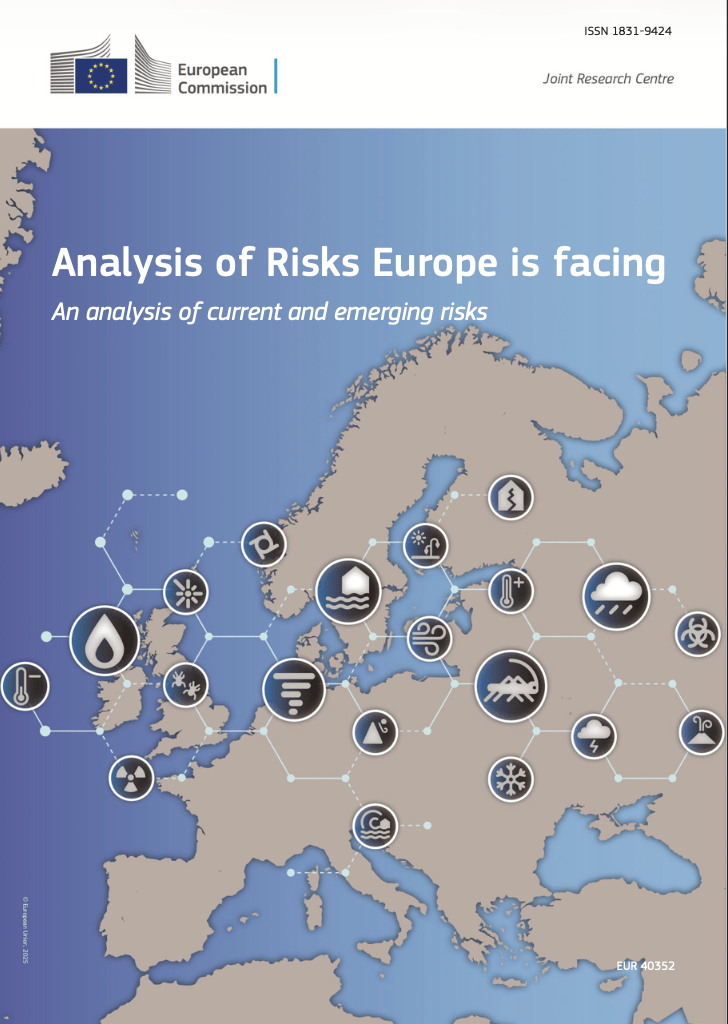
Analysis of Risks Europe is facing

An analysis of current and emerging risks

European Commission Joint Research Centre (JRC) | 2025

“As Europe stands at the nexus of intensifying global uncertainties, this flagship report on Current and Emerging Risks in Europe marks a critical step in shaping a more prepared and resilient Union. It offers an integrated scientific analysis of 47 diverse risks-from climate-driven disasters and pandemics to cyber threats and geopolitical instability-highlighting the urgent need for cross-sectoral, whole-of-society action.

Our Member States rightly expect the European Union to anticipate risks and threats and protect them from cascading crises through a coordinated and proactive approach to addressing the evolving risk landscape.

Lees verder →

Te heet onder onze voeten 

Gezond samenleven kan alleen op een gezonde planeet

Raad voor Volksgezondheid & Samenleving | 21 juli 2025

Onze planeet wordt steeds ongezonder, dat is niet alleen een ecologisch probleem, maar ook een gezondheids- én een rechtvaardigheidsprobleem, zo stelt de Raad in dit advies. Als we onze gezondheid belangrijk vinden, dan moeten we de planetaire grenzen, zoals klimaatverandering en vervuiling serieus nemen en centraal stellen binnen beleid.

Dat betekent niet alleen nieuwe gewoonten opbouwen, maar ook schadelijke systemen afbouwen. Daar hoort ook het maken van lastige keuzes bij, bijvoorbeeld over voeding, mobiliteit en industrie, maar ook binnen zorg en welzijn. Alleen zo komen we tot een gezonde en eerlijke samenleving die ook in de toekomst houdbaar is.

Een ongezonde planeet is niet alleen een ecologisch probleem, maar ook een gezondheids- én een rechtvaardigheidsprobleem. Daarom pleit de Raad voor Volksgezondheid & Samenleving (RVS) in zijn nieuwste advies Te heet onder onze voeten ervoor om gezond samenleven binnen planetaire grenzen het uitgangspunt van beleid te maken. Planetaire gezondheid wordt nu nog vaak los gezien van onze eigen gezondheid, waardoor oplossingen buiten bereik blijven.

Lees verder →

UN Global Risk Report

United Nations | July 2025

The first-ever United Nations Global Risk Report 2024 has been released, offering insights from over 1,100 experts and stakeholders on the most pressing global risks and the world’s preparedness to address them. The report, based on a global survey conducted in 2024, assesses the perceptions of these risks across societal, technological, economic, environmental, and political categories. It highlights the interconnectedness of these risks and emphasizes the need for a more united and multilateral approach to strengthen the world’s capacity to anticipate, adapt, and respond to future challenges, according to the report. 


António Guterres: “We are at a defining moment for humanity. In a year marked by converging global crises, the international community faces mounting pressure to strengthen our collective capacity to anticipate and respond to shared risks.

This report, drawing on data collected in 2024, offers a valuable snapshot of how stakeholders around the world—governments, the private sector, academia, and civil society—perceive global risks and assess the multilateral system’s readiness to address them.

Lees verder →

Chronic Risks Analysis

Cabinet Office and Government Office for Science, United Kingdom | | 8 July 2025

The Chronic Risks Analysis (CRA) is the UK Government’s first bespoke risk assessment for medium to long term risks. It complements the National Risk Register (NRR), which focuses on the UK’s most serious acute risks. The 26 chronic risks identified by the UK Government cover seven themes, spanning across Security, Technology and Cybersecurity, Geopolitical, Environmental, Societal, Biosecurity and Economic issues.

The Rt Hon Pat McFadden MP, Chancellor of the Duchy of Lancaster: “The world order is shifting at breakneck speed. A once-in-a-generation pandemic, war on the continent of Europe, a cost of living crisis, fluctuations in global energy and financial markets – all within the past decade. But in this period of upheaval, the first duty of any Government remains the same: keeping the public safe.

Lees verder →

PRIMO Kaleidoscope

Education for good public governance*

PRIMO | April 2012

Introduction

Kaleidoscope is an internationally developed educational program that provides a holistic, dialogue-oriented approach to public risk. Discussing relevant themes such as cybersecurity, social cohesion, city management, adaptation to climate change, proper water management, and added-value through partnership, and getting familiar with the best concepts, methods, and techniques to manage risk, and learning from authoritative scientists and practitioners. 

The program provides insight into how public values and risks intersect, as well as how to design effective governance mechanisms. The education program consists of three main perspectives and is offered in a modular format with capita selecta:

  1. Craftsmanship of risk management (general overview of risks, drivers, frameworks, techniques).
  2. Establishment and governance of specific values (i.e., topic-related approach of risk, resilience, scenarios, from the organisation and client perspective).
  3. Personal skills (how to act, interact, communicate, learn, and develop yourself).
Lees verder →