Risk management: the Achilles heel of local government
Jos Moerkamp (2006), translation Jack Kruf)| December 2006
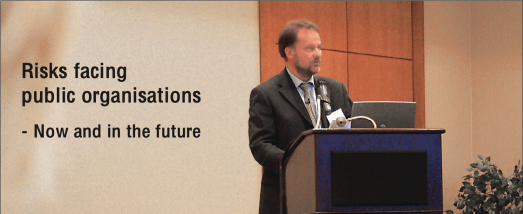
The greatest risk faced by public authorities is realising, after the event, that risks have been overlooked. Managing risks not only reduces the likelihood of a disaster but, more importantly, makes it visible. That is why risk management belongs at the heart of the municipal organisation. That is precisely what PRIMO Nederland aims to achieve. It was formally founded in The Hague on the 6th of October 2006.
Anyone who associates local authorities and provincial councils with risks thinks first and foremost of financial debacles (the Ceteco affair in South Holland, local authorities acting as banks, construction fraud on a national scale) and, of course, disasters. New legislation (such as the Fido Act, which has curbed the risks taken by local authorities in investing and borrowing) and substantial investments by government inspectorates in enforcement and supervision have undoubtedly helped reduce risks.
Nevertheless, risk management is currently causing quite a stir. At the end of September 2006, during the annual conference of the Association of Municipal Secretaries, PRIMO Nederland was launched. PRIMO stands for Public Risk Management Organisation; PRIMO Nederland is part of PRIMO Europe, with members from fifteen countries.
Why is risk management on the rise in local and regional government? In other words, what is so new about it? Hasn’t risk assessment been part of policy-making and implementation for ages?
Jack Kruf, chair of PRIMO Nederland and municipal secretary of Roosendaal, does not deny this. ‘Seen in this light, you could view the history of humanity as the management of risks. For the Netherlands, this translates primarily to this day into managing the risks posed by water to our survival. It is no coincidence that water management is perhaps the most developed form of risk management we know. Constructing the right dykes is a complex science. We can calculate exactly what a dyke must look like to limit the risk of flooding or a breach to a predetermined probability. Managing the risks posed by water is in our DNA.’
In many other areas, however, risk management within the government is still in its infancy, according to Kruf. ‘We do not always look at it systematically or at the right level. Governments make numerous decisions without systematically calculating the risks beforehand. It is only during implementation that the risks come to light. Whereas risk management should take place at the strategic level of the organisation.’ An increasing number of managers and directors within local authorities shared this observation. All the more so as risks at the local level have increased further in recent years. With the introduction of dualism, the concept of ‘governance’ also became a topic of discussion.
Transparency in governance, oversight and accountability are central
‘This requires well-considered risk management,’ says Kruf. ‘The alderman is now much more accountable to the council, whereas before the dualism system, he was an extension of it. Expectations regarding day-to-day administration – and therefore also of the civil service organisation that supports it – have changed drastically. The alderman must be ‘in control’, delivering results and meeting schedules. There is no longer any room for ‘talking one’s way out of things’. All of this is only possible if you can properly assess the risks in advance.’
A second ‘boost’ to risk management in local authorities is the decentralisation of tasks. ‘Local authorities have been given significantly more policy and financial responsibilities. Usually, task transfer occurs without the resources being transferred on a one-to-one basis. Add the new policy areas with limited resources to the need to drastically adapt our organisations to these developments, and you can see significant risks looming.’ Add to this the increased complexity of projects, the growing interdependence between policy areas, and the expanding chain of responsibility for social issues, and it is clear that, certainly at the local level, the need for risk management is increasing significantly.
Moreover, this list makes it clear that risk management is not solely the preserve of controllers. On the contrary. ‘Society also demands politicians and administrators who stick their necks out, who listen more closely to what citizens want. That desire calls for administrators who dare to take risks. The challenge is to support administrators so they take calculated risks. You want to show the councilor that everything has been mapped out, that the risks have been analyzed, that, of course, things can still go wrong, but that he does know in advance what he is getting into.’
Bibliography
Moerkamp J. (2006). PRIMO Nederland established: Risk management – the Achilles’ heel of decentralised government. B&G Magazine, October 2006.