Een pleidooi voor een hernieuwde zoektocht naar leiderschap dat ‘uiteindelijk verantwoordelijkheid neemt’: rentmeesterschap
Jack Kruf | 10 maart 2017
Natuurlijk beschikken we over ons democratisch systeem, een prachtig geheel van beginselen en waarden dat als basis dient voor goed openbaar bestuur. Publiek leiderschap, zowel binnen overheidsorganisaties als in de publieke sfeer van de samenleving, is in dit systeem verankerd – althans, dat zou zo moeten zijn. Je zou uitstekende resultaten mogen verwachten, want het democratisch systeem vindt zijn oorsprong in de Griekse δημοκρατία uit 508 v.Chr. en is keer op keer op de proef gesteld en uitgedaagd. In de loop van de millennia heeft het zich tot dit punt ontwikkeld.
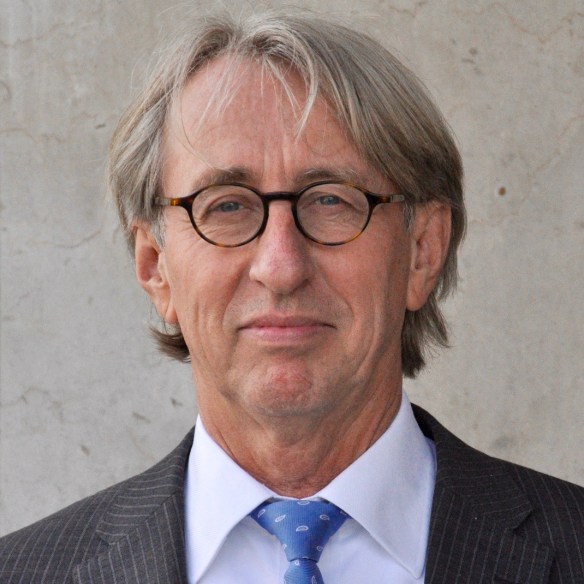
Jack Kruf
Gezien de huidige toestand van de samenleving en van natuurlijke ecosystemen, zou je verbaasd kunnen zijn over de resultaten van deze ontwikkelingsperiode van 2525 jaar. De Global Risks Reports, die sinds 2005 door het World Economic Forum worden gepubliceerd, vertellen hoe kritiek de toestand van de aarde is. Toen ik deze rapporten las, kreeg ik een flashback naar 1972, toen de Club van Rome feiten, bevindingen en cijfers presenteerde in haar rapport The Limits to Growth. Al minstens vijf decennia (dat is een halve eeuw!) weten we wat er gaande is en waar vele generaties leiders ons hebben gebracht.
Quels risques pour les collectivités ? – Compte-rendu d’atelier / Towards e-citizenship and e-government: What are the risks for local authorities? – Workshop report
Gérard Combe* et Thomas Graiff** | 1 decembre 2016
L’édition 2016 du Congrès du Syndicat National des Directeurs Généraux des Collectivités Territoriales a permis à PRIMO France de présenter et rappeler lors d’un atelier l’importance des cyber-risques et les enjeux majeurs qu’ils représentent dans le secteur public, en partenariat avec Marsh France. • The 2016 edition of the National Union of Local Authority Chief Executives Congress provided PRIMO France with an opportunity to present and highlight, during a workshop, the importance of cyber risks and the major challenges they pose in the public sector, in partnership with Marsh France.
Le 14 octobre dernier, l’association PRIMO France et le courtier en assurances Marsh, étaient présents au 76ème Congrès du Syndicat National des Directeurs Généraux des Collectivités Territoriales à Antibes. Pendant l’atelier 16 « Vers de nouvelles pratiques : le citoyen, acteur du service public ? », modéré par Madame Fabienne Ihidope, DGS de la commune d’Hasparren, PRIMO et Marsh ont pu exposer aux directeurs présents les différentes manifestations du numérique dans les pratiques citoyennes ainsi que les enjeux des cyber-risques au sein des collectivités locales.
•On 14 October, the PRIMO France association and insurance broker Marsh attended the 76th Congress of the National Union of Local Authority Chief Executives in Antibes. During workshop 16, ‘Towards new practices: citizens as public service stakeholders?’, moderated by Ms. Fabienne Ihidope, Chief Executive Officer of the municipality of Hasparren, PRIMO and Marsh presented to the directors in attendance the various manifestations of digital technology in citizen practices, as well as the challenges of cyber risks within local authorities.
Het initiatief om een organisatie op te richten die zich richtte op Public Risk Management kwam van UDITE, (Union des Dirigeants Territoriaux de l’Europe), de Europese vereniging van gemeentesecretarissen. Er bestond grote behoefte aan meer aandacht voor risicomanagement in het publieke domein op strategisch en bestuurlijk niveau. Juist vanuit de behoefte van gemeentesecretarissen, omdat zij op het kruispunt werken van politiek, bestuur, management en samenleving.
PRIMO werd in Europa opgericht te Straatsburg op 1 april 2005 en statutair formeel gevestigd in Brussel in 2007. Direct werden landenorganisaties opgericht zoals in Denemarken, Frankrijk, Malta en Zweden. Op initiatief van Jack Kruf werden Nederland en Vlaanderen daaraan toegevoegd. PRIMO Nederland werd formeel opgericht te Den Haag op 6 oktober 2006, dit ondersteund door het Ministerie van Binnenlandse Zaken en Koninkrijksrelaties, de Vereniging van Gemeentesecretarissen (VGS) en toenmalig Bank Nederlandse Gemeenten, nu BNG Bank.
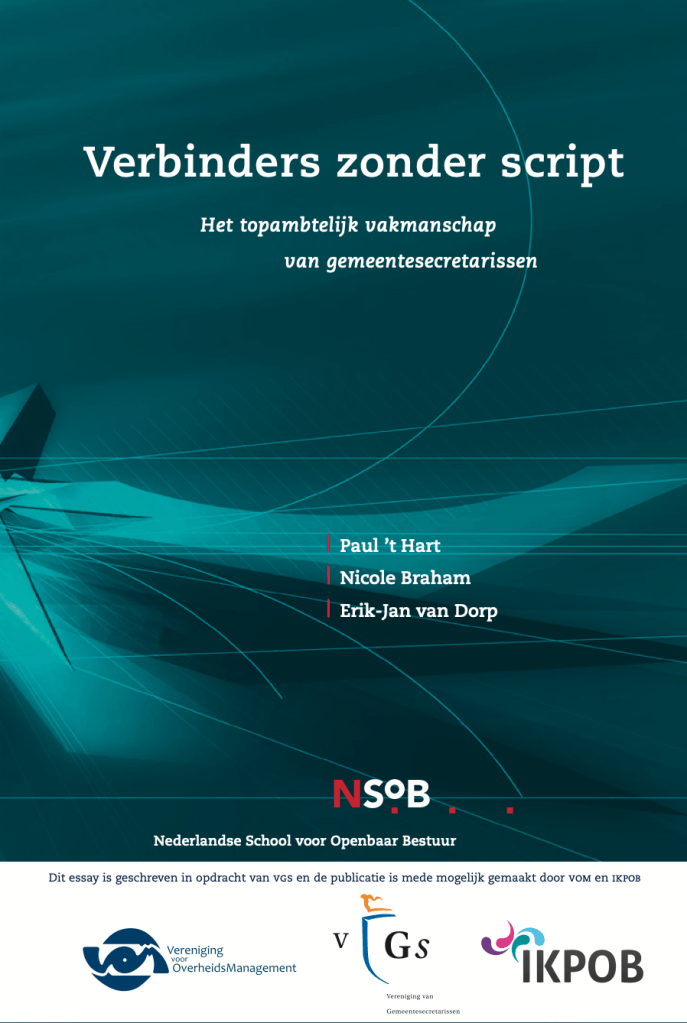
Het topambtelijk vakmanschap van gemeentesecretarissen
Paul ’t Hart, Nicole Braham en Erik-Jan van Dorp | september 2016
De opdrachtgevers Gabriëlle Haanen, voorzitter Vereniging van Gemeentesecretarissen. Mark Frequin, voorzitter Vereniging voor OverheidsManagement en Sjaak van der Tak, voorzitter bestuur Stichting Innovatie, Kwaliteit en Professionaliteit van het Openbaar Bestuur in hun voorwoord:
“Geen zoektocht naar het handwerk van de publieke manager is compleet zonder inzicht in wat publieke managers nu eigenlijk precies doen als ze aan het werk zijn. Waar gaat hun aandacht naar uit? Waar besteden zij hun tijd aan, wat krijgt minder prioriteit, wat delegeren ze naar anderen, wat laten ze lopen? Welke keuzes maken zij daarbij – impliciet of expliciet – en welke factoren zijn van invloed op die keuzes? Ondanks het feit dat bestuurskundigen en andere sociale wetenschappers met grote regelmaat onderzoek doen naar ambtenaren, ambtelijke organisaties en publiek management, zijn de bovenstaande vragen in Nederland nog nauwelijks onderzocht.
An analysis from both a value and a risk perspective
Jack Kruf | June 2016
In this essay, I examine the refugee issue from the perspective of values and risks. I arrive at several reflections. In my view, the issue at hand concerns our collective willingness and capacity to receive refugees and integrate them into our society. The issue moves us deeply.
Jack Kruf
The dynamics are intense. Our democratic system is creaking at the seams. Society is voicing its views on the literal and figurative boundaries. This is also a political and administrative issue. The public value of ‘balance and cohesion in society’ is coming under pressure due to the large influx. Politicians and administrators speak of public risks and how we need to do things differently.
Values and risks
Mark Moore defines public value as ‘the value that the government creates for its citizens and that citizens value’. These values are enshrined not only in the Dutch constitution but also, for example, in the Geneva Conventions, the Universal Declaration of Human Rights, and Roosevelt’s Four Freedoms.
This is where the connection lies. Public risks are linked to public values. Potential deviations from (public) values in the future are interpreted as risks. In this case, one could say: human devaluation in the broadest sense and social instability or disruption. Risk management in relation to our theme is therefore aimed at safeguarding the underlying values. And that, in turn, concerns the quality of reception, care for fellow human beings, streamlined procedures, and tackling the root causes of migration.
In the global discourse on identifying societal ‘risks’, the World Economic Forum ranks ‘large-scale involuntary migration, caused by conflicts, disasters, environmental or economic reasons’ among the top five. Refugee issues are long-term in nature, as they are closely linked to international conflicts between countries, state failure, climate change, and water crises.
It seems somewhat as though we have entered a new period of major population movements (the previous one was between 400 and 1000 AD). According to the Forum, the issue of ‘the refugee’ is taking on a structural character. It is here to stay… And that creates structural risks. In my view, the drivers of this are:
Protracted conflicts: 80% last longer than 10 years. The longer people are away from their homeland, the harder it is to return. They can no longer make a living ‘at home’, often lose family ties and their possessions, and suffer a loss of dignity. The lack of effective integration policies in most countries leads to the emergence of ghettos and isolated communities on the fringes of society, resulting in frustration, disillusionment and even radicalisation.
Lack of international commitment: many countries have either not signed the Geneva Convention or do not adhere to it. There is no enforcement mechanism for ‘refugee status’. Without this status, refugees find it much harder to find work, are not entitled to social assistance, or have no access to travel documents. They are second-class citizens.
Segregation and deliberate bureaucracy: many societies are unable to achieve the integration and inclusion of refugees and keep them at a distance in reception camps. Procedures are often lengthy and formal, and discouraging for refugees.
Lack of effective governance and failing infrastructure: migrants in developing countries with weak social and governance systems are in a particularly difficult position. In 2014, 86% of refugees lived in developing countries and 12% in less developed countries. Refugees place a significant strain on the national budget (up to 7%); only 2% reach the wealthy West.
Reflections
If we were to prioritise value-driven action by governments, combined with sound risk management, ideally the rest would follow naturally. In this context, risk management means working from ‘the intention’, focused on human dignity, respect and balance in society. This requires administrative leadership and professional management, particularly at the local authority level, as the ‘first line of government’.
In this context, administrators, managers and also care workers are, in fact, the frontline risk managers. They stand for decent hospitality in procedures, humane reception and support for refugees, and optimal communication with and transparency towards society.
It may also require us to think one step further, drawing on our own history. After all, many of our ancestors who later became successful were once refugees themselves. New blood in Dutch society also means new opportunities for us as a host society; with a boost to the economy through increased demand, an influx of knowledge and a rise in international contacts. This fits with the tradition of our entrepreneurial spirit. If we take the human being in all their dignity as our starting point, we must be able to manage the risks of migration…
Bibliography
Translated from original publication: Kruf, J. (2016). Over publieke waarden en risico’s: Een andere kijk op het vluchtelingenvraagstuk. WagenaarHoes Magazine, nummer 32.
Op 16 mei 2016 lanceerde Rotterdam haar Resilience Strategie. De holistische aanvliegroute van nieuwe doelen voor de stad is wat aanspreekt. Het is een nieuw concept van denken, dat geleidelijk aan terrein wint. Rotterdam gaat voor Resilience.
De publieke sturing dient daarmee gelijke tred te houden en afgestemd te zijn, dit om de resilience waar te kunnen maken. Veerkrachtige steden vragen dus ook om meer holistische besturingsconcepten.
On 20 May 2016, PRIMO Netherlands organised a masterclass at Utrecht’s new city hall to further explore key aspects of risk management at major events. The final report on Le Grand Départ of the Tour de France by the municipality of Utrecht and the evaluation by Utrecht University, together with the Royal Couple’s visit to the municipality of Roosendaal in 2013, served as the starting point for the discussion.
This essay, based on a masterclass, examines these two successful events. What is the key to this success? How were uncertainties managed? What risks were anticipated?
We hear from two managers who were at the forefront of the branding and responsible for its success, and from a researcher who offers a critical analysis and draws conclusions. A fine combination for a dialogue yielding surprising insights.
“The whole world has to work together, something they normally rarely, if ever, do. An event is therefore a tremendous unifying factor. It is a form of higher intelligence, of advanced mathematics, a bit of luck and, above all, good weather.” – Martijn van Hulsteijn, project leader for Le Grand Départ 2015, Utrecht.