Het Risico van Leiderschap

Een pleidooi voor een hernieuwde zoektocht naar leiderschap dat ‘uiteindelijk verantwoordelijkheid neemt’: rentmeesterschap

Jack Kruf | 10 maart 2017

Natuurlijk beschikken we over ons democratisch systeem, een prachtig geheel van beginselen en waarden dat als basis dient voor goed openbaar bestuur. Publiek leiderschap, zowel binnen overheidsorganisaties als in de publieke sfeer van de samenleving, is in dit systeem verankerd – althans, dat zou zo moeten zijn. Je zou uitstekende resultaten mogen verwachten, want het democratisch systeem vindt zijn oorsprong in de Griekse δημοκρατία uit 508 v.Chr. en is keer op keer op de proef gesteld en uitgedaagd. In de loop van de millennia heeft het zich tot dit punt ontwikkeld.

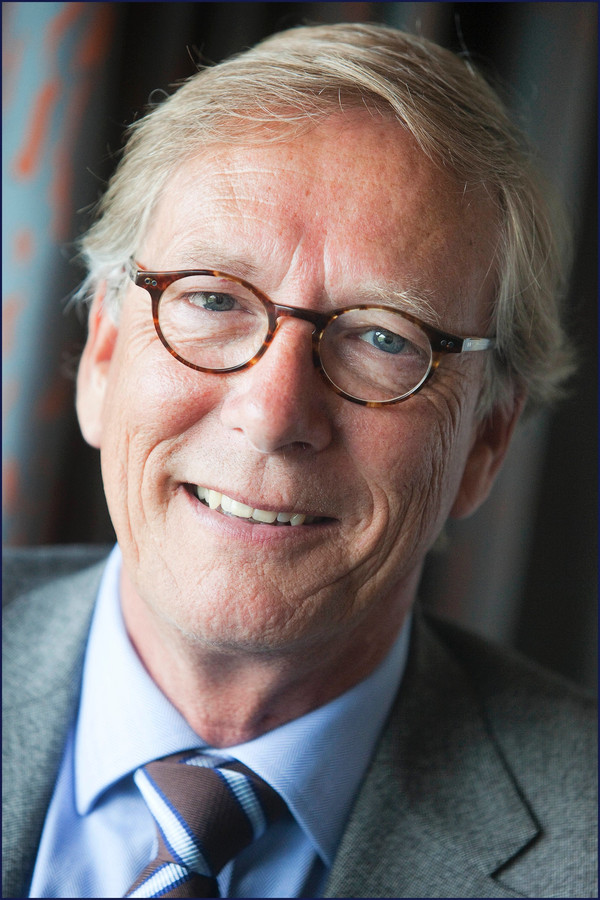
Jack Kruf

Gezien de huidige toestand van de samenleving en van natuurlijke ecosystemen, zou je verbaasd kunnen zijn over de resultaten van deze ontwikkelingsperiode van 2525 jaar. De Global Risks Reports, die sinds 2005 door het World Economic Forum worden gepubliceerd, vertellen hoe kritiek de toestand van de aarde is. Toen ik deze rapporten las, kreeg ik een flashback naar 1972, toen de Club van Rome feiten, bevindingen en cijfers presenteerde in haar rapport The Limits to Growth. Al minstens vijf decennia (dat is een halve eeuw!) weten we wat er gaande is en waar vele generaties leiders ons hebben gebracht.

Lees verder

Verbinders zonder script

Het topambtelijk vakmanschap van gemeentesecretarissen

Paul ’t Hart, Nicole Braham en Erik-Jan van Dorp | september 2016

De opdrachtgevers Gabriëlle Haanen, voorzitter Vereniging van Gemeentesecretarissen. Mark Frequin, voorzitter Vereniging voor OverheidsManagement en Sjaak van der Tak, voorzitter bestuur Stichting Innovatie, Kwaliteit en Professionaliteit van het Openbaar Bestuur in hun voorwoord:

“Geen zoektocht naar het handwerk van de publieke manager is compleet zonder inzicht in wat publieke managers nu eigenlijk precies doen als ze aan het werk zijn. Waar gaat hun aandacht naar uit? Waar besteden zij hun tijd aan, wat krijgt minder prioriteit, wat delegeren ze naar anderen, wat laten ze lopen? Welke keuzes maken zij daarbij – impliciet of expliciet – en welke factoren zijn van invloed op die keuzes? Ondanks het feit dat bestuurskundigen en andere sociale wetenschappers met grote regelmaat onderzoek doen naar ambtenaren, ambtelijke organisaties en publiek management, zijn de bovenstaande vragen in Nederland nog nauwelijks onderzocht.

Lees verder

The refugee issue in perspective

An analysis from both a value and a risk perspective

Jack Kruf | June 2016

In this essay, I examine the refugee issue from the perspective of values and risks. I arrive at several reflections. In my view, the issue at hand concerns our collective willingness and capacity to receive refugees and integrate them into our society. The issue moves us deeply.

Jack Kruf

The dynamics are intense. Our democratic system is creaking at the seams. Society is voicing its views on the literal and figurative boundaries. This is also a political and administrative issue. The public value of ‘balance and cohesion in society’ is coming under pressure due to the large influx. Politicians and administrators speak of public risks and how we need to do things differently.

Values and risks

Mark Moore defines public value as ‘the value that the government creates for its citizens and that citizens value’. These values are enshrined not only in the Dutch constitution but also, for example, in the Geneva Conventions, the Universal Declaration of Human Rights, and Roosevelt’s Four Freedoms.

This is where the connection lies. Public risks are linked to public values. Potential deviations from (public) values in the future are interpreted as risks. In this case, one could say: human devaluation in the broadest sense and social instability or disruption. Risk management in relation to our theme is therefore aimed at safeguarding the underlying values. And that, in turn, concerns the quality of reception, care for fellow human beings, streamlined procedures, and tackling the root causes of migration.

In the global discourse on identifying societal ‘risks’, the World Economic Forum ranks ‘large-scale involuntary migration, caused by conflicts, disasters, environmental or economic reasons’ among the top five. Refugee issues are long-term in nature, as they are closely linked to international conflicts between countries, state failure, climate change, and water crises.

It seems somewhat as though we have entered a new period of major population movements (the previous one was between 400 and 1000 AD). According to the Forum, the issue of ‘the refugee’ is taking on a structural character. It is here to stay… And that creates structural risks. In my view, the drivers of this are:

  • Protracted conflicts: 80% last longer than 10 years. The longer people are away from their homeland, the harder it is to return. They can no longer make a living ‘at home’, often lose family ties and their possessions, and suffer a loss of dignity. The lack of effective integration policies in most countries leads to the emergence of ghettos and isolated communities on the fringes of society, resulting in frustration, disillusionment and even radicalisation.
  • Lack of international commitment: many countries have either not signed the Geneva Convention or do not adhere to it. There is no enforcement mechanism for ‘refugee status’. Without this status, refugees find it much harder to find work, are not entitled to social assistance, or have no access to travel documents. They are second-class citizens.
  • Segregation and deliberate bureaucracy: many societies are unable to achieve the integration and inclusion of refugees and keep them at a distance in reception camps. Procedures are often lengthy and formal, and discouraging for refugees.
  • Lack of effective governance and failing infrastructure: migrants in developing countries with weak social and governance systems are in a particularly difficult position. In 2014, 86% of refugees lived in developing countries and 12% in less developed countries. Refugees place a significant strain on the national budget (up to 7%); only 2% reach the wealthy West.

Reflections

If we were to prioritise value-driven action by governments, combined with sound risk management, ideally the rest would follow naturally. In this context, risk management means working from ‘the intention’, focused on human dignity, respect and balance in society. This requires administrative leadership and professional management, particularly at the local authority level, as the ‘first line of government’.

In this context, administrators, managers and also care workers are, in fact, the frontline risk managers. They stand for decent hospitality in procedures, humane reception and support for refugees, and optimal communication with and transparency towards society.

It may also require us to think one step further, drawing on our own history. After all, many of our ancestors who later became successful were once refugees themselves. New blood in Dutch society also means new opportunities for us as a host society; with a boost to the economy through increased demand, an influx of knowledge and a rise in international contacts. This fits with the tradition of our entrepreneurial spirit. If we take the human being in all their dignity as our starting point, we must be able to manage the risks of migration…

Bibliography

Translated from original publication: Kruf, J. (2016). Over publieke waarden en risico’s: Een andere kijk op het vluchtelingenvraagstuk. WagenaarHoes Magazine, nummer 32.

Risk management at great events


Eric Frank en Jack Kruf | 2016

On 20 May 2016, PRIMO Netherlands organised a masterclass at Utrecht’s new city hall to further explore key aspects of risk management at major events. The final report on Le Grand Départ of the Tour de France by the municipality of Utrecht and the evaluation by Utrecht University, together with the Royal Couple’s visit to the municipality of Roosendaal in 2013, served as the starting point for the discussion.

This essay, based on a masterclass, examines these two successful events. What is the key to this success? How were uncertainties managed? What risks were anticipated?

We hear from two managers who were at the forefront of the branding and responsible for its success, and from a researcher who offers a critical analysis and draws conclusions. A fine combination for a dialogue yielding surprising insights.

“The whole world has to work together, something they normally rarely, if ever, do. An event is therefore a tremendous unifying factor. It is a form of higher intelligence, of advanced mathematics, a bit of luck and, above all, good weather.” – Martijn van Hulsteijn, project leader for Le Grand Départ 2015, Utrecht.

Lees verder

Le Grand Départ de Tour de France (fr)

Ville d’Utrecht : l’université et le conseil municipal évaluent le succès

Eric Frank et Jack Kruf | | janvier 2016

La ville d’Utrecht est membre de PRIMO Pays-Bas. En amont de cet événement spécial, de nombreuses discussions ont eu lieu concernant l’intégration de la gestion des risques dans l’approche. Lorsque l’organisation du projet a été mise en place en septembre 2014, Eric Frank (PRIMO Netherlands) et Jack Kruf (PRIMO Europe et WagenaarHoes), en étroite concertation avec Ilhan Tekir (conseiller financier de la ville d’Utrecht) et Martijn van Hulsteijn (directeur de projet pour le Grand Départ), ont organisé une table ronde pour l’équipe de projet de la ville d’Utrecht.

La table ronde s’est concentrée sur trois domaines principaux :

  • Les risques et incertitudes réels liés à l’événement lui-même.
  • Les risques liés à l’organisation du projet en termes de composition, de mode de fonctionnement, de communication interne et de positionnement par rapport à la structure hiérarchique habituelle de la municipalité d’Utrecht.
  • Le modèle et la méthodologie de gestion des risques à appliquer dans les domaines de l’analyse et de l’atténuation des risques, ainsi que l’assurance qualité au sein du projet.

La table ronde de juin 2014 a donné lieu à une discussion très ouverte impliquant tous les membres de l’organisation du projet au moment de sa mise en place. Elle a abouti à une analyse commune, à une attention plus rigoureuse portée à la gestion des risques et à son intégration permanente dans l’ensemble de l’organisation du projet, ainsi qu’à une répartition claire des tâches et des responsabilités, tant au niveau administratif qu’au niveau de la direction.

Le rapport d’évaluation de la municipalité présente les décisions finales prises au paragraphe 10.3 :

« Un modèle de gestion des risques et des opportunités a été mis en place à l’aide du référentiel COSO (en collaboration avec le service des finances de la municipalité et l’Organisation néerlandaise de gestion des risques publics, PRIMO). Les risques financiers et liés à la qualité ont ainsi été identifiés et font l’objet d’un suivi. Ces risques sont surveillés toutes les 6 à 8 semaines par les différentes subdivisions au sein de l’organisation du projet et gérés au moyen de mesures de contrôle appropriées. »

COSO

Cette méthode est l’une des normes internationales les plus largement utilisées en matière de gestion des risques. Il s’agit d’un cadre conçu principalement pour mettre en place et surveiller les contrôles internes. Elle est considérée comme un modèle de gestion des risques d’entreprise (ERM). Le Code Tabaksblat, le code néerlandais de gouvernance d’entreprise, cite le cadre COSO comme exemple de cadre normalisé pour l’évaluation du système interne de gestion et de contrôle des risques.


Le rapport final de la ville d’Utrecht et le rapport d’évaluation de l’université d’Utrecht (2015) décrivent l’événement comme suit :

« Dans son évaluation de l’impact social, organisationnel et économique du Tour de France à Utrecht, l’université d’Utrecht conclut que le Tour a été un grand succès à Utrecht. Le Tour a généré 25,3 millions d’euros pour la ville. Ce fut une immense fête qui s’est déroulée sans incident, marquée par un extraordinaire esprit communautaire. Elle félicite la ville d’Utrecht et l’organisation du projet pour la manière dont l’événement a été organisé : comme une fête mettant en avant de nombreuses collaborations entre le monde des affaires, les institutions de recherche et les organisations culturelles et sportives. Les conclusions de l’université d’Utrecht rejoignent parfaitement le rapport final rédigé par la ville d’Utrecht elle-même.

L’été dernier, le plus grand événement sportif annuel au monde s’est posé sur la ville d’Utrecht. Après 100 jours de préparation à l’arrivée du Tour à Utrecht à partir du 26 mars, avec pas moins de 250 activités, la période du 1er au 5 juillet 2015 a été une grande fête de, pour et par la ville.

L’arrivée du Tour à Utrecht a reçu des notes élevées : un 8,4 pour le week-end du départ du Tour et un 8,2 pour le programme d’animation. L’événement a généré un impact économique de 25,3 millions d’euros. De plus, une valeur médiatique d’au moins 35 millions d’euros a été réalisée (cette valeur médiatique mesurée se concentre principalement sur la couverture nationale dans la presse écrite et en ligne ; en réalité, elle est encore plus élevée). L’évaluation montre que tous les objectifs ont été atteints et que l’investissement de la municipalité dans l’événement a généré un excellent retour sur investissement.

Le Tour à Utrecht a été rendu possible grâce à un grand nombre de partenaires, d’entreprises, d’organisations et de « Tourmakers » basés à Utrecht. Il est ainsi devenu bien plus qu’un simple événement sportif, et Utrecht a réussi à donner à l’organisation une touche unique et personnelle.

Tous les objectifs atteints

L’université souligne qu’elle considère comme une réussite le fait que l’événement ait été réalisé avec un budget relativement limité. Le budget initial s’élevait à 15,4 millions d’euros. Le résultat financier fait partie du rapport final de la municipalité. Le projet s’est soldé par un déficit de 386 200 euros. Ce déficit est dû aux mesures prises en raison de la canicule, à la baisse des recettes de stationnement résultant du succès d’une campagne en faveur des transports publics et du vélo, ainsi qu’à des recettes légèrement inférieures de la part des partenaires privés.

La municipalité se félicite de ce rapport objectif et de grande qualité. La municipalité considère que l’évaluation confirme les conclusions de son propre rapport final et est fière des résultats. Selon elle, toutefois, les retombées économiques ont été présentées de manière quelque peu « prudente ». Afin de préserver efficacement l’énergie, les réseaux et les connaissances accumulés pendant le Tour, une assemblée a été mise en place. Il s’agit d’un réseau urbain destiné à renforcer davantage la collaboration établie, la capacité organisationnelle et le positionnement d’Utrecht.

L’évaluation réalisée par l’université d’Utrecht (2015) a été menée à la demande de la municipalité d’Utrecht dans le cadre d’un projet conjoint entre l’université d’Utrecht, l’université des sciences appliquées d’Utrecht, l’Institut Mulier, l’université des sciences appliquées d’Arnhem-Nimègue et l’université des sciences appliquées Hanze de Groningue. Cette évaluation est également importante pour la justification de la subvention auprès du ministère de la Santé, du Bien-être et des Sports. »

Dijk et al. (2016) concluent : « Le Grand Départ a été une grande fête de, pour et par la ville d’Utrecht. Les nombreux visiteurs ont attribué une note élevée au départ du Tour de France à Utrecht en juillet 2015. Le programme d’animation, qui a débuté 100 jours avant le départ, a été un succès. De plus, le Tour a généré un impact économique et une valeur médiatique significatifs, malgré un budget relativement limité. Voici quelques-unes des conclusions de l’étude sur l’impact social, organisationnel et économique du plus grand événement sportif annuel au monde : le Tour de France. La recherche a été menée par l’Université d’Utrecht en collaboration avec des chercheurs de l’Université des sciences appliquées d’Utrecht, de l’Université des sciences appliquées Hanze de Groningue et de l’Institut Mulier. »

Dans Frank & Kruf (2016), le chef de projet Martijn van Hulsteijn résume l’organisation de l’événement comme suit : « Le monde entier doit travailler de concert, ce qu’il fait rarement, voire jamais, en temps normal. Un événement est donc un facteur d’unité de premier ordre. C’est une forme d’intelligence collective, de mathématiques avancées, un peu de chance et, surtout, du beau temps. »Tout s’est mis en place, mais le mérite en revient à la municipalité d’Utrecht.

Bibliographie

Dijk, B., Hover, P., Slender, H., & Smits, F. (2016, januari). Le Grand Départ Utrecht 2015; van grote waarde voor Utrecht. SportKnowHowXL. Geraadpleegd op 4 juni 2025, van https://www.sportknowhowxl.nl/nieuws-en-achtergronden/column-xl/item/100546/le-grand-depart-utrecht-2015-3b-van-grote-waarde-voor-utrecht

Frank, E., & Kruf, J. (2016). Risicomanagement bij grote evenementen: Over de weg naar succes. In J.P. Kruf & E.J. Frank. Publiek Risico: Essays, Stichting Civitas Naturalis, 2020, pp. 336–359.

Gemeente Utrecht (2015). Eindrapportage Grand Départ Tour de France Utrecht 2015. Gemeente Utrecht.

Universiteit Utrecht (2015). Evaluatie Le Grand Départ Utrecht 2015. Faculteit Recht, Economie, Bestuur en Organisatie van Departement Bestuur- en Organisatiewetenschap (USBO).

Download Evaluation Le Grand Départ Utrecht 2015.
Le Grand Départ de Tour de France (en)

City of Utrecht: university and local council assess success

Eric Frank and Jack Kruf | | January 2016

The City of Utrecht is a member of PRIMO Netherlands. In the run-up to this special event, there have been extensive discussions about integrating risk management into the approach. When the project organisation was first set up in September 2014, Eric Frank (PRIMO Netherlands) and Jack Kruf (PRIMO Europe and WagenaarHoes), in close consultation with Ilhan Tekir (financial adviser to the City of Utrecht) and Martijn van Hulsteijn (project director for the Grand Départ), organised a round-table discussion for the City of Utrecht’s project team.

The round table discussion focused on three main areas:

  • The actual risks and uncertainties associated with the event itself.
  • The risks relating to the project organisation in terms of its composition, working style, internal communication and positioning in relation to the regular line organisation of the Municipality of Utrecht.
  • The risk model and methodology to be applied in the areas of risk analysis and mitigation, as well as quality assurance within the project.

The round table in June 2014 was a very open discussion involving all members of the project organisation as it was being established. It led to a shared analysis, a more rigorous focus on and permanent embedding of risk management throughout the project organisation, and a clear allocation of tasks and responsibilities, both at the administrative and management levels.dding van risicomanagement in het geheel van de projectorganisatie én een heldere belegging c.q. toebedeling van taken en verantwoordelijkheden, zowel ambtelijk als bestuurlijk.

Lees verder

Public administration and a provincial governor’s conviction

Hans Redert en Jack Kruf | 2015

An interview with Yves de Boer, a member of the Provincial Governing Council of North Brabant, offers an open insight into the relevant trends and developments concerning the governance of the public (provincial) sector. Many of the insights shared by the governor remain relevant today. The interview offers lessons on strengthening governance capabilities.

Governor Yves de Boer

Our conversation with him reveals a leader who instinctively connects with all stakeholders in often complex issues. It is this conviction about the desire to connect that has grown within him over many years of experience and wisdom. The driving forces behind bringing people together have become ingrained in his immediate thinking and actions within the public sphere of governance. An open conversation with a true connector and a sharp analyst.

Lees verder