The Kyoto Protocol was adopted on 11 December 1997 and entered into force on 16 February 2005. Owing to a complex ratification process, it currently has 192 Parties. The treaty follows the main principles agreed upon in the 1992 convention.
It operationalizes the United Nations Framework Convention on Climate Change by committing industrialized countries and economies in transition to limit and reduce greenhouse gas (GHG) emissions in accordance with agreed-upon individual targets. The Convention itself only asks those countries to adopt mitigation policies and measures and report periodically.
Never has good policy been so important. The challenges we face are complex and global, from unemployment and a lack of affordable housing to regulating cryptocurrencies and protecting against cybersecurity threats. The text explains how policymaking works, using examples from around the world, from the emergence of policy ideas to deciding between cutting-edge solutions, from evaluating policies to improving policymaking practices.
Open up the black box of government to see where policies are made. This introductory text takes you beyond theory and into the messy world of policymaking, offering a toolkit for making better policy. Drawing from insights earned through years of interactions with policymakers and extensive teaching experience, Boin and Lodge offer a comprehensive introduction to the inner workings of government and how to produce policies that address societal problems of today and tomorrow.
Strategisch management bij gemeenten in 2017: De toegevoegde waarde van gemeentesecretarissen nu en in de toekomst
Daphne Hubert, Anoep Singh, Peter Teunisse | juni 2017, PwC Nederland
Rol van lokale overheid verandert
Onze maatschappij verandert in hoog tempo. Verstedelijking, vergrijzing, digitalisering en macro-economische ontwikkelingen bieden zowel kansen als uitdagingen voor de publieke sector. De impact van deze globale trends en de beleidsvoering op (inter)nationaal en regionaal niveau is het meest zicht- en tastbaar op het lokale niveau door de directe interactie die daar plaatsvindt met burgers en het bedrijfsleven.
Daarnaast zijn er ontwikkelingen in het publieke domein zelf, zoals de decentralisatie in het sociale domein en de zorg en de nog in te voeren nieuwe omgevingswet, die ieder op zich hun specifieke impact hebben op gemeenten.
Als gevolg van al deze veranderingen zien wij dat de rol van de lokale overheid verandert. Wij bewegen meer en meer naar een participatiesamenleving waarbij de overheid in toenemende mate samenwerkt met burgers, bedrijven, onderwijsinstellingen en andere maatschappelijke instellingen. De overheid neemt hierbij steeds meer de rol aan van facilitator, mede-ontwikkelaar en niet langer die van (uitsluitend) regelgever en uitvoerder. De gemeente staat hierdoor nog dichterbij en naast de burgers en het bedrijfsleven in plaats van erboven.
Today, the framework has near-universal membership. The 198 countries ratified the Convention are called Parties to the Convention. The ultimate aim of the UNFCCC is to prevent “dangerous” human interference with the climate system.
The Convention recognized that there was a problem. The UNFCCC borrowed an essential line from one of the most successful multilateral environmental treaties in history (the Montreal Protocol, in 1987): it bound member states to act in the interests of human safety despite scientific uncertainty.
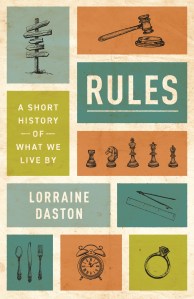
A short history of what we live by. A panoramic history of rules in the Western worldEen korte geschiedenis van wat ons leven bepaalt. • Een overzicht van de geschiedenis van regels in de westerse wereld
Rules order almost every aspect of our lives. They set our work hours, dictate how we drive and set the table, tell us whether to offer an extended hand or cheek in greeting, and organise life’s rites, from birth through death. We may chafe under the rules we have and yearn for ones we don’t, yet no culture could do without them. •Regels bepalen bijna elk aspect van ons leven. Ze bepalen onze werktijden, dicteren hoe we rijden en de tafel dekken, vertellen ons of we een uitgestoken hand of wang moeten geven ter begroeting en organiseren de rituelen van het leven, van geboorte tot dood. We kunnen ons ergeren aan de regels die we hebben en verlangen naar de regels die we niet hebben, maar toch zou geen enkele cultuur zonder deze regels kunnen.
In Rules, historian Lorraine Daston traces rules’ development in the Western tradition and shows how they have evolved from ancient to modern times. Drawing on a rich trove of examples, including legal treatises, cookbooks, military manuals, traffic regulations, and game handbooks, Daston demonstrates that while rules’ content is dazzlingly diverse, their forms are surprisingly few and long-lived. •In ‘Regels’ traceert historica Lorraine Daston de ontwikkeling van regels in de westerse traditie en laat ze zien hoe ze van de oudheid tot de moderne tijd zijn geëvolueerd. Aan de hand van een rijke schat aan voorbeelden, waaronder juridische verhandelingen, kookboeken, militaire handleidingen, verkeersregels en spelhandboeken, laat Daston zien dat terwijl de inhoud van regels duizelingwekkend divers is, hun vormen een verrassend beperkt scala hebben en langlevend zijn.