A Case for an Integrated Governance Clause

On the alignment of content and governance

Michel Klompmaker | 2018

During the Local Government Risk Conference on 17 January 2018 at the Provincial Government Building in Utrecht, a group of experts discussed the key aspects of governance and control as they relate to municipal organisations.
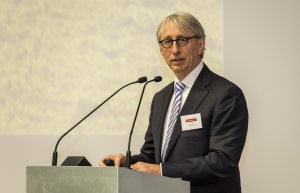
Jack P. Kruf during his keynote speech at the Provincial Government Building in Utrecht. (2018), Risk & Compliance Platform Europe

In his keynote, Jack Kruf advocated for a much stronger link between policy content and policy direction. Given the multitude of interests and stakeholders, the segmentation of expertise and levels of government, as well as the fragmentation of knowledge surrounding issues, he believes that local authorities would be wise to take more time for an ex ante governance clause.

What council would not want its programme to be implemented optimally and effectively? According to him, this does, however, require genuine dialogue and engagement with all stakeholders at the outset. So not just more programme adoptions that focus purely on content, but also explicitly highlight their governance.

Governance in itself – in programmes and agreements by councils and executive bodies – therefore demands our full attention. The quality of public governance has become part of the quality of the public sphere and, consequently, of the public debate. We can no longer avoid explicitly addressing and embedding governance ex ante.

According to Kruf, this governance section is much more than the current ‘risk management and resilience’ section. The latter merely lifts a corner of the veil, and even then only in financial terms. Not unimportant, but resilience is no longer exclusive; it is often purely financially focused, written from a defensive and safeguarding perspective, and does not really address other relevant governance variables, relationships, and connections that play a role in the genuine administration and management of the city, its innovation, and development.

Resilience is good, but not inspiring enough and, moreover, technically wholly inadequate to enable us to discover and dare to explore new paths and set out on them. He quotes a councillor and a mayor from the network:

“Resilience is a theoretical exercise that paints a false picture of reality. I’ve never understood it. More than once, it has served as a smokescreen under which a project was sold.” – Councillor.

“Resilience serves to enable the council to account for its actions in broad terms, rather than to steer them. In practice, other forces – including political ones – determine whether a project is or should be feasible.” – Mayor.

According to Kruf, the new, much broader governance section should describe and (administratively) set out how the council’s programme itself can be steered and managed, and what specific roles the council, the executive committee, and the civil service organisation play in this, alongside social actors and institutions. The section should highlight all elements of governance necessary for performance, results and success. According to him, there are five elements that must be present simultaneously for this to be effective. These are:

  1. Sound financial design and compliance, going hand in hand and, above all, realistic.
  2. A focus by the administration and senior management on the target group (the citizen, the neighbourhood, the young person), on the objective and on the actual delivery of products and services.
  3. Public leadership and stewardship that connects and stands up for its cause.
  4. Tools and organisational capacity to bring plans to fruition.
  5. Focus on the environment: horizontally towards fellow local authorities, market parties and relevant interest groups; vertically towards higher-level authorities, towards sections of society and towards the natural environment and its carrying capacity.

When launching a new programme, a municipal executive could ask its municipal secretary and group controller to draw up a proposal for this governance section. As leading experts in command and control, they are ideally placed to advise the executive on this matter. Indeed, they may be better suited to do so, as they understand the entire landscape. In this section, the five points mentioned above are linked to the executive’s programme.

It goes without saying that governance itself also requires investment. The world is changing, as are the players, and so too must governance. Sometimes this involves the appropriate structuring of a project, process or programme, but it may also concern the development of new roles, thinking in terms of new scenarios, the reorganisation of organisational units, entering into different forms of collaboration or contractual arrangements, or communicating differently with citizens and businesses. Governance itself must then also be budgeted for, regarded as a critical success factor, and embedded. Quality governance costs money, but it also delivers greater returns and can no longer be regarded as merely an afterthought to the substance.

The governance section is, in anticipation of the council’s own in-control statement to be issued in the near future, actually a logical concept. Governance itself thus becomes a fully-fledged factor within the political and administrative sphere. Something that was sorely needed, however contradictory this may sound. Governance too often appears to be a stepchild, resulting in significant public risks.

Kruf cites several examples in his argument. He also quotes from the World Economic Forum’s Global Risks Report 2018, published on the same day. The governance section could broaden the basis for lawful action, both administratively and within the civil service. After all, every euro of taxpayers’ money must be handled with care. And good governance helps with that, he is convinced.

In Kruf’s view, a council programme with a sound and widely supported governance section serves as an inspiration for the success not only of the municipality as an organisation, its executive or council, but also of the municipality as a community of citizens, businesses and institutions, as well as the municipality as a geographical area. In his view, ‘control’ will take on a much more proactive role than it currently does. The reactive role is ‘out’, the proactive role is ‘in’. Control should be able and allowed to play that role. In the coming years, the field of control could evolve into that of governance architecture.

This calls for a new mindset among managers, namely the willingness to bring this knowledge to the forefront of the process. That is not the case at present. Utilising the knowledge, insights, expertise, and skills of (group) controllers and managing directors may well be essential for developing the necessary management capacity. The link between substance and integrated business management, in other words. More, therefore, than just finance and compliance. This is not only challenging but, in fact, calls for a broad reassessment of the expertise of both command and control.

The world has entered a new dynamic. And we know – as Herman Gorter opened his 1889 book ‘Mei’: “A new spring and a new sound…”. In this new spring, substance and governance must be much better linked. The integrated governance section can help with this.

Bibliography

Klompmaker, M. (2018, 25 januari). Integrale Besturingsparagraaf. Risk Compliance Platform Europe. Geraadpleegd op 17 december 2024, van https://www.riskcompliance.nl/news/integrale-besturingsparagraaf/

Kruf, J. (2018). PRIMO bepleit Besturingsparagraaf: Van weerstandsparagraaf naar corporate sturing. In J.P. Kruf & E.J. Frank. Publiek Risico: Essays, Stichting Civitas Naturalis, 2020, pp. 708–713.
PRIMO Kaleidoscope

Education for good public governance*

PRIMO | April 2012

Introduction

Kaleidoscope is an internationally developed educational program that provides a holistic, dialogue-oriented approach to public risk. Discussing relevant themes such as cybersecurity, social cohesion, city management, adaptation to climate change, proper water management, and added-value through partnership, and getting familiar with the best concepts, methods, and techniques to manage risk, and learning from authoritative scientists and practitioners. 

The program provides insight into how public values and risks intersect, as well as how to design effective governance mechanisms. The education program consists of three main perspectives and is offered in a modular format with capita selecta:

  1. Craftsmanship of risk management (general overview of risks, drivers, frameworks, techniques).
  2. Establishment and governance of specific values (i.e., topic-related approach of risk, resilience, scenarios, from the organisation and client perspective).
  3. Personal skills (how to act, interact, communicate, learn, and develop yourself).
Lees verder →

Risicoverkenning in Vlaanderen

Ronde tafel in raadszaal Temse

Tom Baele, Luc Verhulst en Tom Wustenberghs | april 2013

De bijeenkomst in de raadszaal van de gemeente Temse biedt een uitgebreide kijk op risicomanagement binnen publieke organisaties. De vraag staat centraal hoe het beheer van risico’s in het publieke domein in te richten, Daarbij staat het creëren van publieke waarde centraal. Er worden diverse concepten en benaderingen  die overheden tegenkomen bij het realiseren van hun doelen, besproken. Luc Verhulst, gemeentesecretaris van Temse, is gastheer. Tom Wustenberghs, voorzitter van PRIMO Vlaanderen is dagvoorzitter. Een verslag.

Wapen van Vlaanderen

Inleiding

De presentatie door Jack Kruf, president van PRIMO Europe begint met een inleiding die erop gericht is om inzicht en overzicht te bieden met betrekking tot het (nieuwe) vakgebied publiek risicomanagement. De toon wordt gezet door te wijzen op de noodzaak van een holistische benadering van steden en hun geschiedenis. Dit wordt gelinkt aan de bredere context van risicomanagement, dat in feite ondersteunend en vooral dienend is aan de versterking van goed rentmeesterschap door de gemeentesecretaris en zijn managementteam.

Lees verder →

Think Tank ‘From Global to Local’ 2014

Gérard Combe and Jack Kruf, board members of the international PRIMO Europe association, proposed the idea at their May 2013 meeting in Brussels to bring global developments to local governments through a think tank model.

Union des Dirigeants Territoriaux de l’Europe (UDITE), the foremost professional network for Chief Executives and senior managers in the public sector in Europe and Public Risk Management Organisation (PRIMO), the leading international network for the development of products and the dissemination of knowledge and strategic information for the public sector in Europe, joined forces to launch the Think Tank ‘From Global to Local’. It is considered a formal joint project between the two organisations. It was elaborated and applied in the first Think Tank, held in Amsterdam.

The first Think Tank in March 2014 was organised by Jack Kruf, in close cooperation with Eric Frank (director of PRIMO Nederland), and Ronny Frederickx (member of the Executive Committee of UDITE). He was accompanied by Marie Dequae (University of Gent), Ed Mallens (ISO 31000 expert and risk manager), and John O’Dea (president of PRIMO Malta). 

It was agreed that it would be a formal collaboration where content meets craftsmanship, and that global risks should be discussed from the perspective of local and regional governance.

Lees verder →

Denktank ‘From Global to Local’ 2016

Wereldwijde risico’s en lokaal leiderschap

Op 22 april 2016 richtte een multidisciplinaire groep van professionals zich ten kantore van BNG Bank te Den Haag op het Global Risks Report 2016 van het World Economic Forum en besprak de vertaling ervan naar de lokale en regionale Nederlandse praktijk.

Global Risks Report 2016

De denktank maakt onderdeel uit van een internationaal programma dat de presidenten van de Internationale Vereniging van Gemeentesecretarissen in Europa (UDITE) en Public Risk Management Organisation (PRIMO) Europe gezamenlijk hebben geïnitieerd. Doel ervan is om significante publieke risico’s met elkaar te bespreken en nader uit te diepen met veel aandacht voor mogelijkheden en onmogelijkheden voor overheden en bedrijven om tot een realistisch perspectief van feitelijk handelen – besturen en managen – te komen.

PRIMO en UDITE kiezen daarbij voor een multi-disciplinaire samenstelling van de groep, opdat alle invalshoeken vanuit zowel het publieke als private domein aan bod kunnen komen en belicht in deze 3e Denktank Nederland “From Global to Local”. De gedeelde theses zijn per lid van de denktank samengebracht.

Lees verder →

Denktank ‘From Global to Local’ 2017

Cyberstrategie (Lambrecht Nieuwehuize) en Waterbeheerrisico’s (Martin Kuipers)

Jack Kruf en Eric Frank | maart 2017

Union des Dirigeants Territoriaux de l’Europe / European Association for Local Government Chief Executives en PRIMO (Public Risk Management Organisation), de enige vereniging in Nederland die zich richt op risicomanagement in het publieke domeinen heeft in Nederland BNG Bank als partner. Vertrekpunt dit jaar zijn de inzichten in de publieke risico’s verbonden met cyber security en water.

Kader

Wereldwijd valt er nogal wat te rapporteren over trends en ontwikkelingen, kansen en bedreigingen, onzekerheden en risico’s met betrekking tot de staat van onze planeet. Het World Economic Forum (WEForum) publiceerde begin januari haar bevindingen in het Global Risks Report 2017.

Conclusie naar aanleiding van de resultaten is dat deze staat zeer zorgelijk is en de aard en omvang van risico’s snel toenemen. De mensheid veroorzaakt spanningen, ontwrichtingen, grootschalige vervuiling en verwaarlozing. De kwaliteit van de aarde en daarmee van onze eigen leefbaarheid komt steeds verder onder druk, zo blijkt uit de analyses. Het rapport geeft de lezer inzicht en doorzicht wat de samenhang der dingen is. De diagnoses zijn feitelijk en scherp.

Lees verder →

PRIMO Risk Management Award 2015

Uitgereikt te Utrecht op 15 oktober 2016 aan de gemeente Utrecht

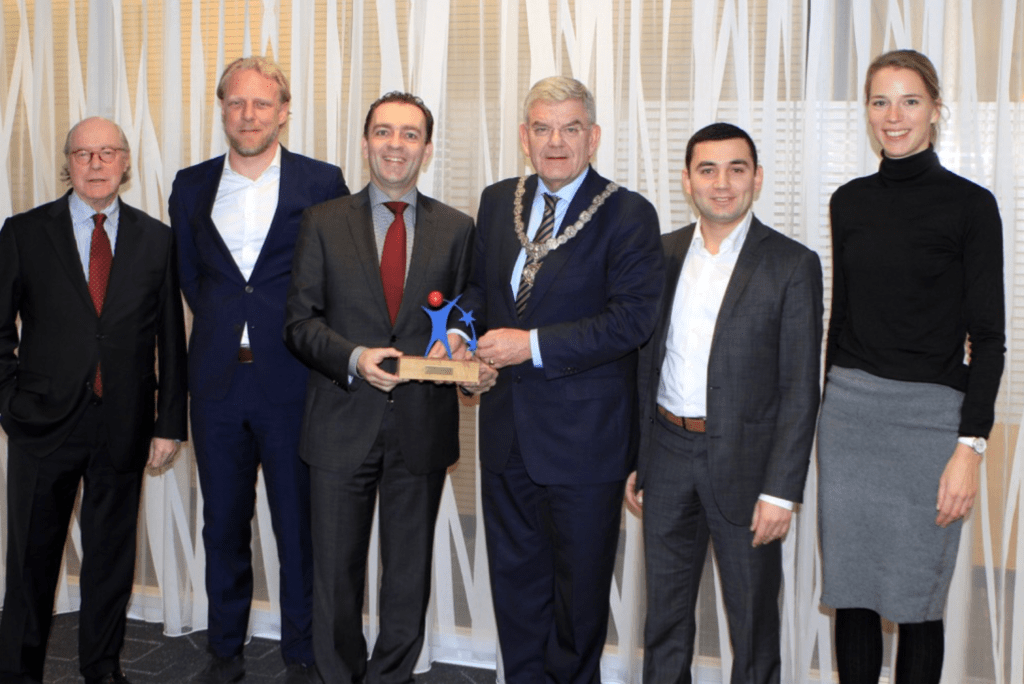
Het bestuur van PRIMO Nederland, Public Risk Management Organisation,  heeft de PRIMO Risk Management Award 2015 toegekend aan de gemeente Utrecht voor de uitmuntende organisatie van Le Grand Départ de Tour de France 2015.

De prijs werd ten kantore van de gemeente Utrecht uitgereikt door de voorzitter van PRIMO Nederland Michel Bezuijen (burgemeester Rijswijk) aan de heer Jan van Zanen, burgemeester van Utrecht.

v.l.n.r. Eric Frank (directeur PRIMO Nederland), Martijn van Hulsteijn (projectdirecteur Le Grand Départ de Tour de France), Michel Bezuijen (voorzitter PRIMO Nederland), Jan van Zanen (burgemeester Utrecht), Ilhan Tekir (financieel adviseur gemeente Utrecht) en Anneke van der Kluit (projectsecretaris en risicomanager Le Grand Départ de Tour de France).

Deze toekenning van de award is mede gebaseerd op het positieve evaluatierapport opgesteld door de Universiteit van Utrecht. Tevens is  het creëren voor het projectteam van awareness van risicomanagement en de feitelijke implementatie een belangrijk aspect geweest.

Zowel gedurende de voorbereiding als tijdens het evenement onder leiding van projectdirecteur Martijn van Hulsteijn, en onder ambtelijke verantwoordelijkheid van gemeentesecretaris Maarten Schurink en bestuurlijke verantwoordelijkheid van het College van Burgemeester en Wethouders, heeft de gemeente Utrecht een voorbeeld-organisatie van een groot evenement laten zien.

Lees verder →