Grenzen aan de groei

Over het dilemma van de mensheid

Donella Meadows, Dennis Meadows, Jørgen Randers en William Behrens III | 1972

In maart 1972 schokte een rapport van een groep jonge wetenschappers aan het Massachusetts Institute of Technology (MIT), in opdracht van Aurelio Peccei, oprichter van de Club van Rome, de wereld. Het rapport blinkt uit in systeemdenken en modellering en is daardoor actueler dan ooit. Het handelt over publieke waarden en hun risico’s.
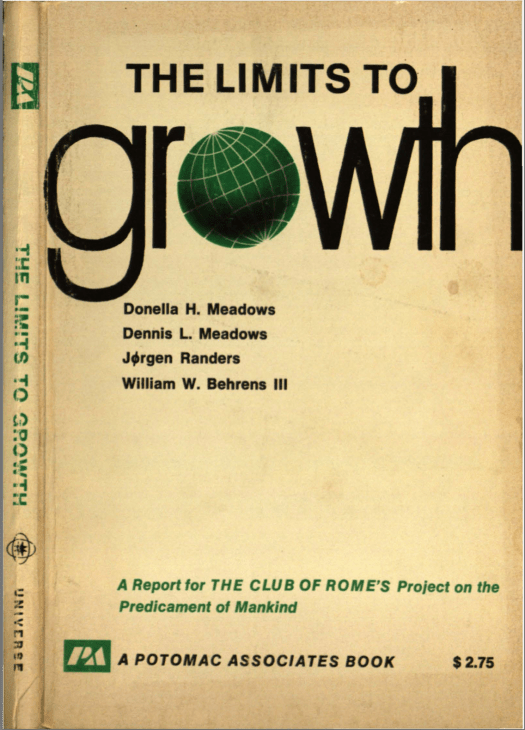
Nog steeds wordt “The Limits to Growth” beschouwd als een van de belangrijkste en meest controversiële milieuboeken aller tijden en blijft het gesprekken over duurzaamheid en ons voortbestaan op deze eindige planeet beïnvloeden. Hieronder volgt het verhaal achter deze baanbrekende publicatie.

Lees verder

Environmental Protection Agency (EPA)

Dit moment in de tijd is gekozen omdat overheid expliciet handelt bij het managen van publieke waarden, zijnde de bescherming van natuurlijke rijkdommen. Het is een voorbeeld  hoe met de analyse van risico’s, zijnde de verdere aftakeling van ecosystemen, effectief maatregelen kunnen worden genomen.

Deze organisatie werd opgericht als een onafhankelijk uitvoerend agentschap van de federale overheid van de Verenigde Staten, belast met milieubeschermingszaken. Vanaf eind jaren 1950 tot in de jaren 1960 reageerde het Amerikaanse Congres op de toenemende bezorgdheid van het publiek over de invloed die menselijke activiteiten op het milieu zouden kunnen hebben.

Lees verder

Silent Spring

Rachel Carson | 1962

In haar boek is Rachel Carson onomwonden en direct in het uitspreken van waarden voor mens en natuur, én van de bedreigingen door gebruik en misbruik van chemische pesticiden zoals DDT. Zij stelt de scope van de wetenschap aan de kaak en duidt concreet de gevaren (risico’s) voor genoemde waarden. Hier ligt één van de beginpunten van publiek risicomanagement. Het boek heeft tevens de basis gelegd voor de milieubeweging. Lees verder

Environmental Protection Agency (EPA)

US Government | December 1970

This organisation was founded as an independent executive agency of the United States federal government tasked with environmental protection matters. Beginning in the late 1950s and through the 1960s, US Congress reacted to increasing public concern about the impact that human activity could have on the environment.

Logo by Chermayeff & Geismar Associates

In 1959 congress passed the Resources and Conservation Act to establish a Council on Environmental Quality in the Executive Office of the President and declared a national environmental policy, which required the preparation of an annual environmental report. The groundwork for the Environment Protection Agency was laid.

Lees verder

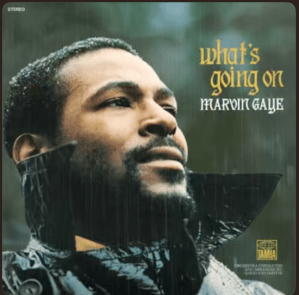
Mercy Mercy Me (The Ecology)

Marvin Gaye | 1971

Woah, ah, mercy, mercy me
Ah, things ain’t what they used to be (ain’t what they used to be)
Where did all the blue skies go?
Poison is the wind that blows
From the north and south and east

(Listen to song on Apple Music or Spotify)

Woah, ah, mercy, mercy me
Ah, things ain’t what they used to be (ain’t what they used to be)
Where did all the blue skies go?
Poison is the wind that blows
From the north and south and east

Woah, mercy, mercy me, yeah
Ah, things ain’t what they used to be (ain’t what they used to be)
Oil wasted on the ocean and upon our seas
Fish full of mercury

Oh Jesus, yeah, mercy, mercy me, ah
Ah, things ain’t what they used to be (ain’t what they used to be)
Radiation underground and in the sky
Animals and birds who live nearby are dying

Hey, mercy, mercy me, oh
Hey, things ain’t what they used to be
What about this overcrowded land?
How much more abuse from man can she stand?

Oh, na, na, na
Oh, oh, oh, oh, oh
Hey, ooh, woo

Bibliography

Gaye, M. (1971) Mercy Mercy Me (The Ecology). Album: What’s Goin on. Detroit: Motown.

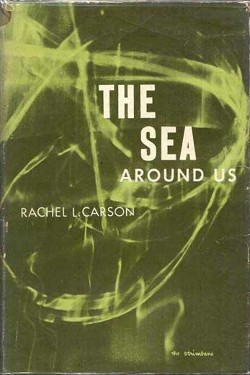
The Sea Around Us

Rachel Carson | July 1951

Here is the strange story of the seas – how they were born, how life emerged from them, and the marine world within them. Rachel Carson’s writing teems with images – the newly-formed Earth cooling beneath an endlessly overcast sky; volcanic action throwing up huge masses on the ocean floor to create immense mountains and desolate canyons; giant squid battling sperm whales hundreds of fathoms below the surface.

A new chapter by Jeffrey Levinton brings the science of “The Sea Around Us” up to date. Levinton incorporates the most recent thinking on continental drift, coral reefs, the spread of the ocean floor, the deterioration of the oceans, the mass extinction of sea life, and many other topics. First published in 1951, this work won the 1952 National Book Award.

“Published in 1951, The Sea Around Us is one of the most remarkably successful books ever written about the natural world. Rachel Carson’s rare ability to combine scientific insight with moving, poetic prose catapulted her book… It inspired an Academy Award-winning documentary and won the 1952 National Book Award and the John Burroughs Medal. This classic work remains as fresh today as when it first appeared.”

Today, with the oceans endangered by the dumping of medical waste and ecological disasters such as the Exxon oil spill in Alaska, this illuminating volume provides a timely reminder of both the fragility and the importance of the ocean and the life that abounds within it. Anyone who loves the sea, or who is concerned about our natural environment, will want to read this classic work.

Bibliography

Carlson, R. (1951) The Sea Around Us. Oxford: Oxford University Press