Andrew Healy, Loyola Marymount University, and Neil Malhotra, Stanford University | 2009
In our democratic system, citizens vote for their representative politicians, elected councils, public leaders, governors, and governing councils. But what about citizens’ perceptions of how risks are handled by their leaders, and what about citizens’ appreciation of proactive thinking by councillors related to public risks when it comes to voting?
Quote: “Do voters effectively hold elected officials accountable for policy decisions? Using data on natural disasters, government spending, and election returns, we show that voters reward the incumbent presidential party for delivering disaster relief spending, not investing in disaster preparedness spending. These inconsistencies distort the incentives of public officials, leading the government to underinvest in disaster preparedness, thereby causing substantial public welfare losses.”
“We estimate that $1 spent on preparedness is worth about $15 in terms of the future damage it mitigates.”
“By estimating both the determinants of policy decisions and the consequences of those policies, we provide more complete evidence about citizen competence and government accountability.”
Bibliography
Healy, A. and Malhotra, N. (2009) Myopic Voters and Natural Disaster Policy. American Political Science Review: Vol. 103, No. 3 August
Meerlagig bestuur vormt een essentieel onderdeel van het navigeren door de publieke sector. Net als in de natuur zijn er invloeden die op en neer gaan tussen de lagen van het ecosysteem. Als stadsmanager en gemeentesecretaris heb ik bijvoorbeeld het komen en gaan ervaren van nationale beleidsplannen, regels en wetgeving naar beneden toe, en financiële en politieke invloeden naar boven toe, evenals de samenwerking tussen verschillende bestuurslagen bij complexe projecten of programma’s. Maar wat is meerlagig bestuur precies? Waar komt de term vandaan? Hoe wordt deze gebruikt? Een korte studie.
Het is een benadering in de politicologie en de theorie van het openbaar bestuur die voortkomt uit studies over Europese integratie. Volgens Piattoni (2001) ontwikkelden politicologen Liesbet Hooghe en Gary Marks het concept van multi-level governance in het begin van de jaren negentig.
In popular imagination, rocket science is the totemic example of scientific complexity. As Britain’s leading academic expert on risk, I will argue here that risk management is in fact much more complex. To put it another way, the scientist studying turbulence “the clouds do not react to what the weatherman or physicist says about them”. The risk manager must, however, deal not only with risk perceived through science, but also with virtual risk – risks where the science is inconclusive and people are thus “liberated to argue from, and act upon, pre-established beliefs, convictions, prejudices and superstitions.”
Professor John Adams
The affluent world is drowning in risk assessments. Almost everyone now has a “duty of care” to identify formally all possible risks to themselves, or that they might impose on others, and to demonstrate that they have taken all reasonable steps to “control” them. It is not clear that those imposing this duty of care appreciate the magnitude and difficulty of the task they have set.
In 2004 I participated in a conference on terrorism, World Federation of Scientists’ International Seminar on Terrorism, Erice, Sicily. Most of the other participants were eminent scientists, and I found myself in a workshop entitled Cross-disciplinary challenges to the quantification of risk. Lord Kelvin famously said:
“Anything that exists, exists in some quantity and can therefore be measured.”
This dictum sits challengingly alongside that of another famous scientist, Peter Medewar who observed:
“If politics is the art of the possible, research is the art of the soluble. Both are immensely practical minded affairs. Good scientists study the most important problems they think they can solve [my emphasis]. It is, after all, their professional business to solve problems, not merely to grapple with them.”
Terrorism undoubtedly exists, and some of its consequences can be quantified. One can count the numbers killed and injured. With the help of insurance companies one can have a stab at the monetary value of property destroyed and, for those with business continuity insurance, the value of business lost. But what units of measurement might be invoked to calculate the impact of the terror that pervades and distorts the daily life of someone living in Chechnya, or Palestine, or Darfur or …. ? Or the loss of civil liberties resulting from the anti-terrorism measures now being imposed around the world.
The problem becomes more difficult when one moves on to the challenge of quantifying the risk of terrorism. Risk is a word that refers to the future. It has no objective existence. The future exists only in the imagination. There are some risks for which science can provide useful guidance to the imagination. The risk that the sun will not rise tomorrow can be assigned a very low probability by science. And actuarial science can estimate with a high degree of confidence that the number of people killed in road accidents in Britain next year will be 3500, plus or minus a hundred or so. But these are predictions, not facts. Such predictions rest on assumptions; that tomorrow will be like yesterday; that next year will be like last year; that future events can be foretold by reading the runes of the past. Sadly, the history of prediction contains many failures – from those of stock market tipsters to those of vulcanologists seeking to predict eruptions, earthquakes and tsunamis.
Type “risk” into an Internet search engine and you will get over 100 million hits. You need sample only a small fraction to discover many unnecessary, and often acrimonious, arguments. Risk is a word that means different things to different people. It is a word that engenders a sense of urgency because it alludes to the probability of adverse, sometimes catastrophic, outcomes. Much of the acrimonious urgency, or the urgent acrimony, that one uncovers searching for “risk” on Google, stems from a lack of agreement about the meaning of the word. People are using the same word, to refer to different things, and shouting past each other.
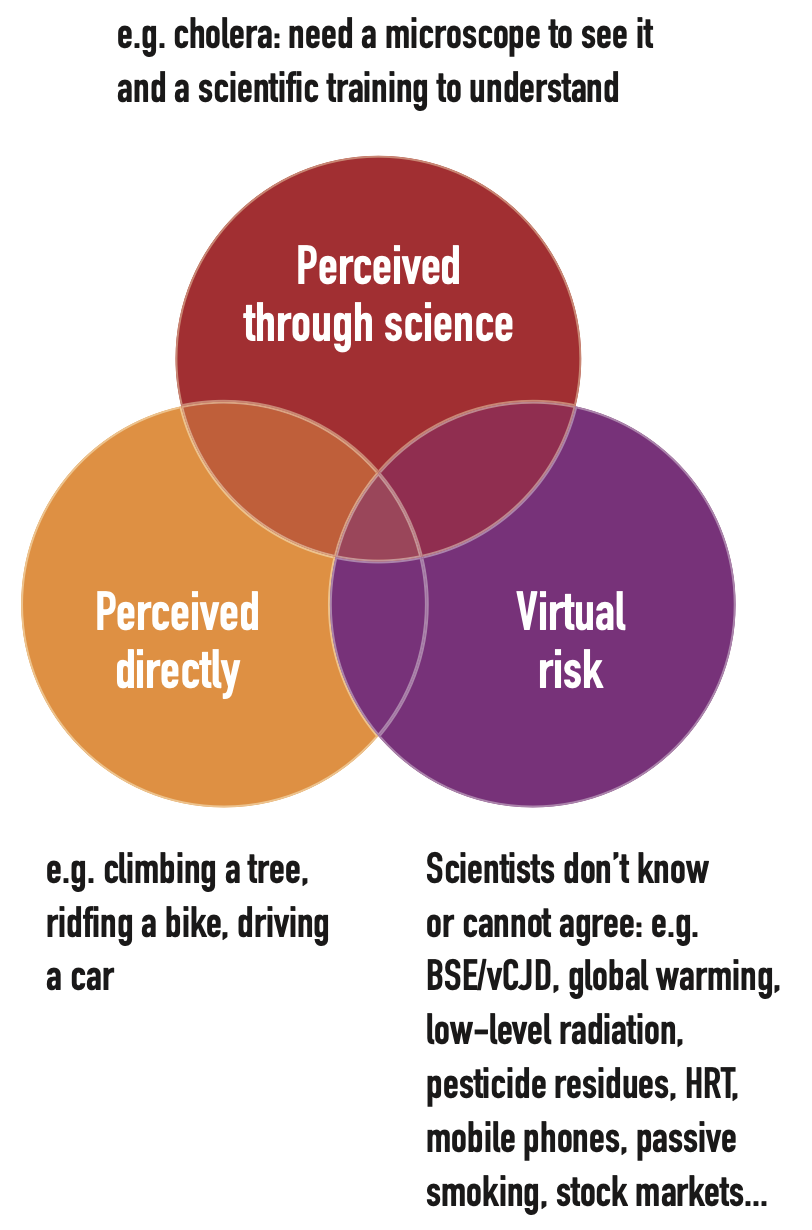
Figure 1 is proffered in the hope of clearing away some unnecessary arguments.
Figure 1.
Directly perceived risk (much operational risks) are dealt with using judgement – a combination of instinct intuition and experience. One does not undertake a formal, probabilistic, risk assessment before crossing the road. Crossing the road in the presence of traffic involves prediction based on judgement. One must judge vehicle speeds, the gaps in traffic, one’s walking speed, and hope one gets it right, as most of us do most of the time.
Most of the published literature on risk management falls into the category of risk perceived through science. Here one finds not only biological scientists in lab coats peering through microscopes, but physicists, chemists, engineers, doctors, statisticians, actuaries, epidemiologists and numerous other categories of scientist who have helped us to see risks that are invisible to the naked eye. Collectively they have improved enormously our ability to manage risk – as evidenced by the huge increase in average life spans that has coincided with the rise of science and technology.
But where the science is inconclusive we are thrown back on judgement. We are in the realm of virtual risk. These risks are culturally constructed – when the science is inconclusive people are liberated to argue from, and act upon, pre-established beliefs, convictions, prejudices and superstitions. Such risks may or may not be real but they have real consequences. In the presence of virtual risk what we believe depends on whom we believe, and whom we believe depends on whom we trust.
A participant at the conference on terrorism was one of the world’s foremost experts on turbulence, notoriously the most intractable problem in science. In the mythology of physics Werner Heisenberg is reported as saying:
“When I meet God, I am going to ask him two questions: Why relativity? And why turbulence? I really believe he will have an answer for the first.”
I would trust the physicist I met at the conference to tell me the truth about turbulence, so far as he knew it. But the problems he is studying are simple compared to those of the risk manager, because the clouds do not react to what the weatherman or physicist says about them.
We are all risk managers. Whether buying a house, crossing the road, or considering whether or not to have our child vaccinated, our decisions will be influenced by our judgement about the behaviour of others, and theirs by their judgements about what we might do. The world of the risk manager is infinitely reflexive. In seeking to manage the risks in our lives we are confronted by a form of turbulence unknown to natural science, in which every particle is trying to second guess the behaviour of every other. Will the vendor accept less in a falling market? Will the approaching car yield the right of way? Will enough other parents opt for vaccination so that my child can enjoy the benefits of herd immunity while avoiding the risks of vaccination? And, increasingly, if things go wrong, who might sue me? Or whom can I sue? The risk manager is dealing with particles with attitude.
Another participant at the conference, alert to the strict limits of natural science in the face of such turbulence, warned that we were in danger of becoming the drunk looking for his keys, not in the dark where he dropped them, but under the lamp post where there was light by which to see.
This caution prompted the re-drawing of Figure 1. Figure 2 is an attempt to highlight the strict limits to the ability of science to foretell the future.
Fig. 2. Three types of risk (re-draw). An attempt to highlight the strict limits to the ability of science to foretell the future.
In the area lit by the lamp of science one finds risk management problems that are potentially soluble by science. Such problems are capable of clear definition relating cause to effect and characterized by identifiable statistical regularities. On the margins of this area one finds problems framed as hypotheses and methods of reasoning, such as Bayesian statistics, which guide the collection and analysis of further evidence. As the light grows dimmer the ratio of speculation to evidence increases. In the outer darkness lurk unknown unknowns. Here lie problems with which, to use Medawar’s word, we are destined to “grapple”.
As the light of science has burned brighter most of the world has become healthier and wealthier and two significant changes have occurred in the way in which we grapple with risk. We have become increasingly worried about more trivial risks, and the legal and regulatory environments in which we all must operate as individual risk managers have become more turbulent. As the likelihood of physical harm has decreased the fear, and sometimes the likelihood, of being sued has increased.
As the light of science has burned brighter most of the world has become healthier and wealthier and two significant changes have occurred in the way in which we grapple with risk. We have become increasingly worried about more trivial risks, and the legal and regulatory environments in which we all must operate as individual risk managers have become more turbulent.
Perhaps the clearest demonstration of this can be found in the increase in the premiums that doctors must pay for insurance, and the way this varies according to the type of medicine practiced. The Medical Protection Society of Ireland has four categories of risk: low, medium, high and obstetricians. Between 1991 and 2000 the premium charged to those in the low category increased by 360 percent to €9854, and that charged to obstetricians increased by 560 percent to € 54567.
Measured in terms of its impact on peri-natal mortality rates, obstetrics and gynecology can claim a major share of the credit for the huge increases in average life expectancy over the last 150 years. This most successful medical discipline is now the most sued – so successful that almost every unsuccessful outcome now becomes a litigious opportunity. I don’t know of any risk assessment that predicted that.
There is a distinction, frequently insisted upon in the literature on risk management, between “hazard” and “risk”. A hazard is defined as something that could lead to harm, and a risk as the product of the probability of that harm and its magnitude; risk in this literature is hazard with numbers attached. So, relating this terminology to Figures 1 and 2, it can be seen that risk can be placed in the circle “perceived through science” while the other two circles represent different types of hazard.
Typing “hazard management” into Google at the time of writing yielded 70,000 hits; “risk management” 12 million. The number of potential harms in life to which useful numbers can be attached is tiny compared to the number through which we must navigate using unquantified judgement. The Kelvinist, rocket-science approach to virtual risks, with its emphasis on the quantitatively soluble, threatens to divert attention from larger, more complicated, more urgent problems with which we ought to be grappling.
Bibliography
Adams, J. (2007). Risk Management: It’s Not Rocket Science – It’s Much More Complicated, Public Risk Forum, Edition May 2007, pp. 9-11.
In March 1972, a report by a group of young scientists at the Massachusetts Institute of Technology (MIT) commissioned by Aurelio Peccei, founder of The Club of Rome, shook the world. The report excels in system thinking and modelling and in that it is more actual than ever.
Today, 50 years after its publication, “The Limits to Growth” is considered one of the most important and controversial environmental books of all time and it continues to influence conversations around sustainability and our continued existence on this finite planet. Below is the story behind this ground-breaking publication.
Published 1972 – The message of this book still holds today: The earth’s interlocking resources – the global system of nature in which we all live – probably cannot support present economic and population growth rates much beyond the year 2100, if that long, even with advanced technology. In the summer of 1970, an international team of researchers at the Massachusetts Institute of Technology began a study of the implications of continued worldwide growth.
They examined the five basic factors that determine and, in their interactions, ultimately limit growth on this planet-population increase, agricultural production, nonrenewable resource depletion, industrial output, and pollution generation. The MIT team fed data on these five factors into a global computer model. Then it tested the model’s behaviour under several sets of assumptions to determine alternative patterns for mankind’s future. The Limits to Growth is the nontechnical report of their findings.
The book also contains a message of hope: Man can create a society in which he can live indefinitely on earth if he imposes limits on himself and his production of material goods to achieve a state of global equilibrium with population and production in carefully selected balance.
The Limits to Growth, 1972 – key messages:
With existing policies, the physical limits to growth would likely be exceeded within one generation.
The most likely outcome of reaching these limits would be overshooting them, followed by systems decline.
The findings, however, also suggested a viable alternative to these outcomes – one in which population growth and material production could be brought into balance with planetary limits.
The fourth conclusion was that it would realistically take 50 to 100 years, or even more, to make this alternative outcome a reality.
Finally, the team found that every year action is delayed toward reaching the alternative outcome, decreasing the number of options available to avoid overshoot and collapse.
Bibliography
Meadows, D. H., Meadows, D. L., Randers, J. & Behrens, W. W. (1972). The limits to growth: A report for the Club of Rome’s project on the predicament of mankind. New York: Universe Books.
Hazards are threats to people and what they value, and risks are measures of hazards. Comparative analyses of the risks and hazards of technology can be traced to Starr (1969) but are rooted in recent trends in technological evolution, hazard identification, risk perception, and societal activities.
These trends have spawned an interdisciplinary quasi-profession with new terminology, methodology, and literature. A review of 54 English-language monographs and book-length collections published between 1970 and 1983 identified seven recurring themes:
i. Overviews of the field of risk assessment.
ii. Efforts to estimate and quantify risk.
iii. Discussions of risk acceptability.
iv. Perception.
v. Analyses of regulation.
vi. Case studies of specific technological hazards.
vii. Agenda for research.
Within this field, science occupies a unique niche, for many technological hazards transcend the realm of ordinary experience and require expert study. Scientists can make unique contributions to each area of hazard management, but their primary contribution is in the practice of basic science.
Hazards are threats to people, and what they value, and risks are measures of hazards.
Beyond that, science needs to further risk assessment by understanding the more subtle processes of hazard creation, establishing conventions for estimating risk and presenting and handling uncertainty.
Scientists can inform the discussion of tolerable risk by placing risks in comparative contexts, studying the evaluation process, and participating as knowledgeable individuals, but they cannot decide the issue. Science can inform the hazard management process by broadening the range of alternative control actions and modes of implementation and devising methods to evaluate their effectiveness.
Bibliography
Kates, R. W., & Kasperson, J. X. (1983). Comparative risk analysis of technological hazards (a review). Proceedings of the National Academy of Sciences, 80(22), 7027-7038.https://doi.org/10.1073/pnas.80.22.7027
Starr, C. (1969). Social benefit versus technological risk: what is our society willing to pay for safety?. Science, 165(3899), 1232-1238.
In this article, I focus on the specific characteristics of the roles and positions of local authority CEOs and city managers in relation to the three worlds of politics, society, and management. A specific focus on the role of risk management in supporting the CEO, and on the process of discussing these issues, should be made to emphasise that risk management belongs on the strategic agenda and demands a holistic approach.
The “best” job
Some might say it is the most attractive and fascinating job there is: serving as CEO in local public management (or city manager or secretary). Why? Because it is at the very heart of a dynamic society, close to politics and government, at the centre of the world of “power and influence”, and at the top of the management pyramid. This person is at the junction of necessary skills, ambitions, rights, stakes, and interests. He or she is, via society, close to disasters, successes, poverty, and environmental challenges, and, via politics, to elected officials like the mayor and local alderman, but always in close contact with officials in higher government and very close to the professionals within the organisation. Local government leadership is a very exciting job.
“It is clear that risk management should be seen as a core competence for every public leader.”
The CEO is a generalist, not a specialist. One might say that a realistic comparison of the job would be with the decathlon. As with decathletes, the CEO must be well-rounded, competitive, and competent in many areas.
Sea levels are rising, and the rate of rise is accelerating. All over the world, many of today’s dikes, sea walls and flood barriers won’t be enough to hold back the water in the future. This will be particularly a problem in countries that lack the resources to maintain or fund extensive engineering projects to protect their citizens. But we can all learn from alternative, more affordable and flexible approaches that adapt to the rising water currently emerging all around the world.
Rather than only battling to keep ever-rising seas out, these natural solutions aim to help rebuild land above sea level. Researchers from Utrecht University are testing which of these strategies will work for specific regions to help tame the tide. And they’re also thinking ahead: how can we minimise the damage and ensure people have somewhere safe to go when the water does come?

 PRIMO Res Publica