Energy transition: The need for policy-makers to address uncertainty.
Jack Kruf and Koos van Houdt | April 2018.
On 20 April 2018, PRIMO organised the 5th ‘From Global to Local’ Think Tank in The Hague, in close collaboration with UDITE and BNG Bank.*
Welcome
BNG Bank, as Pauline Bieringa, Director of Public Finance, noted in her welcome address, is deeply committed to the issue of the energy transition. The bank operates an Energy Transition Facility, a fund managed in collaboration with the Ministry of Economic Affairs and Climate Policy and Tilburg University.
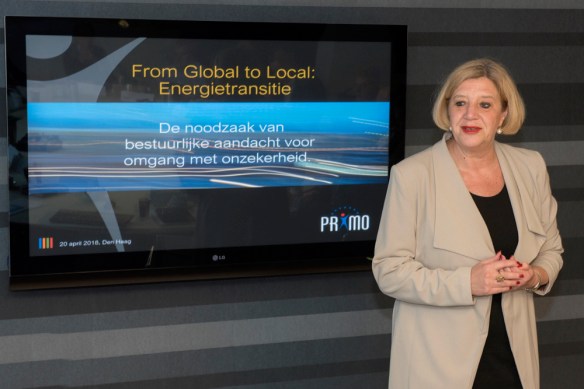
A wide range of projects relating to the energy transition and the promotion of solar and wind energy may be eligible for funding from the Energy Transition Facility. It regards the partnership with PRIMO as highly valuable, as the cross-pollination of knowledge and experience is mutually beneficial.
Professor Bastiaan Zoeteman opens his keynote speech as follows: “The Netherlands is lagging behind in Europe’s energy transition. The Netherlands has become complacent. In the 1980s, under the leadership of ministers such as Winsemius and Nijpels (both of the VVD), the country set a good example internationally when it came to the environment, energy and climate. But the Netherlands also had natural gas. A source of fossil energy considered relatively clean. As a result, our country has fallen behind in terms of policy regarding the energy transition. Now that it is necessary and natural gas extraction is coming to an end, we are languishing at the bottom of the European Union alongside Belgium.”
Jack Kruf, director of PRIMO Netherlands and chair of the day’s proceedings, set out the objective for this think tank meeting as follows: against the backdrop of the Global Risks Report 2018, to discuss the uncertainties surrounding the energy transition and to provide recommendations that can serve the cause of good governance.
What is the impact of these ever-present uncertainties on the attitude and decisiveness of public administrators? At a time when local authorities are forming new executive committees, the question of what these committees can do to effectively implement the ‘energy transition’ portfolio is particularly relevant. What are the enabling frameworks that the administration must develop, how can it shape organisational capacity to bring about change, and what investment capacity needs to be made available to actually initiate and implement the energy transition?
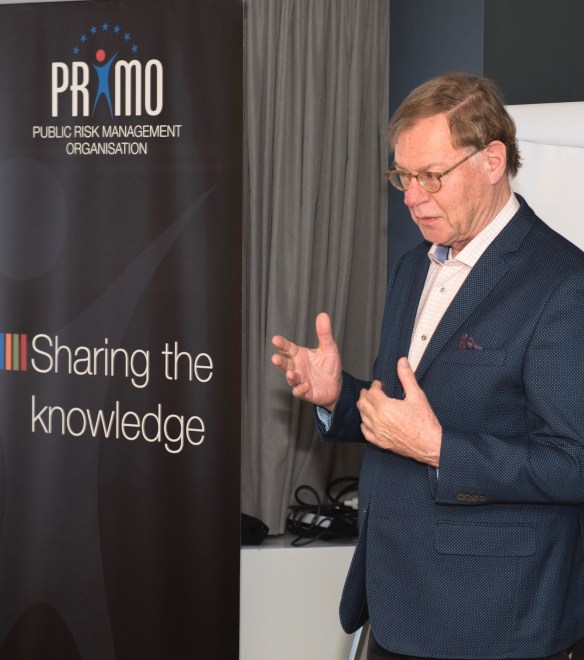
Keynote by Bastiaan Zoeteman
The analysis is by Bastiaan Zoeteman, Professor of Sustainable Development at the Telos Research Centre at Tilburg University and a former senior civil servant responsible for environmental policy. He spoke on Friday 20 April 2018 at the ‘From Global to Local’ think tank organised by UDITE and PRIMO. The think tank was organised and held in close collaboration with, and hosted at the offices of, partner BNG Bank in The Hague.
Zoeteman’s argument made it clear that the new council – and with it the mayors and, in many cases, the new aldermen – must, in any event, possess a great deal of knowledge. The subject is broad, has many different facets, and the bar has been set high in the coalition agreement of October last year. On that basis, the new minister, Eric Wiebes, is, just like his distant liberal predecessors Winsemius and Nijpels, a minister full of drive. At least, that is the impression he gives. On the basis of that coalition agreement, he wants to halve the amount of greenhouse gas emissions, such as carbon dioxide (CO2), in the Netherlands by 2030. That is no small task.
The first thing he is therefore doing is trying to mobilise the whole of society behind this ambition. To this end, he has set up the Climate Council with five consultation groups, which is due to report on measures as early as this summer. That is good. As a result, we are moving towards electric cars, solar panels and insulating homes. Fine, because every little helps. But the energy transition is not really about these developments. The most important challenges in the coming decades lie with industry and electricity generation. Energy-intensive business processes and energy generation itself are the key challenges. These must no longer be dependent on fossil fuels. The role of central government as the linchpin is crucial in this regard. Other authorities wish to help, according to the recently agreed Intergovernmental Programme. “Take the content of the new Environment Act as a basis for this: all authorities are pulling together,” said Minister Kajsa Ollongren (Home Affairs and Kingdom Relations).
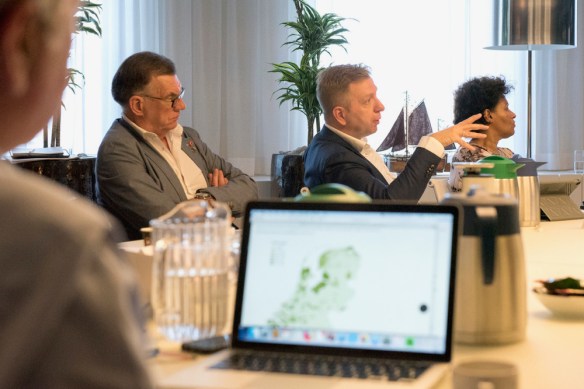
This shared responsibility is felt worldwide. The Paris Climate Agreement of December 2015 is a commendable agreement. But will that agreement remain credible? Is it not crumbling under pressure from the Trump administration in the United States? The World Economic Forum’s Global Risks Report 2018 warns of such a risk.
A second risk lies in digital security. Can we really keep the risks of living and working with digital tools sufficiently under control? And a third risk lies in the phenomenon of ‘geo-engineering’. This is a subject that seems to be taboo in Europe. It centres on issues such as artificially manipulating the weather and climate by releasing chemicals into the atmosphere or the oceans, and the unknown consequences this may have for the climate and nature. The risks involved are greater as certain world powers, such as China and the US, see this as an alternative to phasing out fossil fuels. Zoeteman wondered whether there might be a role for the European Union in keeping other major powers, such as the United States and China, in check on this issue?
The national government should then make it its task to describe all these complex interrelationships, to seek out the connections, to learn from others who are also engaged in this work, to calculate extrapolations, and then to return to the ‘postage stamp’ that is the Netherlands to translate this ongoing process of seeking information into concrete actions. To a large extent, these are also tasks that are carried out in the Netherlands by the Netherlands Environmental Assessment Agency.
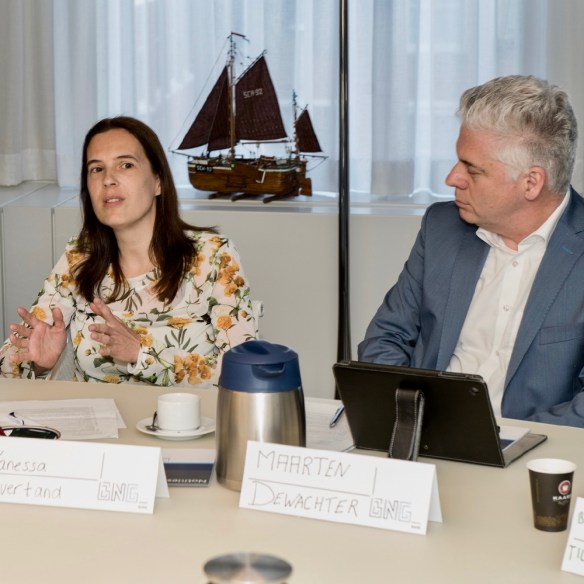
But when we take a broader view, the Netherlands is not really on the right track in terms of policy in this regard. We are lagging behind, and even the existing energy agreement is not delivering enough to ensure a sufficient energy transition. Nevertheless, local authorities can make a significant contribution to improving these outcomes by focusing on the details. That said, if we take a closer look, we should not expect too much from these local authorities either. Compared to 1990, CO2 emissions had fallen in 30% of local authorities by 2017, risen in 30%, and remained more or less at the same level in the rest. The increase is mainly seen in large local authorities with significant industrial activity.
Furthermore, opposition in rural areas to the installation of more wind turbines is growing. There is a great deal of agitation on social media against wind turbines, particularly in the northern provinces. There are currently 2,300 onshore turbines, and a slight increase to 2,700 is expected. In fact, there should be four times as many. It is striking that there are no wind turbines situated right along the eastern border in the Netherlands, whilst just across the border in Germany this is clearly the case. Policy in the Netherlands is now focused on many more wind farms in the North Sea.
The good news is that the business community and industry are now starting to take notice. All sorts of reports with positive plans are appearing, such as recently from a major player, the VNCI (Association of the Dutch Chemical Industry), as Zoeteman pointed out.
Caspar Boendermaker on financing
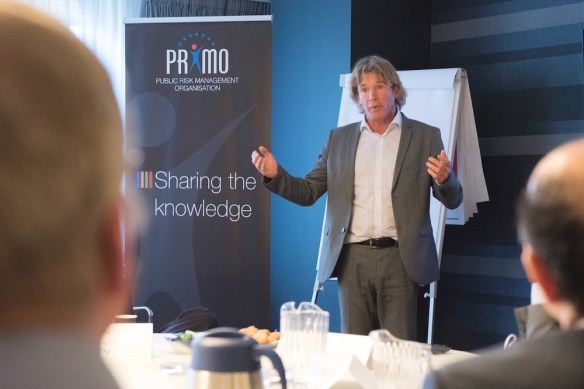
Speaking on behalf of BNG Bank, Caspar Boendermaker, a specialist in Business Development & Sustainability, described the energy transition as “financable”. His bank is active in financing projects for energy savings and the transition to renewable forms of electricity (primarily solar and wind). Financing forms of renewable heat and their application in the built environment is more challenging. Small steps taken by individual citizens all contribute. Insulating buildings and behavioural changes are key areas of focus in this regard
BNG Bank’s current timeframe is the period 2030–2050. During this period, local authorities in the Netherlands aim to be ‘energy-neutral’. Gas-free? Perhaps not entirely, but only with the use of so-called ‘green gas’. Other key areas within this strategy for generating renewable heat include heat networks (high-temperature heat, low-temperature heat), various forms of geothermal energy, thermal and cold storage, and electric heat generation.
He rejected the notion that banks – or at least BNG Bank – are far too conservative. On the contrary, BNG Bank is working on all sorts of new financing solutions, such as ESCOs (Energy Service Companies) for social housing and residential properties, and the concept of energy sponsorship. Regarding the latter, he cited the example of Maasstad Hospital in Rotterdam, which offers companies and organisations the opportunity to reduce the hospital’s energy bill to ‘zero’ through energy sponsorship and to associate themselves with Maasstad Hospital via solar panels installed on the hospital’s façade.
He further noted in this context that the added value of European funding in the Netherlands via the European Fund for Strategic Investments (EFSI), as implemented by the European Investment Bank (EIB), is relatively limited. The reduction in financing costs for investments in, for example, making housing associations more sustainable is very limited (< 0.10%). It is important to deploy EFSI funds specifically for higher-risk projects.
Key points and discussion
In response to the presentations by Zoeteman and Boendermaker, and drawing on the initial informal discussion, chair Jack Kruf identified five key administrative and organisational questions:
- Is there currently sufficient leadership and long-term planning?
- Is there sufficient dialogue between businesses, investors/banks, citizens and government officials?
- Is the leadership of the administrators stable enough, or is there too much indecision?
- Are the risks of the energy transition failing properly at the forefront of our minds; in other words, do we still know why we are doing all this in the first place?
- Is there sufficient coordination between the various levels of government? Are we actually applying the insights gained within what has come to be known as ‘multi-level governance’?
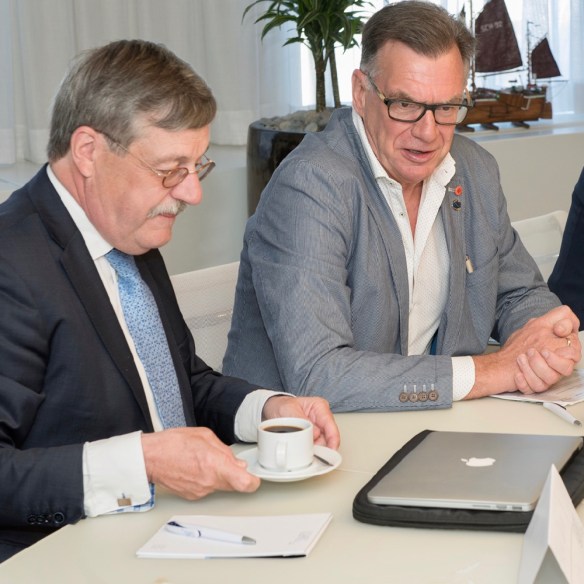
In response to the chair’s request to participants to each articulate their greatest uncertainty and identify the most important measure to address it, the first priority is to consider the nature and character of the leadership required of directors and managers. Do they have the courage to act decisively in line with long-term policies already formulated, or do they bring in interests from existing and past networks, which lead to setbacks? In practice, it proves very complicated to stay on course and continue to follow the leader’s objective. It is also difficult for some leaders to formulate that objective clearly and in a way that is understandable to everyone.
Furthermore, other interests brought into the governing body can also act as a disruptive factor. At the provincial level, leaders may be able to function as a source of help and support. Politics is a field full of pitfalls when it comes to staying on course, particularly with regard to the energy transition, which requires long-term thinking.
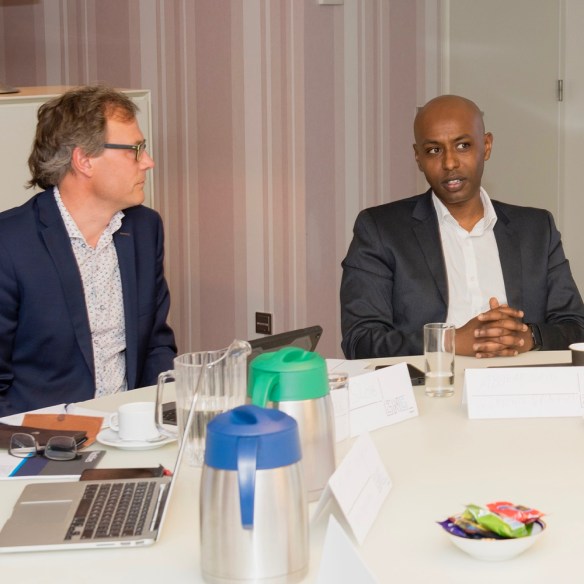
However, we must not make the mistake of trying to remove the entire process from the political sphere. That suggestion was put forward. After all, where can long-term contracts offer a solution to recurring differences in priorities? The energy transition will span at least five council terms. The suggestion to keep it on the political-administrative agenda is the right course from a democratic perspective, but it entails significant uncertainties.
What does this mean for new councils? Not just setting lofty goals (e.g. ‘we want to become gas-free’), but also establishing credibility by taking the first concrete steps. The concept of a ‘coordinating alderman’ was raised in this context, with arguments both for and against it. It is also important to establish supporting structures for local government, such as authoritative regional advisory and review bodies. These can then support local administrators in the same way as the Climate Council does at national level.
Finally
Chair Jack Kruf concludes from the suggestions put forward by the think tank members that he wishes to explore the matter further. He proposes to the members that he ask them further questions to gain a deeper understanding of their knowledge and insights. They agree to this. In the meantime, PRIMO will remain in contact with the members to gather and share suggestions, plans and ideas.
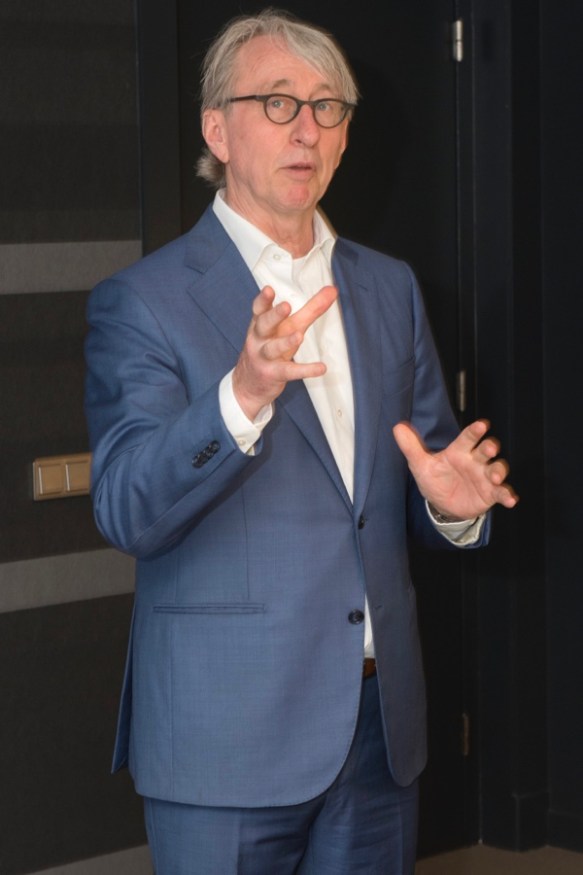
The members of the think tank agree to meet again in September. The chair concludes the meeting and thanks Bastiaan Zoeteman for his insightful, enlightening and comprehensive presentation, Caspar Boendermaker for his professional and, above all, practical guidance on financing, and all members of the think tank for their openness, commitment and contribution to the dialogue.
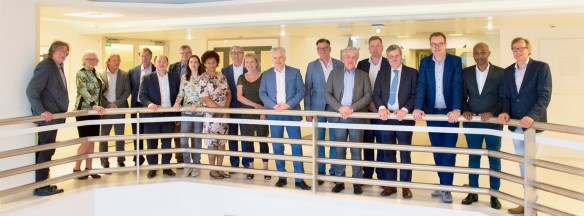
Think Tank Membership 2018
- Loes Bakker, Director of Holland Rijnland, Leiden.
- Pauline Bieringa, Director of Public Finance at BNG Bank.
- Caspar Boendermaker, Business Development & Sustainability Specialist at BNG Bank.
- Anneke Boezeman, Programme Manager for Energy/Circular Economy, Province of North Brabant.
- Monique Brewster, Director of Leusden Housing Association.
- Jan Bart Dekker, Risk Manager, Corporate Staff, City of Amsterdam.
- Maarten Dewachter, Deputy Coordinating Municipal Secretary, Midden- en West-Brabant Safety Region.
- Frank Dietz, Head of Sustainable Development, Netherlands Environmental Assessment Agency.
- Ronny Frederickx, Honorary/Past President of UDITE, former State Secretary of Essen, Belgium.
- Anne-Marie Hitipeuw-Gribnau, Chief Resilience Officer, Municipality of The Hague.
- Koos van Houdt, Director of Virtupress, European correspondent awarded the Mérite Européen.
- Arnold van Kampen, Head of Geotechnics & Water, Municipality of Rotterdam, Manager of RISNET.
- Erik Kiers, Director of the West Brabant Partnership.
- Jack Kruf, Jack, President of PRIMO Europe, Director of PRIMO Netherlands (Chair).
- Abukar Said, Public-Private Partnership Policy Advisor, City of Groningen.
- Harrie Scholtens, Harrie, Project Leader of the European Public Sector Award (EPSA) 2017 and affiliated with the European Institute of Public Administration (EIPA), Maastricht.
- Vanessa Silvertand, Sustainability Programme Manager, Municipality of Eindhoven.
- Wouter Slob, Secretary and Managing Director of the Zuiderzeeland Water Authority, Board Member of PRIMO Europe and PRIMO Netherlands.
- Rolf Sloots, Group Manager for Spatial Planning & Economy, Municipality of Emmen.
- Bastiaan Zoeteman, Professor at Telos, Centre for Sustainable Development, Tilburg University.
Photography
Michel Groen
*The Think Tank is an international initiative aimed at raising awareness of significant public risks, forging relevant links between organisations, and contributing to concrete courses of action, particularly at local and regional level.
Furthermore, the think tank aims to increase knowledge of and experience with strategic risk management as an integral part of good public governance, to promote the management of public values – and the underlying fundamental values as enshrined in the Dutch Constitution – and to mitigate public risks. The think tank takes, among other things, the recently published Global Risks Report 2018 by the World Economic Forum as its starting point.
 PRIMO Res Publica