Prospect Theory

An analysis of decision under risk

Daniel Kahneman and Amos Tversky | 1979

This paper presents a critique of expected utility theory as a descriptive model of decision making under risk, and develops an alternative model, called prospect theory.

Choices among risky prospects exhibit several pervasive effects that are inconsistent with the basic tenets of utility theory. In particular, people underweight outcomes that are merely probable in comparison with outcomes that are obtained with certainty. This tendency, called the certainty effect, contributes to risk aversion in choices involving sure gains and to risk seeking in choices involving sure losses.

In addition, people generally discard components that are shared by all prospects under consideration. This tendency, called the isolation effect, leads to inconsistent preferences when the same choice is presented in different forms.

An alternative theory of choice is developed, in which value is assigned to gains and losses rather than to final assets and in which probabilities are replaced by decision weights.

The value function is normally concave for gains, commonly convex for losses, and is generally steeper for losses than for gains.

Decision weights are generally lower than the corresponding probabilities, except in the range of low probabilities. Overweighting of low probabilities may contribute to the attractiveness of both insurance and gambling.

Bibliography

Kahneman, D. and Tversky, A. (1979) ‘Prospect Theory: An Analysis of Decision Under Risk’. Econometrica, 47, 263-291.

Download essay.

WMO en het managen van risico’s

Jan-Willem Boissevain, Logica en Jack Kruf, PRIMO en gemeente Roosendaal | 29 maart 2007, Rotterdam

Per 1 januari 2007 is de WMO van start gegaan. Iedereen bereidde zich voor op woedende burgers, enorme wachtlijsten en stapels bezwaarschriften. Maar niets van dat alles. Toch zijn de risico’s reëel. Misschien niet op korte termijn, maar op lange termijn neemt de vraag naar middelen en voorzieningen toe. Hoe bereiden de betrokken organisaties zich hierop voor?

In de Trouwzaal van het Rotterdamse stadhuis kwamen 29 maart vertegenwoordigers van de WMO-keten bij elkaar, van zorgaanbieder tot gemeente. Aan de hand van stellingen kwam een levendige discussie op gang over de kansen en bedreigingen van het nieuwe beleid en de te realiseren publieke waarden en de mogelijke schades (zijnde risico’s) in de nabije toekomst.

Jetty Voermans is de gespreksleider van de avond. Als zelfstandig adviseur, voormalig projectleider WMO bij de VNG en sinds kort ook wethouder van de gemeente Zeevang, weet zij meer dan genoeg over de WMO. “Ik had verwacht dat de telefoons roodgloeiend zouden zijn, de kranten vol met de WMO, maar dat is uitgebleven”, concludeert Voermans over de media-aandacht over de WMO.

Lees verder →

AR6 Synthesis Report Climate Change 2023

IPCC | 2023

Interlaken, Switzerland, March 20, 2023 —

This IPCC report focuses sharply on the losses and damages we are already experiencing and will continue to experience, especially those hitting the most vulnerable people and ecosystems. Taking the right action now could result in the transformational change essential for a sustainable, equitable world.

There are multiple, feasible and effective options to reduce greenhouse gas emissions and adapt to human-caused climate change, and they are available now, said scientists in the latest Intergovernmental Panel on Climate Change (IPCC) report released today.

“Mainstreaming effective and equitable climate action will not only reduce losses and damages for nature and people, it will also provide wider benefits,” said IPCC Chair Hoesung Lee. “This Synthesis Report underscores the urgency of taking more ambitious action and shows that, if we act now, we can still secure a liveable sustainable future for all.”

In 2018, IPCC highlighted the unprecedented scale of the challenge required to keep warming to 1.5°C. Five years later, that challenge has become even greater due to a continued increase in greenhouse gas emissions. The pace and scale of what has been done so far, and current plans, are insufficient to tackle climate change.

Lees verder →

Risk Culture

Under the Microscope Guidance for Boards

The Institute of Risk Management | 2012

Richard Anderson, Chairman of The Institute of Risk Management: “For over 25 years, the Institute of Risk Management has provided leadership and guidance to the emerging risk management profession with a unique combination of academic excellence and practical relevance. The Institute’s profile continues to grow internationally with heightened interest in the management of risk across government, public, and business domains.“

This board guidance on risk culture is our latest contribution to thought leadership in the field. Although essential, the continuing parade of organisational catastrophes (and some notable successes) demonstrates that frameworks, processes and standards for risk management are insufficient to ensure that organisations reliably manage their risks and meet their strategic objectives. What is missing is the behavioural element: why do individuals, groups and organisations behave the way they do, and how does this affect all aspects of the management of risk?

Lees verder →

The new Danish guide on Risk Leadership

Lars Løkke Rasmussen and Jesper Hjort | May 2007

In January 2007, PRIMO Danmark launched its national guide on (public) risk management, Risikoledelse – En Kommunal Opgave. The guide was endorsed by the Danish Minister of Interior, Lars Løkke Rasmussen, who wrote the first part of the preface to the guide.

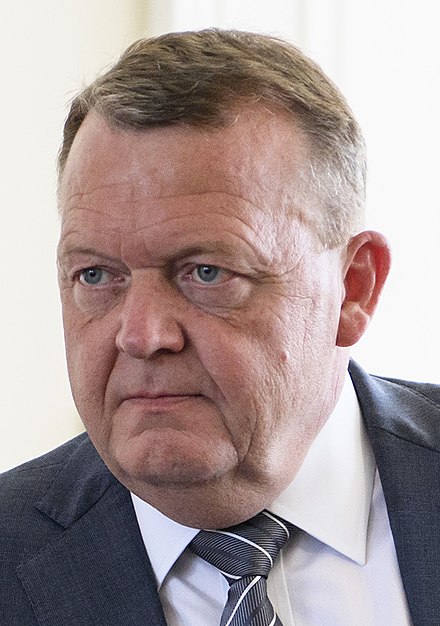
Lars Løkke Rasmussen (source: Wikipedia)

Rasmussen: “Every day, local authority managers make decisions involving risks; that is, decisions involving significant uncertainty. It is important to note that these may be risks facing citizens, local communities or the local authority organisation itself.

Risk is simply a condition of life when the future is uncertain. To put it in another way: making important decisions on an uncertain foundation is also part of overall management. Executives can never be entirely certain about the foundations of their decisions. However, if entirely risk-proof decisions were possible, nothing would happen.

So, for executives, the whole secret is – in the words of Kierkegaard – to take upon one self this uncertainty. Executives in the public sector should, therefore, work systematically on minimizing the negative sides of risks and on maximising the positive sides.

Lees verder →

“Long history of corporate governance puts UK in the lead”

Interview with Dr. Lynn Drennan, CEO of ALARM, about risk management

Great Britain is the European example of well-developed risk management in the public sector. In a country where you can insure yourself against almost anything, governments and other public organisations appear to do a lot to eliminate and limit risks.

Dr. Lynn Drennan

ALARM (Association of Local Authority Risk Managers) has grown into a national public sector risk management forum with over 1,800 participating organisations— a conversation with Dr. Lynn Drennan, ALARM chief executive.

She has only been in office since August this year, but Lynn Drennan has been active in risk management for many years. She was affiliated with Glasgow Caledonian University, ‘the only university in Europe that offers a university degree in risk management,’ says Drennan. “And that since 1982. Many of our graduates now work as risk managers in the corporate world, for consultants such as Marsh and Aon and for public organisations.”

Lees verder →

Change is here to stay

5 essentiële principes voor succesvol besturen in crisistijd

Alinda van Bruggen | juni 2020

Sinds het uitbreken van de Corona-pandemie bevinden we ons in een nieuwe werkelijkheid. Een werkelijkheid die we nog maar beperkt kennen en doorgronden. Maar waarbij één ding wel zeker is: er komt nog meer in beweging dan we nu kunnen voorzien.

Alinda van Bruggen

De fase van de acute crisis is voorbij, gelukkig, maar daarmee wordt het niet in alle opzichten gemakkelijker. Er mag en kan weer meer – maar daarmee wordt het moeilijker de collectieve focus op ‘zorg dragen voor wat er echt toe doet’,  die in de eerste periode zoveel veerkracht en saamhorigheid bracht, vast te houden. Nadat de eerste dreiging het hoofd geboden is, zal in de komende tijd steeds meer zichtbaar en voelbaar worden wat daarvan de prijs is. Het leiderschap dat in de acute fase verwelkomd werd, zal in deze fase een andere vorm moeten vinden om de collectieve energie en creativiteit van velen te aan te boren om de nieuwe werkelijkheid in te richten.

Voor bijna iedereen – individuen, bedrijven, zorg, onderwijs en overheidsorganisaties – geldt dat een andere manier van werken en samenwerken nodig is. Daarnaast moeten veel organisaties nadenken over hoe zij de economische impact van de crisis gaan hanteren. In veel gevallen geldt ook dat wat van ons gevraagd wordt anders is dan voorheen, zonder dat we al precies weten hoe dat er uit gaat zien.

Lees verder →