Stern Review on the Economics of Climate Change

HM Treasury UK | 2006

“The scientific evidence is now overwhelming: climate change presents serious global risks and demands an urgent global response. This independent Review was commissioned by the Chancellor of the Exchequer, who reports to both the Chancellor and the Prime Minister, to contribute to assessing the evidence and building an understanding of the economics of climate change.

The Review first examines the evidence on the economic impacts of climate change itself and explores the economics of stabilizing greenhouse gases in the atmosphere. The second half of the Review considers the complex policy challenges involved in managing the transition to a low-carbon economy and in ensuring that societies can adapt to the consequences of climate change that can no longer be avoided.

The Review takes an international perspective. Climate change is global in its causes and consequences, and international collective action will be critical in driving an effective, efficient and equitable response on the scale required. This response will require deeper international cooperation in many areas – most notably in creating price signals and markets for carbon, spurring technology research, development and deployment, and promoting adaptation, particularly for developing countries.

Climate change presents a unique challenge for economics: it is the greatest and widest-ranging market failure ever seen. The economic analysis must therefore be global, deal with long time horizons, have the economics of risk and uncertainty at centre stage, and examine the possibility of major, non-marginal change. To meet these requirements, the Review draws on ideas and techniques from most of the important areas of economics, including many recent advances.

The benefits of strong, early action on climate change outweigh the costs

The effects of our actions now on future changes in the climate have long lead times. What we do now can have only a limited effect on the climate over the next 40 or 50 years. On the other hand what we do in the next 10 or 20 years can have a profound effect on the climate in the second half of this century and in the next.

No-one can predict the consequences of climate change with complete certainty; but we now know enough to understand the risks. Mitigation – taking strong action to reduce emissions – must be viewed as an investment, a cost incurred now and in the coming few decades to avoid the risks of very severe consequences in the future. If these investments are made wisely, the costs will be manageable, and there will be a wide range of opportunities for growth and development along the way. For this to work well, policy must promote sound market signals, overcome market failures and have equity and risk mitigation at its core. That essentially is the conceptual framework of this Review.

The Review considers the economic costs of the impacts of climate change, and the costs and benefits of action to reduce the emissions of greenhouse gases (GHGs) that cause it, in three different ways:

  • Using disaggregated techniques, in other words considering the physical
    impacts of climate change on the economy, on human life and on the environment, and examining the resource costs of different technologies and strategies to reduce greenhouse gas emissions.
  • Using economic models, including integrated assessment models that estimate the economic impacts of climate change, and macro-economic models that represent the costs and effects of the transition to low-carbon energy systems for the economy as a whole.
  • Using comparisons of the current level and future trajectories of the ‘social cost of carbon’ (the cost of impacts associated with an additional unit of greenhouse gas emissions) with the marginal abatement cost (the costs associated with incremental reductions in units of emissions).

From all of these perspectives, the evidence gathered by the Review leads to a
simple conclusion: the benefits of strong, early action considerably outweigh the costs.

The evidence shows that ignoring climate change will eventually damage economic growth. Our actions over the coming few decades could create risks of major disruption to economic and social activity, later in this century and in the next, on a scale similar to those associated with the great wars and the economic depression of the first half of the 20th century. And it will be difficult or impossible to reverse these changes. Tackling climate change is the pro-growth strategy for the longer term, and it can be done in a way that does not cap the aspirations for growth of rich or poor countries. The earlier effective action is taken, the less costly it will be.

At the same time, given that climate change is happening, measures to help people adapt to it are essential. And the less mitigation we do now, the greater the difficulty of continuing to adapt in future.

Download Stern Executive Summary

Visit National UK Archives
The Risk of Leadership

A plea for a new search for ‘responsible-in-the-end’ leadership: stewardship

Jack Kruf | 10 March 2017

Of course, we have our democratic system, a great set of principles and values that serve as equipment for good public governance. Public leadership, concerning both public organisations and the public domain of society, is embedded in this system, at least it should be. You may expect excellent results because the democratic system traces back to the Greek δημοκρατία in 508 BC and has been tested and challenged over and over again. Over the millennia, it has developed to this point.

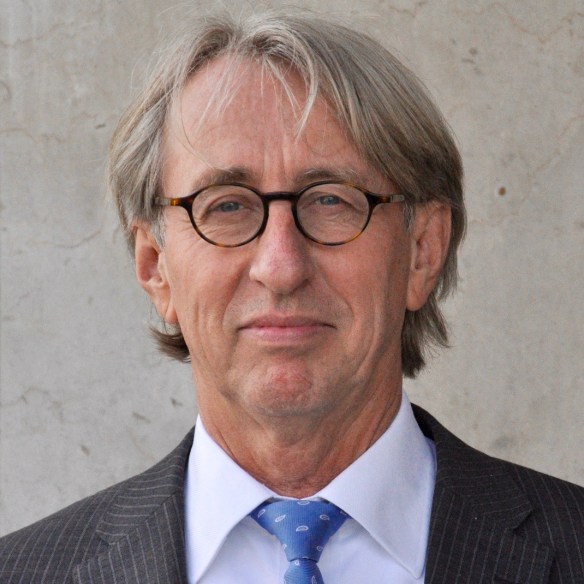
Jack Kruf

Considering the present state of society and of natural ecosystems, you may be surprised by the results of this period of 2525 years of development. The Global Risks Reports, published by the World Economic Forum since 2005, tell the story of how critical the state of the Earth is. Reading these reports, I had a flashback to 1972, when the Club of Rome presented facts, findings, and figures in its report, The Limits to Growth. For at least five decades (i.e., half a century!), we know what is going on and where many generations of leadership have brought us.

Lees verder

Risicoperceptie van gemeentesecretarissen

Bert van de Velden, Leo ’t Hart en Franc Weerwind* | 2004, VGS en Marsh

Anticiperend op het per 1 januari 2004 in te voeren Besluit Begroting en Verantwoording provincies en gemeenten (BBV) is medio 2003, bij een aantal gemeentesecretarissen het idee ontstaan om aandacht te geven aan het onderwerp risicomanagement. Dit idee is vervolgens uitgewerkt en besproken met het bestuur van de VGS. Hierbij is afgesproken om binnen het kader van risicomanagement onderzoek te doen naar de risicoperceptie van gemeentesecretarissen.

Bij publieke besluitvorming spelen veel aspecten een rol. Visie, nut en noodzaak, uitvoerbaarheid, (financiële) haalbaarheid en handhaafbaarheid zijn voorbeelden van die aspecten. Risicomanagement is een ander perspectief dat bij deze besluitvorming een rol kan spelen.

Lees verder

Handreiking Risicobeheersing voor Raadsleden

VNG | 30 juni 2022

Raadsleden moeten lastige afwegingen maken over grote projecten. Wat is het risico voor de gemeente? Welke maatschappelijke meerwaarde levert het op? Om raadsleden op weg te helpen in risicobeheer, is er nu de Handreiking Risicobeheersing voor Raadsleden. De handreiking is een gezamenlijk product van VNG Risicobeheer, de Nederlandse Vereniging voor Raadsleden en het ministerie van BZK. Het idee is dat risicobeheer reële verwachtingen oplevert en erkende (on)zekerheden. Met als doel een gedeeld besef van hoe er kan worden (bij)gestuurd, ook als zaken anders lopen dan verwacht.

Grip op projecten

De handreiking kan raadsleden helpen om op praktisch niveau beeld te brengen waar je op moet letten en of de gemaakte keuzes bijdragen aan maatschappelijke oplossingen. In projecten gaat het erom het financiële resultaat in beeld te krijgen, maar ook of de afweging van voor- en nadelen bijdraagt aan een betere samenleving,’ zegt directeur Henk Bouwmans van de Nederlandse Vereniging voor Raadsleden. 45% van alle raadsleden in de nieuwe periode is nieuw. ‘Ze moeten zich verdiepen in allerlei onderwerpen en worden overspoeld met informatie. Raadsleden steken gemiddeld 16 uur per week in het raadswerk. We zijn blij met deze handreiking omdat die helpt grip te krijgen op de risico’s van projecten en activiteiten.

Brede blik

Concerncontroller Tom Noordermeer van de gemeente Zevenaar werkte mee aan de handreiking namens het Risico Platform Overheden (RPO). Hij vindt het belangrijk dat de handreiking een brede kijk geeft op risicobeheersing. ‘Het gaat in de gemeenteraad vaak om het ratiogetal in de weerstandsparagraaf. Maar de vraag is: draagt die ratio bij aan een goed besluit of belemmert die dat juist?’ De weerstandsparagraaf is op zichzelf een goed instrument, maar het is aan actualisering toe, vindt Noordermeer. ‘De focus moet niet eenzijdig financieel zijn, in gemeenten is het aspect van publieke waarde net zo belangrijk. Het ratiogetal suggereert een exactheid die er in feite niet is.’ De handreiking is een bijdrage aan een bredere kijk op risicobeheersing.

Leren van of door rapporten

Hoe de gemeente Rotterdam leert van raadsenquêtes en rekenkamerrapporten

Mark van Twist, Hans Vermaak, Nancy Chin-A-Fat en Marije Huiting | 2021, NSOB

Herkent u dat? Er verschijnt over uw organisatie een rapport met aanbevelingen hoe van alles beter moet. De bedoeling is dat dat doorwerkt en effect sorteert. Maar toch werkt dat niet altijd zo uit…

Betrokkenen kunnen ervaren dat het rapport er (een beetje) naast zit of te negatief uitpakt. Of ze vinden het rapport goed, maar het (b)lijkt lastig om al die aanbevelingen op te volgen. Of als je ze opvolgt, krijg je er dan wel een sterkere organisatie of beter werk van?
Lees verder

COVID-19: A Failure in Risk Management

David Zaruk as Risk-Monger | March 2020

The longer the Risk-Monger gets in the tooth, the more global mass panic events he has witnessed. Every crisis is a learning opportunity and as I had written in mid February, 2020. COVID-19, the Wuhan-originated coronavirus, has created a rich pedagogic environment.

When a train crashes, authorities are on the scene to determine the cause. The COVID-19 coronavirus is fast becoming a global train wreck and unless we quickly assess the mistakes leading up to this tragedy, more trains will pile into the station.

David Zaruk

Lessons are, unsurprisingly, being learnt the hard way with more mistakes sending the public health situation deeper into disaster. Worse, as our communications methods move from an expert-based model to a bottom-up citizen-based community model, our friends on social media become our main source of information.

Lees verder

Thorbecke voorbij: Lokale sturing op complexe opgaven

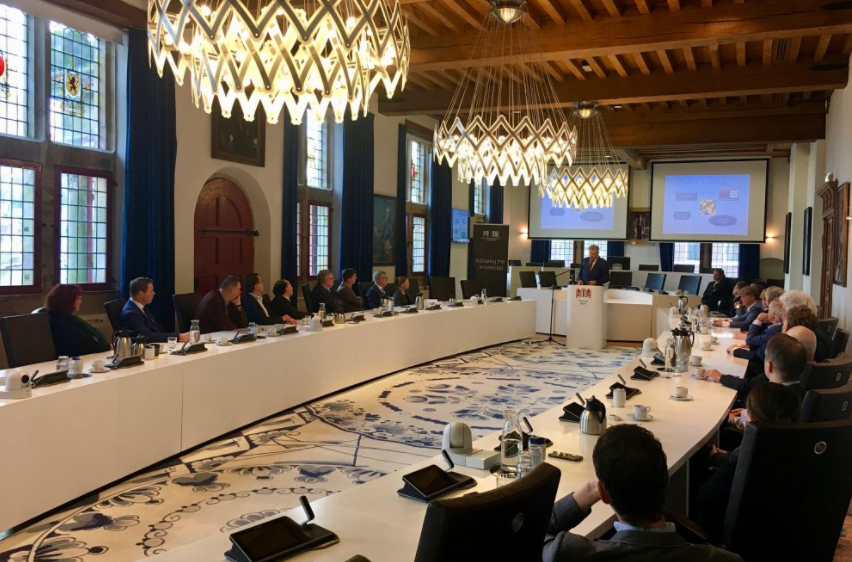
Delft, 20 januari 2022. De tweede Professor dr.ir. Roelof A.A. Oldeman Lezing* door Mr. J. (Hans) Krul, gemeentesecretaris en algemeen directeur van de Gemeente Delft.

Hij belicht vanuit zijn functie en rol in het knooppunt van het gemeentelijk verkeer, hoe vanuit lokaal perspectief voorliggende complexe opgaven kunnen worden benaderd. Thorbecke en Oldeman zijn daarbij behulpzaam in denken en handelen.

Hans Krul spreekt de 2e Professor Oldemanlezing uit in de raadszaal van de gemeente Delft.

De lezing

“Hartelijk welkom in de raadszaal van dit mooie historische stadhuis van Delft, een van de jongste leden van het PRIMO netwerk. Het is een eer dat ik vandaag in deze voor mij zo vertrouwde omgeving van de Delftse raadszaal de Oldeman Lezing uit mag spreken.

Ik ga dan ook mijn uiterste best doen u niet teleur te stellen waarbij ik in de eerste plaats terugval op mijn ruim 40-jarige werkervaring bij de overheid. Mijn lezing zal zich via de volgende stations voltrekken:

Lees verder