Uncertain safety

WRR Scientific Council for Government Policy | 2008

In view of the vulnerability of humans, society and the natural environment, a proactive approach to uncertainties is required. A precautionary approach will create new responsibilities for the government, the private sector and consumers, as well as new activities. In its report Uncertain safety (Report no. 82, 2008), the WRR recommends inserting the new precautionary principle in the Constitution.
Not so much risks as uncertainties

The classical risk approach has limitations as a result of social developments (food safety, new technologies and climate change, for example) and progressive scientific insights. Society is not so much confronted with risks as with uncertainties. These uncertainties have to be addressed in an organised manner.

Lees verder
Risk Governance: towards and integrative approach

A framework by International Risk Governance Council

Ortwin Renn, with annexes by Peter Graham | 2005

In this comprehensive white paper Risk Governance: Towards an integrative approach – coordinated and edited by Professor Ortwin Renn – the International Risk Governance Council (IRGC) brought together: “an integrated analytic framework for risk governance which provides guidance for the development of comprehensive assessment and management strategies to cope with risks, in particular at the global level. The framework integrates scientific, economic, social and cultural aspects and includes the effective engagement of stakeholders.” 

In this article the headlines are summarized. In the light of history this framework is noteworthy and marks the next phase in thinking of the risk concepts. It focuses on “the improvement of risk governance strategies for risks with international implications and which have the potential to harm human health and safety, the economy, the environment, and/or the fabric of society at large.”

Lees verder

Staat van het Bestuur 2022

Ministerie van Binnenlandse Zaken en Koninkrijksrelaties (BZK) | 2022

De Staat van het Bestuur biedt elke twee jaar een beeld van hoe het decentrale openbaar bestuur in Nederland ervoor staat. Het bundelt actualiteiten, trends en ontwikkelingen en combineert de functie van langjarige monitoring en signalering voor de kortere termijn.

Naast de constanten die het openbaar bestuur in Nederland kenmerken, toont de Staat van het Bestuur 2022 een beeld van een openbaar bestuur dat vanuit verschillende kanten onder druk staat. Internationale, economische, ecologische en maatschappelijke ontwikkelingen en crisissituaties stellen het bestuur voor uitdagingen in een omgeving waarin het vertrouwen in de politiek onder druk staat en er beperkte middelen beschikbaar zijn. In het decentraal bestuur zelf neemt de versnippering toe en is ook het verloop onder bestuurders en volksvertegenwoordigers groot.

In deze context werpen het themahoofdstuk in de Staat, van de hand van Albert Jan Kruiter, en de essaybundel Realiserend bestuur: daadkrachtig en responsief hun licht op een bestuur dat een bijdrage levert aan de oplossing van maatschappelijke problemen: het realiserende bestuur. De perceptie en waardering van een bestuur dat realiseert en ‘presteert’ zijn dynamisch. Het is tijd- en plaatsgebonden en ook in hoge mate politiek bepaald. In deze essaybundel wordt hier vanuit verschillende invalshoeken naar gekeken.

Bibliografie

Ministerie van Binnenlandse Zaken en Koninkrijksrelaties (2022). Staat van het Bestuur 2022. BZK.

Ministerie van Binnenlandse Zaken en Koninkrijksrelaties (2023). Realiserend bestuur: daadkrachtig en responsief. BZK.

Download De Staat van het Bestuur.

Download Realiserend bestuur: daadkrachtig en responsief.

AR6 Synthesis Report Climate Change 2023

IPCC | 2023

Interlaken, Switzerland, March 20, 2023 —

This IPCC report focuses sharply on the losses and damages we are already experiencing and will continue to experience, especially those hitting the most vulnerable people and ecosystems. Taking the right action now could result in the transformational change essential for a sustainable, equitable world.

There are multiple, feasible and effective options to reduce greenhouse gas emissions and adapt to human-caused climate change, and they are available now, said scientists in the latest Intergovernmental Panel on Climate Change (IPCC) report released today.

“Mainstreaming effective and equitable climate action will not only reduce losses and damages for nature and people, it will also provide wider benefits,” said IPCC Chair Hoesung Lee. “This Synthesis Report underscores the urgency of taking more ambitious action and shows that, if we act now, we can still secure a liveable sustainable future for all.”

In 2018, IPCC highlighted the unprecedented scale of the challenge required to keep warming to 1.5°C. Five years later, that challenge has become even greater due to a continued increase in greenhouse gas emissions. The pace and scale of what has been done so far, and current plans, are insufficient to tackle climate change.

Lees verder

Risk Culture

Under the Microscope Guidance for Boards

The Institute of Risk Management | 2012

Richard Anderson, Chairman of The Institute of Risk Management: “For over 25 years, the Institute of Risk Management has provided leadership and guidance to the emerging risk management profession with a unique combination of academic excellence and practical relevance. The Institute’s profile continues to grow internationally with heightened interest in the management of risk across government, public, and business domains.

This board guidance on risk culture is our latest contribution to thought leadership in the field. Although essential, the continuing parade of organisational catastrophes (and some notable successes) demonstrates that frameworks, processes and standards for risk management are insufficient to ensure that organisations reliably manage their risks and meet their strategic objectives. What is missing is the behavioural element: why do individuals, groups and organisations behave the way they do, and how does this affect all aspects of the management of risk?

Lees verder

The new Danish guide on Risk Leadership

Lars Løkke Rasmussen and Jesper Hjort | May 2007

In January 2007, PRIMO Danmark launched its national guide on (public) risk management, Risikoledelse – En Kommunal Opgave. The guide was endorsed by the Danish Minister of Interior, Lars Løkke Rasmussen, who wrote the first part of the preface to the guide.

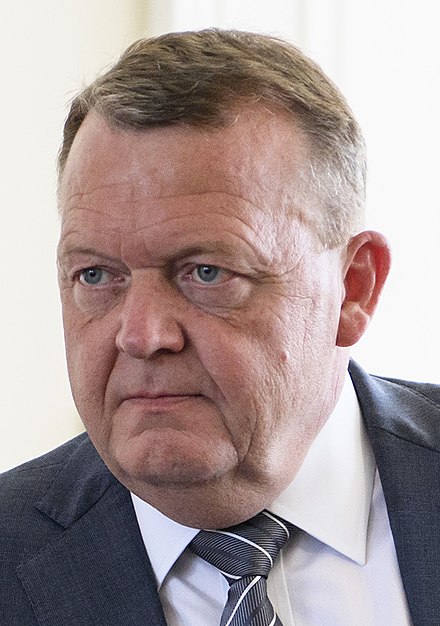
Lars Løkke Rasmussen (source: Wikipedia)

Rasmussen: “Every day, local authority managers make decisions involving risks; that is, decisions involving significant uncertainty. It is important to note that these may be risks facing citizens, local communities or the local authority organisation itself.

Risk is simply a condition of life when the future is uncertain. To put it in another way: making important decisions on an uncertain foundation is also part of overall management. Executives can never be entirely certain about the foundations of their decisions. However, if entirely risk-proof decisions were possible, nothing would happen.

So, for executives, the whole secret is – in the words of Kierkegaard – to take upon one self this uncertainty. Executives in the public sector should, therefore, work systematically on minimizing the negative sides of risks and on maximising the positive sides.

Lees verder

Over de ministeriële verantwoordelijkheid

Raad van State | 2020

Raad van Sta­te over mi­nis­te­riële ver­ant­woor­de­lijk­heid brengt een ongevraagd advies uit inzake ministeriële verantwoordelijkheid. Uitleggen wat de overheid doet en waarom ze doet wat ze doet: het is belangrijker dan ooit.

Of het nu gaat om de veiligheid van de Stint, de cijfers over zware criminaliteit onder asielzoekers, de zeventig burgerdoden in Irak, het uitkeren van de kinderopvangtoeslag door de Belastingdienst of, nog recenter, de vraag of de overheid voldoende voorbereid was op de coronacrisis: steeds spitst het debat zich op de vragen toe, wat is de relevante informatie en is deze voor iedereen beschikbaar? En wie kan op dit alles worden aangesproken? Is dat de betrokken bewindspersoon of zijn het anderen? Hoe zit het met de ambtelijke verantwoordelijkheid en deskundigheid? Heeft de Tweede Kamer voldoende grip?

Lees verder