Think tank ‘From Global to Local’ 2019
PRIMO Europe | juli 2019
PRIMO is organising the 6th ‘From Global to Local’ Think Tank in The Hague on Friday, 5 April 2019, in close collaboration with BNG Bank and UDITE. The findings, based on a survey of our members, are consistent with national and international reports: we are witnessing a combination of societal transitions. These are taking place simultaneously and genuinely call for reflection and a reassessment of financial strategy in the public sector.
These include transitions in the social sector, the Environment Act, digital transformation (cybersecurity, privacy, artificial intelligence, big data), the energy transition, the circular economy and climate change. They are placing significant pressure on financial resources in terms of maintaining society’s resilience. It appears to be a systemic issue.
The recent letter from Seth Klarman to investors is on the table. Klarman is a hedge fund manager, CEO and portfolio manager of the Baupost Group. To put it mildly, he draws attention to the growing problem of government debt.
Above all, it is clear that there is a great need for innovation in the form of practical and concrete financial instruments. It would appear that sound financial governance and management once again form the foundation of our future. Hence, a 2019 PRIMO think tank that delves into the status quo, scenarios and concrete tools, exploring both administrative ambition and financial realism. Looking in the rear-view mirror and peering under the bonnet are important, but no longer sufficient. Ex post democratic accountability is essential, but ex ante financial architecture – which actually works and can be linked to scenarios – is certainly becoming a critical success factor.
Kader
Among other things, the think tank takes the World Economic Forum’s recently published Global Risks Report 2019 as its starting point. Here are a few quotes from the report:
“Interest is increasing in approaches to economics and finance that draw on moral theory and social psychology to reconcile individual and communitarian goals.”
“Meeting the region’s infrastructure needs is likely to require significant change: concerns that we cited in 2010 about weak political and governance systems continue to hold back flows of investment finance.”
Bestuurders, managers en controllers zijn aan zet om te innoveren op nieuwe allianties, samenwerkingsvormen en contracten met vooral een lange termijn-blik als basis voor de besluitvorming van nu. Korte runs helpen niet in tijden van transitie.
Programme
- Welcome Bert Hummel, Public Finance Manager at BNG Bank.
- Global Risks Report 2019 and the context by Jack Kruf.
- Where do we stand in the Netherlands? What exactly are the financial challenges ahead of us? What are the major public risks on or beyond the horizon? A joint exploration.
- Inspirational contributions by Johan de Kruijf (status quo of Dutch finances) and Gido ten Dolle (the challenge of the Delft Agenda).
- What are the possible scenarios for the near future? What models might work? A joint in-depth discussion.
- Inspirational contribution by Caspar Boendermaker (insights from a bank).
- Towards a new municipal business model? Joint wrap-up and conclusions.
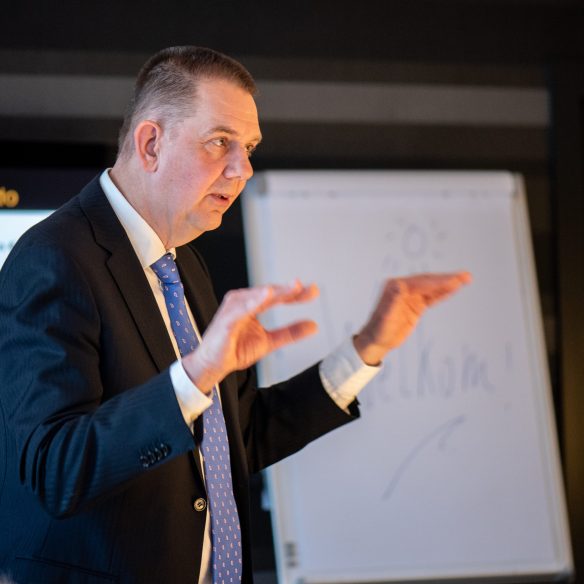
The meeting focuses on the current financial situation – debt levels, solvency and reserves – facing local authorities in particular. The meeting explored the requirements of the upcoming transitions, the scale of the necessary investments, the forms of cooperation required and the broad outlines for the governance of the financial strategy. To realise public values and mitigate public risks, one thing was clear: a financial strategy – one that can actually be implemented – is a prerequisite. After all: “No money, no Swiss.” The Netherlands’ resilience ratio was estimated at an average of 0.25.
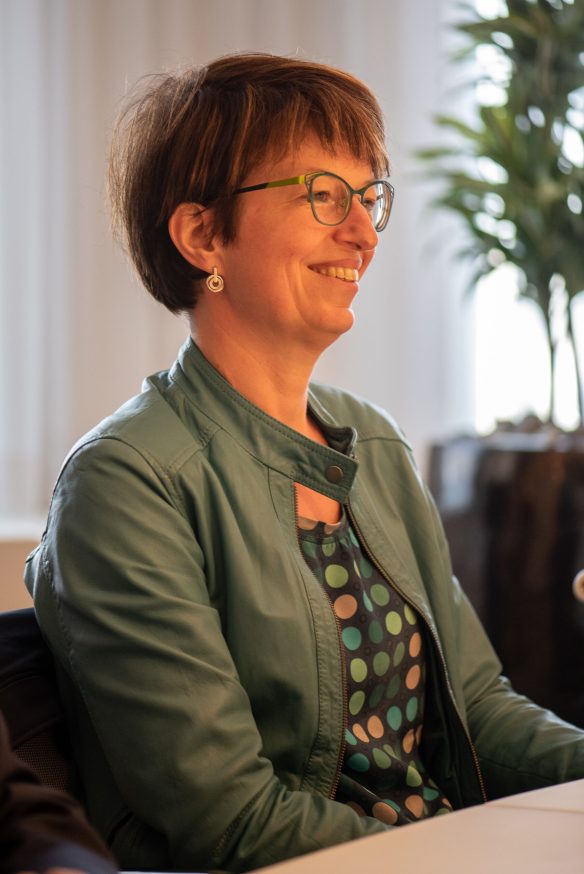
The second part focused on possible scenarios for regional and local authorities to actually develop a targeted financial strategy. A strategy that can span several council terms, offering the continuity needed to be effective in the areas of energy transition, climate adaptation, digital transformation and the circular economy. A strategy that also reshapes operational management in terms of forms of collaboration, partnerships and human resource management. During the dialogue, PRIMO and BNG Bank discussed in detail potential and effective arrangements with ‘third parties’ that could contribute to effective funding, financing or investment.
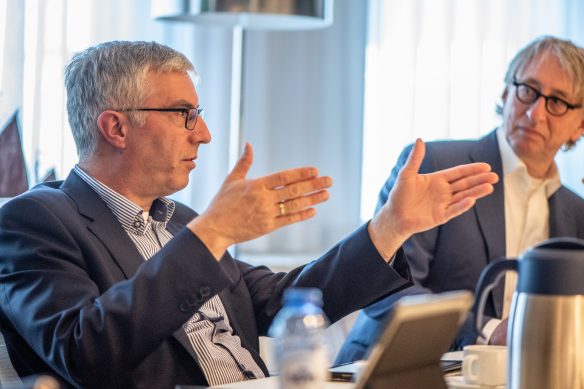
With the foundations in place, it is time for reflection: working as a single government with direct lines of communication between organisations, embedding long-term objectives in multi-year contracts, depoliticising the long-term strategies whilst respecting democratic changes to create reliability and predictability for citizens, businesses and institutions, and regional platforms such as Brainport and the Delft Agenda, which can serve as meeting places and focal points for initiatives, appear to be the keys to success.
Financial strategies with secure funding streams are the only way to be effective in streamlining the fragmented landscape of pilot schemes, the multitude of stakeholders, funding models, and projects. After all, ultimately, the city’s resilience may also be at stake. A patchwork of funding arrangements inevitably creates many vulnerabilities. The resilience of the urban ecosystem benefits from long-term planning, an integrated approach, and clear ultimate accountability; indeed, it depends on these factors. Given the current administrative and bureaucratic discontinuity (there are so many changes) and fragmentation, this seems likely to prove difficult. So, how do we ensure that we achieve an integrated approach and coordination? Greater leadership helps, as does commercial safeguards. A ‘wait-and-see government’, as the Netherlands has been characterised (in contrast to northern countries), does not help.
The group discussed the roles that directors, group controllers, managers and consultants can – and sometimes must – play in this context. The conclusion was that thinking and action in this regard must be guided by the principle of a single government. The permanent and perhaps even dominant representation of interests, as embodied by numerous umbrella organisations, can act as a hindrance to establishing direct lines of communication between authorities and to finding new forms of cooperation.
The national government, provinces, local authorities, and water boards can and must work much more closely together to find collective solutions. And we really need to devote more time to the discipline of ‘financial engineering’, whilst respecting and consulting the expertise of those who have their feet firmly on the ground or have had them there in the past. Making use of this expertise aligns with the principles of a High Reliability Organisation. So listen to the people who know what they’re talking about.
The group controller as an ‘engineer of governance’, the municipal secretary as a ‘link to the community’, the administrator who realises that only collegial governance is the path to success, a mayor who is able and permitted to look beyond the boundaries of his ‘safety and public order’ portfolio to consider the bigger picture; these are factors that are essential prerequisites for, and contribute to, a successful financial strategy. Added to this is a broader role for ministries: it is not only the supervisory aspect that is important or essential; the role of adviser to and partner of local authorities also serves the cause. After all, there is only one government. Supervision also creates distance, both perceived and actual.
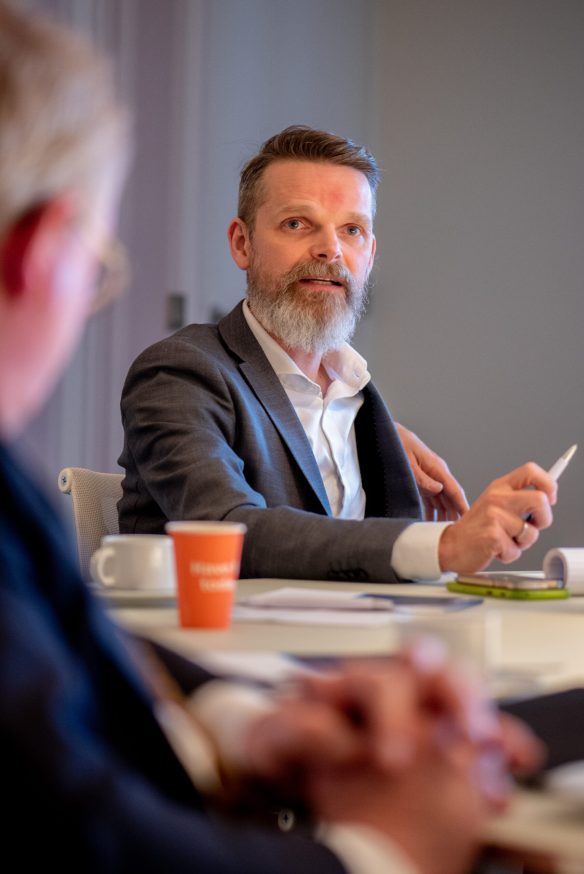
As mentioned earlier, the state of public finances has been a major focus for all participants. The topic has been explored in depth and further details have been added. We would like to refer you to the insights and conclusions summarised in the articles below:

Is there sufficient financial capacity to cope with these transitions? An essay by Johan de Kruijf and Jack Kruf.

Cracks appearing in financial relations. An essay by Caspar Boendermaker and Jack Kruf.
There was a firm belief that the Netherlands possesses all the knowledge required to establish the connections needed to identify and secure a successful strategy for each transition. The discipline of financial engineering is crucial to ensuring effectiveness over the coming decade. This discipline thus lies at the heart of public governance. There is no other way. Ultimately, money determines the quality of the public sphere, our society, our prosperity and personal well-being. National coordination is deemed necessary, as is targeted knowledge exchange. Otherwise, we will become fragmented and end up reinventing the wheel time and time again.
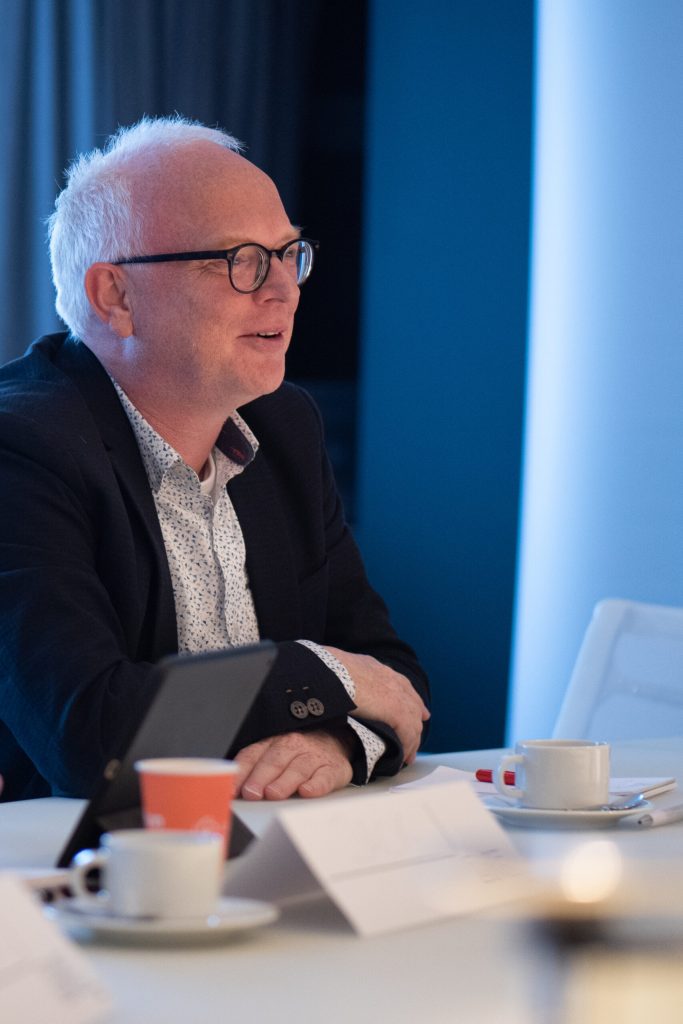
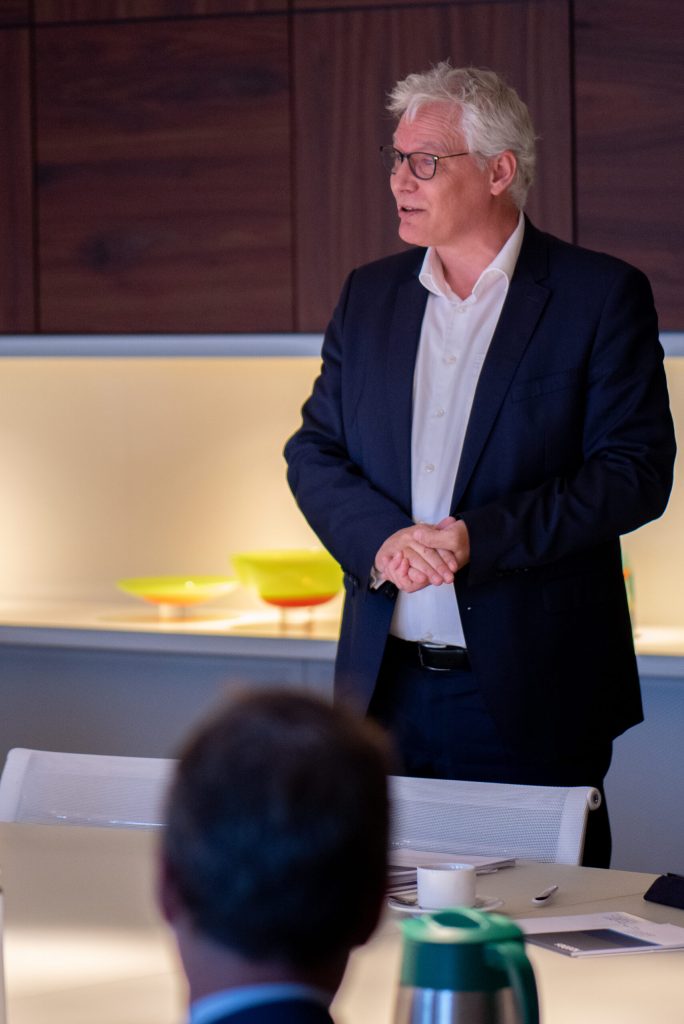
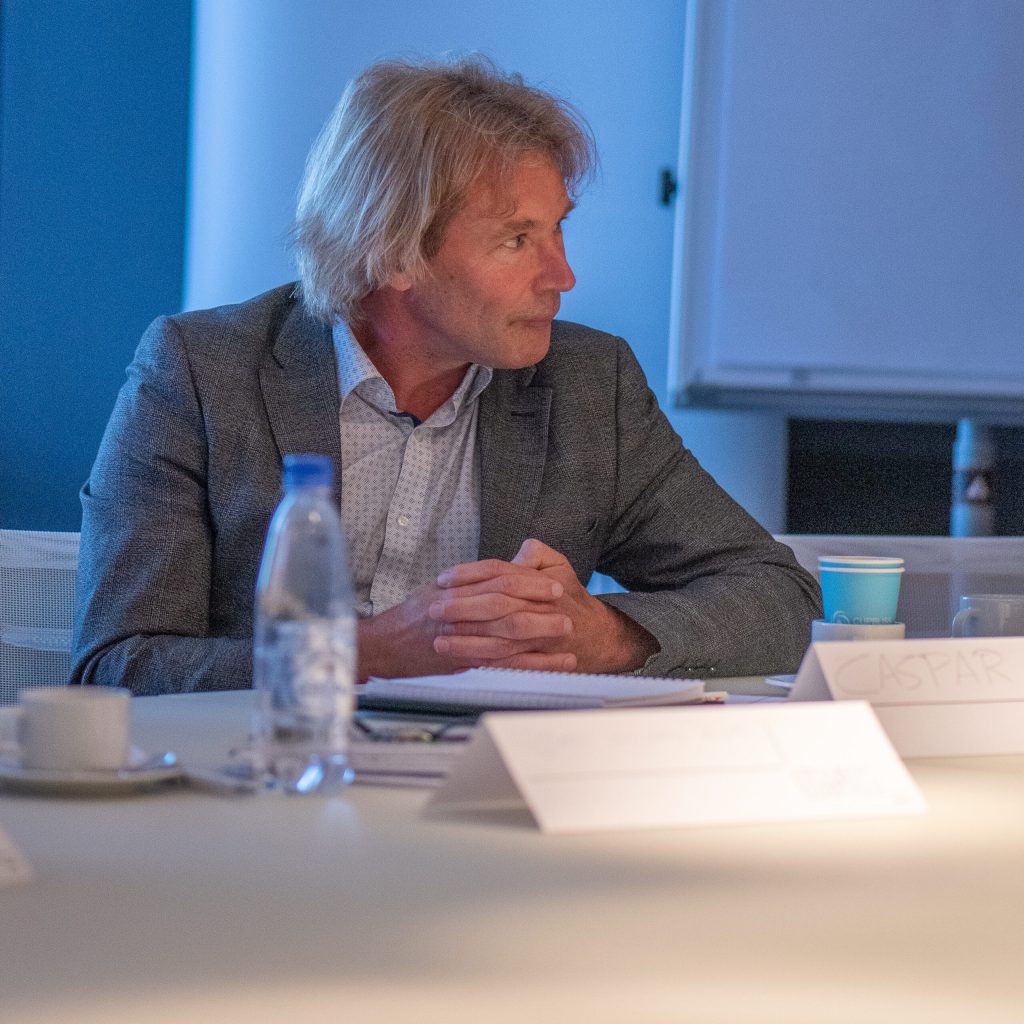
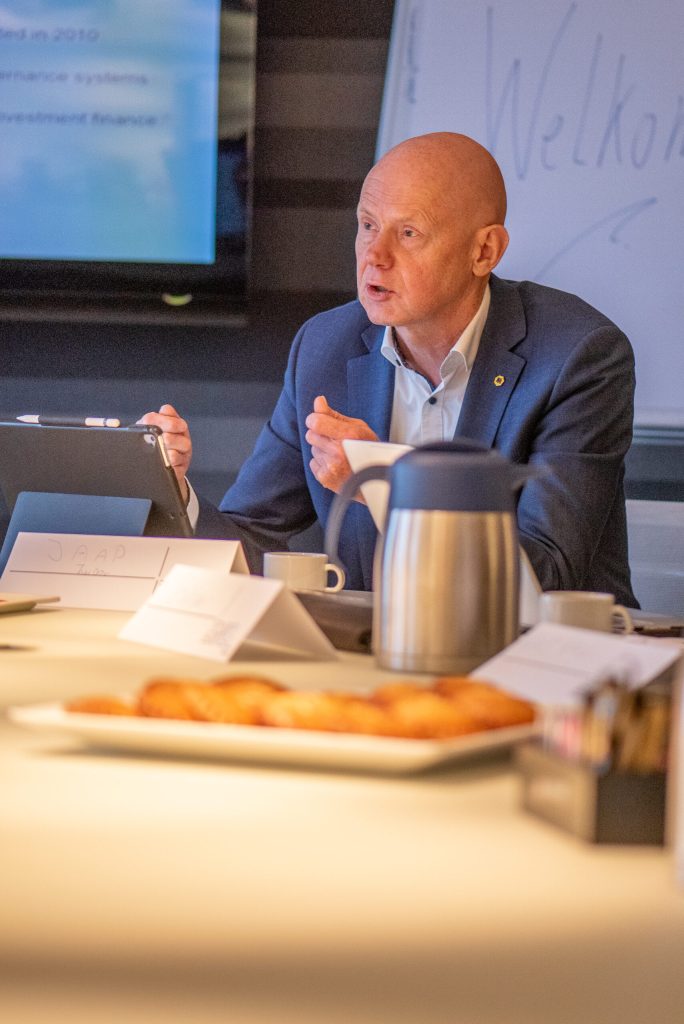
Drawing on BNG Bank’s wealth of experience and insights, we have been inspired by the range of options available to elected representatives, boards and management teams for establishing the necessary governance structures. We Dutch appear to be an inventive, yet consensus-seeking people. The quality of long-term financial engineering can make or break us; that much is clear. Acting on the principle that there is a single government and that we operate from that basis will help, and greatly so. No, it is a fundamental principle.
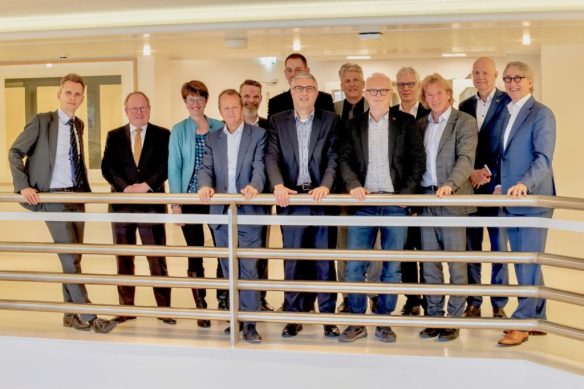
Participants
- Caspar Boendermaker, Business Development & Sustainability Specialist at BNG Bank and Senior Advisor at the Netherlands Investment Agency (NIA)
- Jan-Willem Dijk, Group Controller, Municipality of Assen
- Gido ten Dolle, Director of Spatial Planning and Economy, Municipality of Delft
- Teun Eikelboom, Head of Financial Regulation and Supervision at the Ministry of the Interior and Kingdom Relations
- Bert Hummel, Public Finance Manager, BNG Bank
- Henriëtte de Jong, Group Controller, Municipality of Groningen
- Johan de Kruijf, Associate Professor of Public Administration, Radboud University
- Jack Kruf, Director of PRIMO Netherlands, President of PRIMO Europe (Chair)
- Hans Krul, Municipal Secretary of Delft
- Hans van Lent, Group Controller, Municipality of Ede
- Tom Schulpen, Director of European Programmes, Province of North Brabant
- Ad Verbakel, Group Controller and Deputy Municipal Secretary of Eindhoven
- Jaap Zwaan, Municipal Secretary of Medemblik
Think Tank
The meeting is by invitation only and exclusively for PRIMO members. The Think Tank is an international initiative aimed at raising awareness of significant public risks, forging relevant links between organisations, and contributing to concrete courses of action, particularly at local and regional level.
Furthermore, the Think Tank aims to increase knowledge of and experience with strategic risk management as an integral part of good public governance, to promote the management of public values – and the underlying fundamental values as enshrined in the Dutch Constitution – and to mitigate public risks.
 PRIMO Res Publica