Risk Management at the Edge of Three Worlds

City management in the perspective of ‘risk’

Jack P. Kruf | 2007

In this article, I focus on the specific characteristics of the roles and positions of local authority CEOs and city managers in relation to the three worlds of politics, society, and management. A specific focus on the role of risk management in supporting the CEO, and on the process of discussing these issues, should be made to emphasise that risk management belongs on the strategic agenda and demands a holistic approach.

The “best” job

Some might say it is the most attractive and fascinating job there is: serving as CEO in local public management (or city manager or secretary). Why? Because it is at the very heart of a dynamic society, close to politics and government, at the centre of the world of “power and influence”, and at the top of the management pyramid. This person is at the junction of necessary skills, ambitions, rights, stakes, and interests. He or she is, via society, close to disasters, successes, poverty, and environmental challenges, and, via politics, to elected officials like the mayor and local alderman, but always in close contact with officials in higher government and very close to the professionals within the organisation. Local government leadership is a very exciting job.

“It is clear that risk management should be seen as a core competence for every public leader.”

The CEO is a generalist, not a specialist. One might say that a realistic comparison of the job would be with the decathlon. As with decathletes, the CEO must be well-rounded, competitive, and competent in many areas. 

Lees verder

Stern Review on the Economics of Climate Change

HM Treasury UK | 2006

“The scientific evidence is now overwhelming: climate change presents serious global risks and demands an urgent global response. This independent Review was commissioned by the Chancellor of the Exchequer, who reports to both the Chancellor and the Prime Minister, to contribute to assessing the evidence and building an understanding of the economics of climate change.

The Review first examines the evidence on the economic impacts of climate change itself and explores the economics of stabilizing greenhouse gases in the atmosphere. The second half of the Review considers the complex policy challenges involved in managing the transition to a low-carbon economy and in ensuring that societies can adapt to the consequences of climate change that can no longer be avoided.

The Review takes an international perspective. Climate change is global in its causes and consequences, and international collective action will be critical in driving an effective, efficient and equitable response on the scale required. This response will require deeper international cooperation in many areas – most notably in creating price signals and markets for carbon, spurring technology research, development and deployment, and promoting adaptation, particularly for developing countries.

Climate change presents a unique challenge for economics: it is the greatest and widest-ranging market failure ever seen. The economic analysis must therefore be global, deal with long time horizons, have the economics of risk and uncertainty at centre stage, and examine the possibility of major, non-marginal change. To meet these requirements, the Review draws on ideas and techniques from most of the important areas of economics, including many recent advances.

The benefits of strong, early action on climate change outweigh the costs

The effects of our actions now on future changes in the climate have long lead times. What we do now can have only a limited effect on the climate over the next 40 or 50 years. On the other hand what we do in the next 10 or 20 years can have a profound effect on the climate in the second half of this century and in the next.

No-one can predict the consequences of climate change with complete certainty; but we now know enough to understand the risks. Mitigation – taking strong action to reduce emissions – must be viewed as an investment, a cost incurred now and in the coming few decades to avoid the risks of very severe consequences in the future. If these investments are made wisely, the costs will be manageable, and there will be a wide range of opportunities for growth and development along the way. For this to work well, policy must promote sound market signals, overcome market failures and have equity and risk mitigation at its core. That essentially is the conceptual framework of this Review.

The Review considers the economic costs of the impacts of climate change, and the costs and benefits of action to reduce the emissions of greenhouse gases (GHGs) that cause it, in three different ways:

  • Using disaggregated techniques, in other words considering the physical
    impacts of climate change on the economy, on human life and on the environment, and examining the resource costs of different technologies and strategies to reduce greenhouse gas emissions.
  • Using economic models, including integrated assessment models that estimate the economic impacts of climate change, and macro-economic models that represent the costs and effects of the transition to low-carbon energy systems for the economy as a whole.
  • Using comparisons of the current level and future trajectories of the ‘social cost of carbon’ (the cost of impacts associated with an additional unit of greenhouse gas emissions) with the marginal abatement cost (the costs associated with incremental reductions in units of emissions).

From all of these perspectives, the evidence gathered by the Review leads to a
simple conclusion: the benefits of strong, early action considerably outweigh the costs.

The evidence shows that ignoring climate change will eventually damage economic growth. Our actions over the coming few decades could create risks of major disruption to economic and social activity, later in this century and in the next, on a scale similar to those associated with the great wars and the economic depression of the first half of the 20th century. And it will be difficult or impossible to reverse these changes. Tackling climate change is the pro-growth strategy for the longer term, and it can be done in a way that does not cap the aspirations for growth of rich or poor countries. The earlier effective action is taken, the less costly it will be.

At the same time, given that climate change is happening, measures to help people adapt to it are essential. And the less mitigation we do now, the greater the difficulty of continuing to adapt in future.

Download Stern Executive Summary

Visit National UK Archives

Global Risks Report 2006

World Economic Forum | 2006

Towards a more sophisticated understanding of global risks, this document summarises the output of a collaboration between the World Economic Forum, MMC (Marsh & McLennan Companies, Inc.), Merrill Lynch and Swiss Re, in association with the Risk Management and Decision Processes Center of the Wharton School at the University of Pennsylvania, on the topic of Global Risks. The purpose of this collaboration, building on work undertaken in 2004, was to:

  • Identify and assess current and emerging global risks in the 2006 and 2015 time horizons.
  • Study the links between them and assess their likely effect on different markets and industries.
  • Advance the thinking around more effective mitigation of global risks.
Lees verder

Global Risks to the Business Environment

World Economic Forum | 2005

Global Risks to the Business Environment: “This paper, the output of two workshops organised by the World Economic Forum in collaboration with Merrill Lynch, reviews major, global risks facing business leaders today, and examines how those risks differ from the challenges of the past. Some key points:

1) Global Risks and Business

At a time when risks not specific to business are having an unprecedented effect on the corporate world, it is crucial for business leaders to understand the environment in which their business operates, in order to survive, remain competitive and grasp opportunities.

2) An Increasingly Turbulent and Complex World

Today’s risks are much more interconnected than in the past. They are much more volatile and can disrupt markets throughout the world with almost instantaneous precision. Such risks can be difficult to anticipate and respond to, even for the most seasoned business leaders.

3) The Global Risks

We identify 36 “global” risks, classified into four categories: economic, geopolitical, societal and environmental. This report details the prevailing consensus reached at our workshop discussions as to the ten risks most likely to have a major or extreme impact on business:
• Instability in Iraq
• Terrorism
• Emerging fiscal crises
• Disruption in oil supplies
• Radical Islam
• Sudden decline in China’s growth
• Pandemics – infectious diseases
• Climate change
• Weapons of mass destruction (WMD)
• Unrestrained migration and related tensions

4) Risk Mapping – Connecting the “Dots” and Spotting the Patterns

In an interconnected world, global risks should not be considered on a stand-alone basis; it is important to understand how they can trigger, amplify or buffer one another.

5) Dealing with Global Risks

Seldom can global risks be addressed by a single business entity, industry or country, and many institutional mechanisms are proving fairly ineffectual as they struggle to cope with the challenge. There is also a large discrepancy between the immediate time horizon employed by most business and political leaders and the long-term approach required to tackle risks on a global scale. As a result, our capacity to address risk is jeopardized; a myopic tendency – or worse, denial – prevails. Finally, of equal concern is the problem that some major risks are being passed on to those least able to solve them – or with least responsibility for creating them.”

Global Risks to the Business Environment

The Risk of Leadership

A plea for a new search for ‘responsible-in-the-end’ leadership: stewardship

Jack Kruf | 10 March 2017

Of course, we have our democratic system, a great set of principles and values that serve as equipment for good public governance. Public leadership, concerning both public organisations and the public domain of society, is embedded in this system, at least it should be. You may expect excellent results because the democratic system traces back to the Greek δημοκρατία in 508 BC and has been tested and challenged over and over again. Over the millennia, it has developed to this point.

Jack Kruf

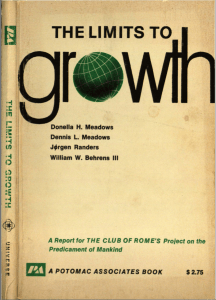
Considering the present state of society and of natural ecosystems, you may be surprised by the results of this period of 2525 years of development. The Global Risks Reports, published by the World Economic Forum since 2005, tell the story of how critical the state of the Earth is. Reading these reports, I had a flashback to 1972, when the Club of Rome presented facts, findings, and figures in its report, The Limits to Growth. For at least five decades (i.e., half a century!), we know what is going on and where many generations of leadership have brought us.

Lees verder

Risicoperceptie van gemeentesecretarissen

Bert van de Velden, Leo ’t Hart en Franc Weerwind* | 2004, VGS en Marsh

Anticiperend op het per 1 januari 2004 in te voeren Besluit Begroting en Verantwoording provincies en gemeenten (BBV) is medio 2003, bij een aantal gemeentesecretarissen het idee ontstaan om aandacht te geven aan het onderwerp risicomanagement. Dit idee is vervolgens uitgewerkt en besproken met het bestuur van de VGS. Hierbij is afgesproken om binnen het kader van risicomanagement onderzoek te doen naar de risicoperceptie van gemeentesecretarissen.

Bij publieke besluitvorming spelen veel aspecten een rol. Visie, nut en noodzaak, uitvoerbaarheid, (financiële) haalbaarheid en handhaafbaarheid zijn voorbeelden van die aspecten. Risicomanagement is een ander perspectief dat bij deze besluitvorming een rol kan spelen.

Lees verder

Handreiking Risicobeheersing voor Raadsleden

VNG | 30 juni 2022

Raadsleden moeten lastige afwegingen maken over grote projecten. Wat is het risico voor de gemeente? Welke maatschappelijke meerwaarde levert het op? Om raadsleden op weg te helpen in risicobeheer, is er nu de Handreiking Risicobeheersing voor Raadsleden. De handreiking is een gezamenlijk product van VNG Risicobeheer, de Nederlandse Vereniging voor Raadsleden en het ministerie van BZK. Het idee is dat risicobeheer reële verwachtingen oplevert en erkende (on)zekerheden. Met als doel een gedeeld besef van hoe er kan worden (bij)gestuurd, ook als zaken anders lopen dan verwacht.

Grip op projecten

De handreiking kan raadsleden helpen om op praktisch niveau beeld te brengen waar je op moet letten en of de gemaakte keuzes bijdragen aan maatschappelijke oplossingen. In projecten gaat het erom het financiële resultaat in beeld te krijgen, maar ook of de afweging van voor- en nadelen bijdraagt aan een betere samenleving,’ zegt directeur Henk Bouwmans van de Nederlandse Vereniging voor Raadsleden. 45% van alle raadsleden in de nieuwe periode is nieuw. ‘Ze moeten zich verdiepen in allerlei onderwerpen en worden overspoeld met informatie. Raadsleden steken gemiddeld 16 uur per week in het raadswerk. We zijn blij met deze handreiking omdat die helpt grip te krijgen op de risico’s van projecten en activiteiten.

Brede blik

Concerncontroller Tom Noordermeer van de gemeente Zevenaar werkte mee aan de handreiking namens het Risico Platform Overheden (RPO). Hij vindt het belangrijk dat de handreiking een brede kijk geeft op risicobeheersing. ‘Het gaat in de gemeenteraad vaak om het ratiogetal in de weerstandsparagraaf. Maar de vraag is: draagt die ratio bij aan een goed besluit of belemmert die dat juist?’ De weerstandsparagraaf is op zichzelf een goed instrument, maar het is aan actualisering toe, vindt Noordermeer. ‘De focus moet niet eenzijdig financieel zijn, in gemeenten is het aspect van publieke waarde net zo belangrijk. Het ratiogetal suggereert een exactheid die er in feite niet is.’ De handreiking is een bijdrage aan een bredere kijk op risicobeheersing.