Hans Redert en Jack Kruf | 2015
An interview with Yves de Boer, a member of the Provincial Governing Council of North Brabant, offers an open insight into the relevant trends and developments concerning the governance of the public (provincial) sector. Many of the insights shared by the governor remain relevant today. The interview offers lessons on strengthening governance capabilities.
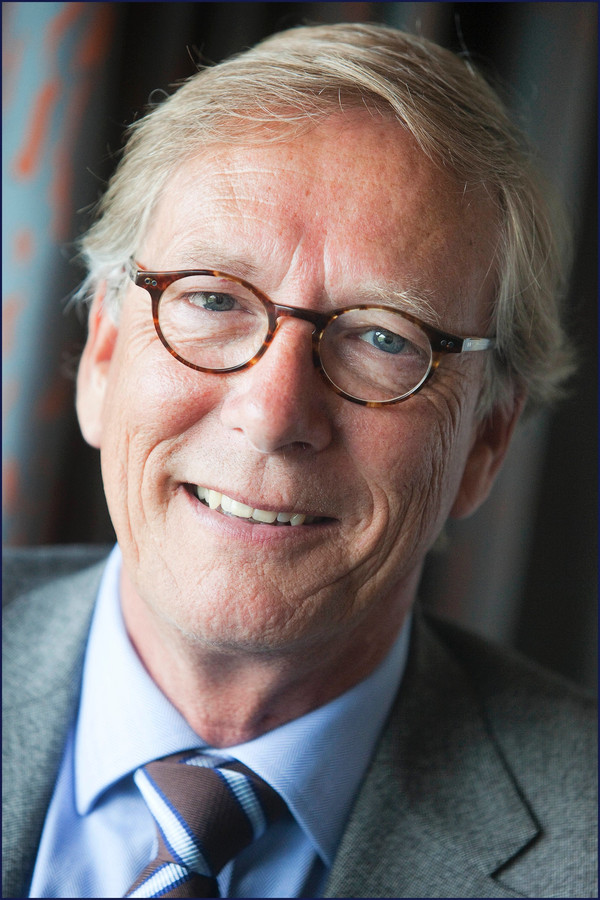
Our conversation with him reveals a leader who instinctively connects with all stakeholders in often complex issues. It is this conviction about the desire to connect that has grown within him over many years of experience and wisdom. The driving forces behind bringing people together have become ingrained in his immediate thinking and actions within the public sphere of governance. An open conversation with a true connector and a sharp analyst.
An evolving interface
At the interface between government and society, a great deal is changing, and at a rapid pace. Generally speaking, society is adapting much more quickly than it was, say, 10 years ago. The rise of social media (De Boer: “news travels at lightning speed”) and the fact that citizens and stakeholders are much more vocal are having a major impact on the role and place of government. In his view, there is a rapidly growing realisation that the government must be part of the networked society, rather than the other way round.
Cohesion is declining
Cohesion between the players in society appears to be declining. Old ties, such as the connection to one’s own land/territory/region, are gradually being lost. Interests are no longer straightforward and sometimes overlap in layers. This gives interest groups a sense of drifting. After all, the anchoring of interests is no longer straightforward. Increasingly, conflicting and difficult-to-reconcile interests come into play within issues. The declining cohesion makes processes and outcomes less predictable.
Hardening hinders open dialogue
De Boer observes that in the dialogue between society and politics, there is an increasing tendency towards a hardening of tone and language. Interests are expressed more forcefully and sharply. In his view, issues always require careful consideration. Dialogue is the way to achieve this, as it requires stakeholders to empathise with each other’s viewpoints, interests, backgrounds and origins. This mutual understanding fosters greater mutual understanding.
If financial resources are scarce – which is increasingly the case – the pressure increases further. A hardening of tone and language then makes optimal dialogue more fragile and vulnerable. In his view, this hardening is a consequence of diminishing mutual respect for one another. A development that inhibits and hinders open dialogue.
Provincial governor: a bridge between politics and society
The Provincial Elected Council is the debating forum of elected representatives with ultimate responsibility, a place where interests are ultimately shared and discussed. This is the natural home of the Provincial Governing Council. The outside world, however, tends to view the last as the province’s governing body, as the administration of Brabant. This implies that all expectations from the ‘outside’ – from citizens and businesses – regarding coordination and decision-making also rest with the governing council.
It is the natural task of this council to manage these expectations in such a way that a natural connection is created between provincial politics itself and the public sphere of provincial interests of citizens, businesses, and institutions.
The trend is that the provincial governor increasingly appears to be becoming the focal point, the place where politics and society meet. It is a clear trend, in De Boer’s view, that the range of options for an effective administrative approach – to translate political convictions into steering power and to properly address societal interests within the political arena – is broadening. This demands ever greater creativity, skill, and openness from administrators to arrive at solutions with all stakeholders within the bounds of legality. As a provincial governor, you must keep a close eye on this range of options in order to, as it were, constantly reinvent your role as a unifying force.
The provincial Governor as a ‘homo universalis’
Within the Province, interest groups increasingly view the provincial governor as the figurehead – and sometimes even the ultimate one. The member of the Provincial Governing Council has become the embodiment of the role in which serving as a direct point of contact for citizens and businesses, and exercising administrative power converge.
Society increasingly expects the provincial governor to sort things out (quickly). That he or she, as it were, has the final say – or ought to have it – in order to arrive at solutions swiftly. De Boer believes that society is increasingly focusing on a face, a person, who possesses the gift of personally connecting the inner and outer worlds.
The provincial governor is increasingly seen as a ‘homo universalis’ within the overall, for many people complex, administrative system. He or she connects the systemic world of the administrative domain with the living world of the public domain.
Empathy: the key to success
The combined expectations of stakeholders, the due diligence required in decision-making, and the position of the provincial governor – and thus of each member of the governing council – mean that the provincial administration is regarded as the ultimate bridge between different worlds.
To fulfill this role, empathy with people and their interests is essential for successful governance. This is, in addition, of course, to knowledge of the substance of issues and their background, of new policies that are constantly being developed, and of the nature and legitimacy of procedures. Empathy forms the basis for reaching agreements with stakeholders and, naturally, for honoring them.
Empathy has become the key factor for success. Without it, there is no real understanding of issues, no regard for people and their interests, and effective solutions are, in his view, impossible. Empathy has become a top-tier administrative competence over the last 10 years.
Governance 2.0 is the way forward
The complexity of decision-making on multifaceted issues is enormous. Increasingly, they require a cascade of decisions, all of which must, of course, be taken carefully and, above all, lawfully. Governance is no longer about following purely linear paths. It increasingly involves thinking through the various aspects of the issue and bringing parties together in a fluid process that demands flexibility from all involved.
‘In fact, there is increasingly more government participation rather than citizen participation’
Governance 2.0 is a theme that Yves de Boer has been promoting for years. He speaks of the “social innovation of spatial planning”. As chair of the Year of Spatial Planning 2015, he observes that society is developing rapidly, bringing its spaces to life through individual and collective initiatives, and that the government can and should increasingly become part of this process. In fact, there is an increasing shift towards government participation rather than citizen participation.
He is convinced that, in public administration, working on this participation in strategy, policy, and implementation is the way forward. He knows that allowing participation is perhaps not the easiest form of governance. It is intensive and demands a great deal from politics, administration, and society. But it is challenging, it does much more justice to interests and leads to socially supported and therefore effective solutions.
Finally
We conclude from this fascinating conversation that Yves de Boer immediately translates the trends he observes into a renewed, personal approach to issues and an interactive, empathetic style of governance. It seems as though his new way of thinking is not yet complete and will continue to evolve. He is a leader through and through.
 PRIMO Res Publica