Jack Kruf | March 2020
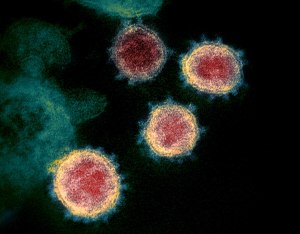
The recent outbreak of COVID-19 gives rise to some personal thoughts. Of course, we face a crisis and are trying to limit the outbreak. But we seem to have entered the middle of a movie, in a world, for most people, strange, where aliens are trying to take over our precious planet. Some reflections through some familiar lenses in the world of value and risk management.
Certain or uncertain?
Some say we are living in a volatile, uncertain, complex, and ambiguous (VUCA) world, and that this outbreak is related to this. I personally do not think along these lines of considering the world. I never did. I think we live in a highly sophisticated world where science is advanced, and experts are fully aware of most patterns. We live in a world full of certainties. VUCA is made up and non-existent in my view.
The world in 2020, in my view, is not more complex than it was 10.000 years ago. Maybe it has to do with my Wageningen University background (forest ecology and social psychology), but anyway, it is my conviction. The world order is the same; its volatility and complexity are the same as they ever were. Ambiguous? Think not. The way the world shows itself to us today, though, is different and more intense. The underlying patterns are the same. In every ecosystem, the laws of the jungle rule. They always did, and always will. The present dynamics follow the same patterns, from that of the forest ecosystem to, yes, the world of viruses.
Did we know?
I think that we knew what was coming. The experts did. We studied epidemics extensively, reported on them to the world, and built scenarios. It is an essential part of every ecosystem and at the heart of resilience thinking. I believe we have enough scientific knowledge about the planet to justify the conclusion that an epidemic is no more complex, uncertain, or unpredictable than other social matters we face daily. If we fail or forget to act, it leads to a crisis. And so we did.
Global Risks Report
This has been the reason why PRIMO in 2014 took the initiative to organise a yearly think tank ‘From Global to Local’ in cooperation with the European Federation of Local Authority Chief Executive Officers, UDITE. This think tank organises a transdisciplinary debate on how to concretise local management and governance in response to public risks identified through in-depth interviews and respected analyses by world leaders, experts, and scientists. Every year, we pick one public risk and one challenge and develop detailed recommendations for local and regional governance. For 2020, we have chosen the interface between the handling of the rest of medicine in surface water (lakes and rivers), the quality of drinking water, the risk for people and society, the chain of involved organisations, and the related aspects of public governance. In 2019, we discussed financial resilience; in 2018, energy transition; and in 2017, cybersecurity, to give a sense of the topics. Almost every time, we faced the long-distance road between the global values and risks and the ability to act on the local, regional, or provincial level. Yes, even on the country-level.
Corona
Regarding epidemics like the COVID-19 pandemic, we note the system-wide reporting over the last 15 years! The conclusions of the last Global Risks Report, published in January 2020, were in fact very clear on this. Simply stated: we knew that we were highly vulnerable to pandemics, we knew we could expect an epidimic and yes, we knew we were not ready. Please read: Insights on handling coronavirus from an earlier report on business and outbreaks.
We can also conclude that some of us saw it coming and knew the scenarios; it was not widely accepted as a genuine public risk by the general public or most public leaders. Did we forget about it? Despite the many publications, there was no hard, felt, or obvious need to incorporate scenarios into our strategies and policies and to attach risk and resilience management to them. Now, most of the measures to handle the crisis and reduce the actual risks seem to have been invented, discussed, and debated over the past week. And thanks to a rich (social) media landscape, we may know what is true and what is not. My plea is to listen to the (right) experts and to the people who are on the front lines of care and cure. Our learning curve is steep, though, but preventing the outbreak could have been possible.
A fragmented landscape
The decisions we make are diverse, though, and seem to differ greatly by culture, country, public governance structure, and, let us be honest, by type (and even character) of leadership. We seem to be improvising. This is partly because most local and regional governments’ policy plans did not mention or anticipate this type of crisis. It was, and still is, not predicted or calculated in terms of social and economic impact. In most existing risk analyses of regions and municipalities, it is not found in policy plans or risk paragraphs, whereas global reports are widely disseminated, discussed, and known.
Disconnection?
Well, is this disconnection between the global and the local not surreal, even bizarre? Should globally known ex ante scenarios be better integrated into the heart of local and regional public governance to prevent us from drifting on the wide ocean of ex post crisis management? I think yes. Here is a lesson to be learned. But to improve, we need to look more carefully, because interfaces are always between two players. Beck et al. (2013) conducted a national study in the Netherlands on the interface between national knowledge institutes and regional/local governments. It could possibly be extrapolated to global knowledge institutes. They concluded (page 38) that:
- Almost all interviewees at provinces, municipalities, and water boards claim that they follow the publications of national knowledge institutes, but that they always lack depth at the regional level. Usually, it lacks regional and provincial breakdowns in tables or maps.
- The interviewees also indicate that the ‘lens’ through which national knowledge institutes look is not sharp enough to analyse the specific mix of problems in their region. In addition, scientific knowledge is, as such, too difficult for administrations to use, as it is often too specialised and not directly applicable to policy papers because the results have not been translated into relevant policy information.
- The mismatch is caused by the fact that research – carried out by national knowledge institutes for the national policy cycle – is predominantly exploratory and signalling, with these institutes emphasising fundamental scientific national scale, while decentralised policy makers are particularly in need of regionally applicable policy research that fits policy practice.”
Now, with the outbreak of the Coronavirus, are we facing scenarios that were known, thoroughly analysed, considered high risk, elaborated on, and, in fact, expected? And yes, due to a combination of factors, they were not publicly recognized as major or key risks and therefore were not translated into, or embedded in, local and regional plans. I think we may conclude this. Quote of the Global Risks Report 2020:
“A recent first-of-its-kind comprehensive assessment of health security and related capabilities across 195 countries found fundamental weaknesses around the world: no country is fully prepared to handle an epidemic or pandemic (NIT, 2019). Meanwhile, our collective vulnerability to the societal and economic impacts of infectious disease crises appears to be increasing.” – World Economic Forum.
High Reliability
It is the view and strong conviction of PRIMO that every public leader – in charge of and responsible for the quality of decisions related to the public domain of citizens and society, which in fact they represent (chosen by the people, representing the people and working for the people) – should act as if he/she is part of a High Reliability Organisation (Weick and Sutcliffe, 2007). In this approach to thinking and acting, the leaders of such organisations listen to experts and act accordingly.
Simply put, leaders should respect the experts and ground workers, vice versa. Mutual respect is the crucial factor. Mutual. Sutcliffe and Weick concluded that, in highly reliable and therefore successful organisations, this principle emerges as the simple ground rule: if experts speak, leaders should listen and act accordingly, based on their true insights and knowledge. Public leaders are alike.
Here, though, they meet with the political dimension of their leadership. It should not be a conflicting factor in crisis management. But it was. The term politics is what connects public leaders, what in fact unites them, in its original meaning. The term ‘politics’ derives from the Greek πολιτικά, politiká, meaning “affairs of the cities”. It is this entity, the city, where at the end, all things meet. The American politician O’Neill (1994) stated: “All politics, after all, is local”.
During pandemics, national leaders should also take note of this principle. All decisions work out locally. Mayors and city managers should be involved in all the steps we take. To be frank, I miss the high-reliability approach during the last few weeks of the crisis-management acceleration.
Holistic approach
Well, we are looking forward to good governance and to true public risk management by leaders, experts, and scientists. I am hopeful we will manage this. The stakes are high. I personally believe in the Renaissance power of humans. PRIMO will contribute where it can and is allowed to. It has a well-designed portfolio focused on sharing knowledge via media, think tanks, education, a public risk forum, and a governance framework, FORTE™, to facilitate dialogue.
From my perspective, a plea is that high-quality risk reports, as mentioned here or similar, should be on the bedside table of every public leader. It is free guidance not only on the bigger picture of relevant trends and developments, but also on the insights that show these are directly connected to every local community, street, house, and citizen. Knowledge improves the quality of decisions, always.
It is, in fact, the holistic approach I plead for. Every detail is connected with the bigger picture, vice versa. Holism is not a vague concept in this regard, but a concept of true public value management by connecting the dots and true listening. As PRIMO, we are fully committed to this concept, to help and support our members in dialogue and sharing the knowledge to do so, to find, and to engineer good public governance.
Bibliography
Beck, J., Van den Broek, L., & Van Gerwen, O-J. (2013). Kennismaken met decentrale overheden: Een verkennende studie naar de strategische kennisbehoefte van provincies, gemeenten en waterschappen in samenhang met de decentralisatie van het omgevingsbeleid. Planbureau voor de Leefomgeving.
O’Neill, T., & Hymel, G. (1994). All Politics Is Local: And Other Rules of the Game. Bob Adams, Inc.
NTI (Nuclear Threat Initiative) (2019). Global Health Security Index: Inaugural Global Health Security Index Finds No Country Is Prepared for Epidemics or Pandemics. NTI. Press Release, 24 October 2019. Read more
Weick, K.,& Sutcliffe, K. (2007). Managing the Unexpected: Resilient Performance in an Age of Uncertainty. Jossey-Bass.
World Economic Forum (2019). Outbreak Readiness and Business Impact Protecting Lives and Livelihoods across the Global Economy. White Paper, in collaboration with Harvard Global Health Institute.
*Jack Kruf is President of PRIMO Europe. This article has been written on a personal title.
 PRIMO Res Publica