The effects of the downturn
Philippe Auzimour, Sabrina Boshuizen en Jack Kruf | July 2009
In mid-2009, Alarm, Marsh, and PRIMO Europe joined forces by presenting the results of different surveys and round tables, which focused on the public risks companies and governments faced due to the downturn. This article combines this report’s highlights (selected by the editor). The extended survey gave an in-depth look at perceptions and actual risks directly after a massive financial crisis emerged.


The survey shows that risk complexity has increased: over 75% of participants reported that the volume and complexity of risks within their organisation have increased over the last 5 years. 700 Organisations were interviewed, spanning twelve countries and seven industry sectors. Of these organisations, 101 were in public entities. PRIMO Europe interviewed several people from public entity organisations and sent out a survey to public entities, to which 112 people responded. Also, two round tables were held, one in Amsterdam and one in Bournemouth. The results of all interviews, survey responses, and roundtables are included in this report.
Findings and headlines
There is a huge increase in technological complexity, which heightens the complexity of our risks, but this technology also helps us control them. In the event of a technology failure, a large number of our processes will be down. Take, for example, the internet: if it’s down, most of our communication is blocked. If electricity is down for an hour, communities panic as they are so heavily dependent on technology.
51% of respondents had experienced a significant disaster in the last 5 years. The disasters mentioned included environmental calamities, major disruptions to transport and infrastructure, and general disasters such as fires and aircraft accidents. 50% of the respondents had experienced some to many major operational surprises in the last 5 years, from key employees leaving the organisation to major budget overruns on large projects.
Another driver of risk management is the pressure of external parties. Over half of the respondents said that external stakeholders, such as members of the public, corporates, and local government officials, had put pressure on organisations to provide more information about risk in the areas of finance, political reputation, risk management, and legislation affecting their organisations.
Asked which risks they regarded as likely to be most significant over the next 18 months, participants identified environmental risk (73%), public liability (65%), business continuity (63%) and partnership risks (59%). In addition, half of the respondents expressed concern about PPP and PFI associates or contractors.
Philippe Auzimour, head of Marsh’s public sector practice in Europe, the Middle East and Africa, said: “The recession has had a clear impact on the way public sector bodies approach risk. Over half of the survey participants say that, because of the downturn, risk management is now seen as more important at senior levels in their organisation. A similar proportion say that the downturn has prompted their organisation to review its approach to risk management, and 22% say their board’s appetite for risk has grown. In addition to planning for a major disaster, public sector organisations’ risk management is under scrutiny from a growing list of stakeholders.”
Lynn Drennan, CEO of ALARM, the UK public risk management body, commented that the recession was putting pressure on budgets in public sector organisations: “The financial crisis means reduced budgets, fewer grants and fewer projects. An increase in social assistance and unemployment is also seen as a risk by public sector bodies. Forward-thinking bodies are now reviewing investments and budgets and considering which projects could be postponed. all of this means that the need to manage risk more proactively has never been more acute.”
Jack Kruf, president of PRIMO Europe, added: “Almost three-quarters of the participants say that a sector-wide standard for risk management either would or already does benefit their organisation. Of those already covered by a sector-wide standard, 89% say it benefits them. Embedding best practice risk management clearly has benefits for organisations prepared to make the necessary investments.”
The impact of the downturn
To find out how organisations have responded to the downturn, the survey examined attitudes to risk management, including risk priorities, strategy, and policy.
A split in attitudes towards risk management
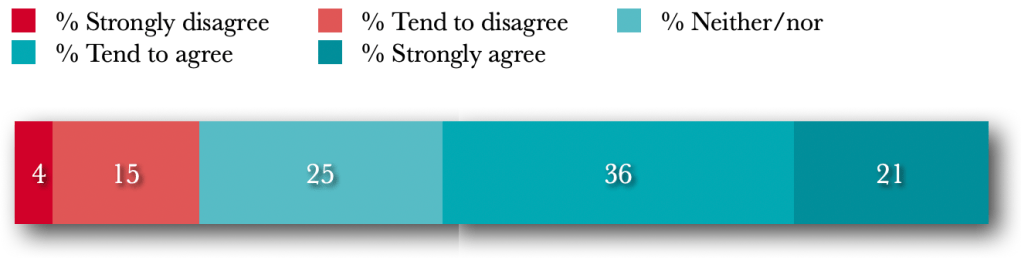
There is evidence of a split between those adopting and those ignoring risk management, as seen in responses to a question about whether the downturn has raised the importance of risk management at the most senior levels.
Overall, 56% say it has, but there is a marked disparity between the UK, where local authorities have dedicated risk managers, and the countries where this is not the case, as the figure below shows. 19% of the people are convinced that the downturn has not raised the importance of risk management. 25% do not know. Quite astonishing, considering that the economic downturn has such a large impact on business, economic development, and society.
Increasing demands, diminishing resources
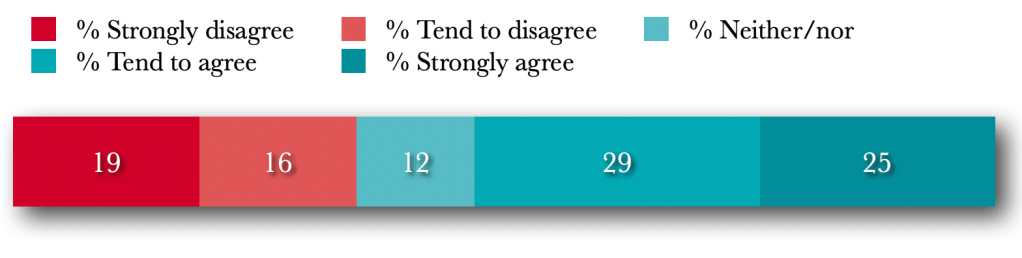
Every single public entity has been affected by the downturn. According to the participants, their organisations will be hit mostly in terms of means and budget, with fewer grants and projects. Public entities have had severe losses and will need to make budget cuts. Also, an increase in social assistance and unemployment is seen as a big risk coming from the crisis. But when asked if they will be affected less than other sectors, more than half of the participants in our survey agree, as the figure below shows.
Although they will not be affected as directly as some other sectors, the demands made on them will increase as the downturn continues – those unable to keep up with their mortgage payments may need public housing, for example. Meanwhile, revenues are likely to decrease as business rates bring in less, tourism declines, and more people default on local taxes.
If the effects of the downturn on public entities are not as direct as they are on other sectors, they may well be longer-lasting. Some areas of public spending will increase in the short term as government stimulus packages are disbursed. Stimulating sustainability, accelerating investments, and the nationalisation of banks are among the current risk management policies driven by central governments. But this spending will be followed by cuts as governments try to restore their financial positions.
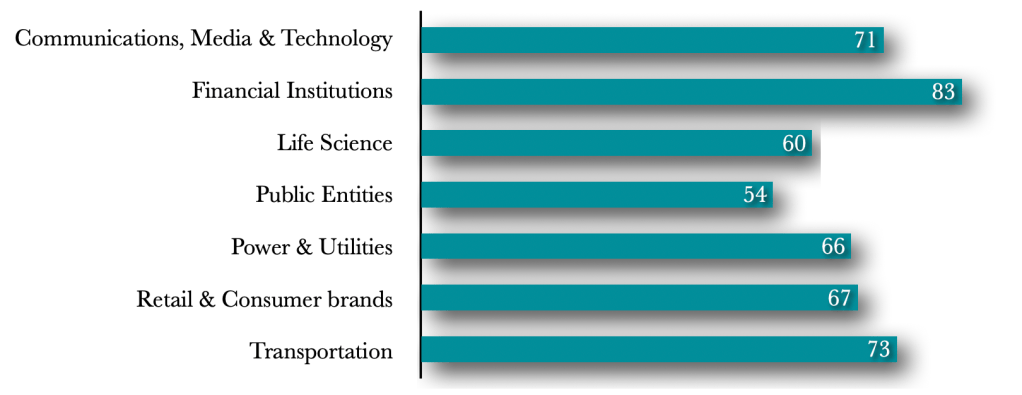
This lack of direct and immediate impact may be why, of the seven sectors we surveyed, public entities are the least likely to say that the downturn has prompted them to review their approach to risk. Nonetheless, 54% of respondents have done just that. It is the lowest rate related to other sectors.
The credit crisis has made managers more likely to discuss risk management. Risk management has unfortunately not always been a hot topic for politicians and chief executive officers (CEO). CEOs are there for strategic decisions, and are not accustomed to thinking about a hole in the road, for example. A wider area should be drawn. Issues like health, housing, and infrastructure need structural and strategic attention. The credit crisis forces managers to think better about things. They have to think about budgets, dismissals, and other macroeconomic drivers. This is the time to pay attention to risk management.
Asked how the downturn will affect risk management, 13% of participants say that more attention will be paid to budgets – especially, it seems, for insurance. The most common response, voiced by 30% of participants, is that the downturn will have no effect on risk management. This is the first sign in the survey of a group of about a third of participants who seem not to be engaging with risk management.
The existence of this group seems confirmed when we ask which areas the downturn has prompted them to review in their approach to risk. Many participants answer this question as though they had been asked about insurance, rather than risk more broadly, as this response shows: “This economic slowdown doesn’t currently influence our decisions regarding insurance”.
This speaks to the lack of dedicated risk managers in public entities, except in the UK and the Benelux countries. As a result, risk tends to be dealt with in a rather piecemeal way, with aspects of it covered by insurance, legal, or health and safety departments. However, the downturn is likely to change attitudes to risk management. CEOs of local authorities have seen their tenants bankrupted and understand that major players in public finance, such as Dexia and Fortis, can also get into deep trouble. Some municipalities in France could face rate increases of up to 18% due to structured finance issues. As a result, elected representatives and civil servants are more likely to understand that there is a return on the money invested in risk management and that the discipline must be taken seriously.
Philippe Auzimour, “The recession has had a clear impact on the way public sector bodies approach risk. Over half of the survey participants say that, because of the downturn, risk management is now seen as more important at senior levels in their organisation. A similar proportion say that the downturn has prompted their organisation to review its approach to risk management, and 22% say their board’s appetite for risk has grown. In addition to planning for a major disaster, public sector organisations’ risk management is under scrutiny from a growing list of stakeholders.”
The downturn in the global economy has been swift and severe. It raises important questions about how organisations conduct their business – and particularly about how they assess and manage risk. Lynn Drennan, ceo of Alarm, the UK public risk management body, commented that the recession was putting pressure on budgets in public sector organisations: “The financial crisis means reduced budgets, fewer grants and fewer projects. An increase in social assistance and unemployment is also seen as a risk by the public.

The results illustrate how the downturn – combined with court rulings and regulations such as the EU Environmental Liability Directive – is adding to public entities’ long- term liabilities and making it increasingly difficult for them to genuinely share risks with the private sector.
Over half the participants (56%) say that, because of the downturn, risk management is now seen as more important at senior levels in their organisation. A similar proportion says that the downturn has prompted their organisation to review its approach to risk management. 22% say their board’s appetite for risk has grown. The proportion of participants who say their appetite for risk has diminished (25%) is the lowest across the seven sectors in our survey.
Risk appetite is very different than in other sectors
If awareness of risk is beginning to increase, what effect is that having on boards’ appetite for risk? Here again, there are large regional differences. Overall, around half of our participants say that the board’s risk appetite has not been affected by the downturn, with the rest fairly evenly split between increasing and decreasing appetite, as the figure shows.
The public sector has the lowest percentage reporting a decrease in appetite for risk – among financial institutions, the percentage is 52%, with other sectors ranging between 33% and 43%. When we break the responses down geographically, we see that the UK gives very different responses than other participants. In this country, where risk management has been embraced far more than elsewhere in Europe, only a third say the downturn has not affected appetite. Meanwhile, a quarter say it has lessened their appetite for risk, and a third say it has increased it.
The explanation is that public entities have no choice but to take on more risk, as new regulations and failing companies increasingly shift liability onto them (see Section 2). The realisation of this is greatest in the UK, where public-sector risk management is best developed and where PPP has been most in evidence.
Elsewhere in the world, there are attempts to address this growth in public entities’ liabilities – in the United States, some cities are suing banks over lending decisions that have left city authorities with thousands of extra people to rehouse – but in Europe, the trend is clear. With risks increasingly devolving to public entities, better risk analysis is the only option.
A large group plans to retain more risk
This explanation is reinforced by the fact that 22% of participants – the highest percentage in any sector, at 23% – plan to retain more risk, while only 12% expect to transfer more. When asked in which areas they would retain more risk, 23% of participants mentioned insurance, and 18% mention liability. This seems to indicate a move among the more sophisticated public entities towards self-insurance.
The retention of risk necessitates establishing reserves appropriate to a local authority’s budgetary procedures. It is imperative to monitor fund balances and forecast future claims to ensure the fund is adequate to meet claim settlements.
It is likely that organisations that have conducted risk analyses are moving to self-insure against frequent claims, such as injuries among waste-management staff. In Paris, on any given day, 16% of dustbin collectors are absent from work due to minor injuries, typically caused by poor lifting techniques. The money spent on insuring these frequent claims can be ring-fenced for paying compensation, providing healthcare, and – most importantly – improving training and awareness to avoid injuries. Retaining risks such as these can save money, which may then be used to increase limits on low-frequency, high-impact events such as earthquakes, pandemics, and floods – the very areas in which the changes in liability are most likely to affect public entities. By moving towards higher deductibles and much higher limits on insurance policies, public entities can trade an increased likelihood of affordable losses against a much decreased likelihood of a catastrophically large loss.
A feasibility study carried out at the end of 2005 and participated in by 28 authorities established that a mutual owned by London authorities could generate significant premium savings and, in the medium term, a substantial operating surplus for its members.
Comparing performance among organisations
Strategies such as the one outlined above can only spread if organisations have some means of evaluating their risk management practices against those of their peers. Of the participants in our survey, 40% say they have initiatives in place for doing so. Most commonly, these initiatives include peer review (28%) and the establishment of a risk management group (also 28%).
When asked if there is a sector-wide standard in their country for evaluating public entities’ risk management practices, most participants answered correctly. Discrepancies are largely due to differing interpretations of what constitutes a sector-wide standard. For example, there are standards in several countries governing health and safety and BCM, which are aspects of risk management, but there is nothing explicitly covering risk management as a whole. The UK also has Alarm, the public risk management association. There is no comparable sizeable equivalent in other European countries. However, 71% of our participants say that a sector-wide standard either does or would benefit them. And of those who believe a sector-wide standard exists, 89% say it benefits their organisation.
Alarm came into being under its current name in the early ’90s, the year before Municipal Mutual Insurance (MMI), which had provided insurance to all UK local authorities, went bust after unsuccessful attempts to address solvency problems. Having tried successive year-on-year premium hikes of 40-60%, MMI imposed significant (> £100K) deductibles on their larger (County/Metropolitan) clients in 1992. It was, however, too late, and after both the public entity members and the UK government at the time declined to inject further cash, MMI ceased trading and went into run-off in 1993. The market changed forever, with private-sector insurers maintaining the high-deductible approach, which in turn forced public entities in the UK to move away from reliance on ground-up insurance and to invest in risk management. The downturn is now exerting similar pressures across Europe.

The other factor in developing risk management in the UK was the introduction of the CPA (Comprehensive Performance Assessments) – performance in which is directly linked to government grants. The focus of these assessments was not only on audit but also on how risk management could enhance service delivery. Now is a good time for a Europe-wide equivalent.
Public entities are realising they have to evaluate their risk management
Almost three-quarters (71%) of participants say that a sector-wide standard for risk management either would or already does benefit their organisation. Of those already covered by a sector-wide standard, 89% say it benefits them. However, only 40% of participants say they have initiatives for evaluating their risk management practices against those of their peers. embedding best practice risk management is clearly having benefits for organisations prepared to make the necessary investments.”
Financial crisis puts pressure on public spending efficiency
According to the participants, the financial crisis will hit their organisations primarily in terms of resources and budgets, less so in grants and projects. Also, an increase in social assistance and unemployment is seen as a risk resulting from the crisis. 43% of the participants say they have a special (financial and economic) crisis alert team. The most important actions that their organisations or these special teams have taken are earlier investments, budget reviews, and project postponement.
Over 75% of participants reported that the volume and complexity of risks within their organisation have increased over the last 5 years. 51% had experienced a significant disaster in the last 5 years. Some of the disasters mentioned were: significant budget overruns in large projects, environmental calamities, major transport/infrastructure disruptions, and general disasters like fires or aircraft accidents. Another driver of risk management is the pressure of external parties. Over half of the respondents said that external stakeholders, such as members of the public, corporates, and local government officials, had put pressure on organisations to provide more information about risk in the areas of finance, political reputation, risk management, and legislation affecting their organisations.
Manifestations of risk
Asked which risks they regarded as likely to be most significant over the next 18 months, participants identified environmental risk (73%), public liability (65%), business continuity (63%), and partnership risks (59%). In addition, almost as many participants are concerned about PPP and PFI associates or contractors (51%) as are concerned about citizens (54%).
Environmental risks
Governments face a broad range of environmental risks, from local pollution to climate change. Extreme weather conditions are predicted to become more common, the sea level is rising, and the risk of floods is increasing. The impact of nature on humans is a concrete threat. There is a risk of a shortage of commodities, which could lead to an increase in population migration. Also, public health-related risks, linked to pandemics, use of radio waves, or nanotechnologies are to be managed more cautiously by local authorities.
Another reason for the growing concern about environmental risks is the EU’s Environmental Liability Directive 2004, which established the “polluter pays” principle. As local authorities are responsible for the water, air, and endangered species within their territory, courts usually rule that they bear the ultimate liability for pollution. An example is a case brought by consumers in France against a company that provides water, due to the nitrate levels in the drinking water. Having lost the case, the water company sued the government on the grounds that the nitrates resulted from local farmers using too much fertiliser and that the government had failed in its responsibility to enforce restrictions on fertiliser use. The water company won this case, and the government duly paid the compensation owed to its customers.
Public liability
Heightened public awareness of environmental issues increases the likelihood of regulatory action and claims. This mechanism is one reason participants in the survey identify public liability as a significant risk. It is rated as significant by the second-highest proportion overall (65%) and as “very significant” by the largest proportion of participants (28%). In fact, public entities are liable for everything within their area, not merely environmental risks.
Public liability fosters the need to build resilient communities and mitigate partnership risks. Partnership risks (59%), PPP and PFI associates or contractors risk (51%) and concerns about citizens (54%) illustrate how the downturn – combined with court rulings and regulations such as the EU Environmental Liability Directive1 – are adding to public entities’ long- term liabilities and making it increasingly difficult for them to genuinely share risks with the private sector.
The mayor of Chamonix, Michel Charlet, was given a six-month suspended sentence – despite an appeal – as a result of the 1999 fire in the Mont Blanc tunnel. The judge ruled that because the tunnel was in the mayor’s territory, he bore responsibility for not having identified the danger and taken steps to avoid it, even though he had no direct authority over the tunnel.
The “precautionary principle”, adopted by the EU and enshrined in law in many European countries, expands potential liability. Two city governments in the EU have compelled a mobile telephone provider to remove mobile phone relay stations for this reason, despite the lack of compelling evidence that they cause harm.
Business Continuity
Business continuity risks, the third risk on the list (rated significant by 63%), is also closely related to the first two. For local authorities, business continuity means restoring normality as soon as possible. That includes clean water, security, and other basic public services such as work management and transport. Authorities may expose themselves to legal action if they fail to keep public services running, even amid a pandemic, earthquake, or flood – forces that respect no boundaries or borders. To do this, they will have to stress-test plans in order to improve resilience and be able to cope with any emerging risks.
During the PRIMO Europe roundtable “the art of risk management” insufficient connection between everything that is happening around us was seen as a major risk; other major risks were considered as current high risks for society; for example, changing demographics in society, like widespread legal immigration, which has a severe impact on the provision of health care, education, and housing. But also the longer life expectancy of people nowadays, which causes a higher demand for public services and social health care. Another risk that was mentioned is cybercrime. Cybercrime is an ongoing threat that requires police and several organisations to work together.
‘Resilient communities’ as concept of thinking emerges, because of the multitude and cohesion of risks.
Partnership
Because some risks cannot be efficiently transferred, partnership becomes less attractive for both public and private bodies. In France, many utilities are being renationalised: Paris is taking its water back into public control. The survey shows that 59% of participants rate partnership risks as significant – a similar proportion to that for public liability and business continuity risks.
Another indication of the problems with partnerships is that 51% of participants say they are concerned about contractors, including partners, under programmes such as public-private partnerships (PPPs) or the Private Finance Initiative (PFI). Of these, 10% are “very concerned”. The level of concern correlates with the amount of PPP or PFI activity in a country, peaking in the UK and France, where 62% of participants are concerned. It is significant that the degree of concern over contractors is so close to that for citizens, just 3 percentage points apart, at 54%. Citizens are the people to and for whom public entities are ultimately responsible. As such, almost all risks ultimately emanate from citizens, in the form of votes, political pressure, and lawsuits. For these reasons, it is difficult to imagine circumstances in which citizens would not be the greatest source of concern.
This concern about partnership is relatively new. We believe that if the survey had been conducted 18 months ago, the percentages expressing concern would have been around half what we find today. The reason for this is public entities’ experience of PPP, especially in the UK. There, private companies have been removed from projects to modernise London’s underground railway, for example.
In August 2008, Alarm published a report on ‘Partnership risks: issues, solutions and examples of good practice’. Based on the outcomes of a workshop that took place on the 16th of May and was attended by 45 representatives from local authorities, housing associations, and central government, one of the conclusions that came from that workshop was the importance of dealing with the issue of cultural risk between the different partners in a contract. The culture of a local government organisation differs from that of an engineering organisation or, for example, a community group. For that reason, communication between the partners is essential. It’s not only important to get the contract right; there must also be a common understanding of what is required and how it will be delivered. All over Europe, problems with PPPs have increased due to the downturn. Companies bidding for projects now find it difficult to raise the capital and financing to carry them out, and public entities face similar challenges, as the institutions funding their debt are running into trouble. All this increases partnership risk.
Construction/Infrastructure
Infrastructural projects are often complex, long-term undertakings that involve high levels of investment. The risks inherent in this sector can have far-reaching consequences for every stakeholder throughout the asset lifecycle.
A high percentage of infrastructural projects experience high budget overruns and long delays. During the roundtable on infrastructural projects at PRIMO Europe’s The Art of Risk Management conference in Amsterdam, the risks involved in such projects and possible solutions were discussed.
One of the main conclusions of the roundtable was that most projects face significant political and managerial risks, not just technical ones. Most Infrastructural projects are long-term; management often changes, resulting in different project managers throughout the project, which has a huge impact on the project’s efficiency. Another managerial and political risk is that project teams often lack a mandate. For every small change, the project team has to go back to the government for approval, causing long delays and additional costs. By giving the project team a mandate to make decisions within a certain framework, this risk can be mitigated. The project team needs to have one project manager who has overall responsibility. It’s not always clear who has overall responsibility for the project. Is it the council or is it the project manager? Who leads the team? Draft contracts and covenants, and document them thoroughly; do not change the contract or its requirements.
Often, politicians change their opinions and therefore keep making adjustments to the contract; contractors will take advantage of this. E.g., they charge high prices for minor adjustments. This risk could be managed by not changing the project specifications. Rather than spend more time in the preparation phase to get contracts right, keep changing the specifications in the contract during the project. Be realistic; make financial projections from the start till the very end of the project.
Another essential part of an Infrastructure project is communication. Within the team, it should be clear what is required and how it should be delivered. But also to the public: get them accustomed to the project, tell them what to expect, and be honest. The visualisation of the project for the surroundings and the people around it is essential.
Striking a balance between internal and external risks
Asked to spontaneously name two or three risks that will be priorities for their organisations over the next 18 months, participants’ responses are relatively evenly split between internal risks – strategic and operational things such as health and safety or business continuity – and external ones, financial and macroeconomic considerations such as credit risk or the volatility of financial markets: 47% of responses fall into the first category and 48% into the second. Hazard risks, such as natural disasters, account for only 10% of responses, presumably because these are long-standing risks and are covered mainly by regional catastrophe risk insurance pools, funded by tax on property insurance.
External risks include credit risk (10%), financial market volatility (8%), and general financial risk (8%). Internal risks are health and safety (9%), business continuity (8%), and employee (8%). The prevalence of external risks is undoubtedly a result of the downturn, and this will change the way public entities manage their finances. Sliding into history are the days when a public entity could have a rate on a lending agreement that is a function of the difference between Euribor and the dollar. As a result of such arrangements, public finance has been affected by factors beyond the control of public governance, as shown by 8% of participants who say financial market volatility will be one of their risk priorities.
Internal risks are particularly interesting, confirming the importance of business continuity and pointing to two important sources of long-term liability: employee risks and health and safety. As we will see in the next section, these two risks – taken together with other findings – point to economic risks.
Bibliography
The report is disseminated to members of PRIMO Europe and ALARM.
 PRIMO Res Publica