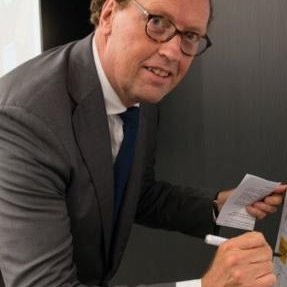
Harry Sterk* | april 2010
The major differences between traditional and PPP projects, according to Harry Sterk, lie in how costs are defined and how building plans are developed. In a PPP project, total costs are assessed in light of the project’s lifecycle.
Traditionally, the focus is on initial construction costs and omits, for instance, maintenance and other ‘post-initial’ costs. The initiator doesn’t make a detailed plan but instead formulates what has to be done within a certain framework: the output specifications.
The contracting party is therefore encouraged to be creative and smart within that framework and to develop a complete solution. Once the project is completed, the contracting party receives a fee based on the actual fulfillment of these output specifications. This incentive motivates the contractor to stay sharp throughout the project’s running period. It also explains why the overwhelming majority of PPP projects are delivered on time and within budget.
Especially during financial and economic difficulties, as we’re experiencing at the moment, there are plenty of additional reasons for local governments to roll out projects based on public-private partnerships. The basis should be that the projects aren’t too small. The development of PPP projects usually takes time (the process of turning an idea into an achievable project). This costs time and money; therefore, the project has to be of sufficient volume to offset these initialization costs.
But this shouldn’t discourage local governments from investing in PPP projects. The network has calculated that, based on the study of PPP projects put against traditionally built projects, governments can save up to 20% in costs, or to put it the other way around, get up to 20% more quality for the same money. In reality, the upside is likely to be significantly higher because these PPP projects were benchmarked against flawlessly executed traditional projects, whereas research shows that a whopping 75% of such traditional projects don’t stay within the initial budget and/or are completed behind schedule. This could save millions of dollars for the government each year.
This should make investing in PPP projects more interesting, especially in a time when the government should be extra careful with the use of public money. Based on the aforementioned calculation, governments can achieve more effectively at a lower cost. PPP projects have a longer run time (20 to 30 years). With this in mind, the government achieves greater stability in the market than by creating short-term projects, which have no lasting effect. In addition, PPP is an effective way for the public sector to ‘export’ risks to the private sector: again, if the contracting party fails to deliver products on time and in accordance with the output specifications, the contracting party is penalized with a lower fee or no fee at all.
Currently, the UK is leading in the implementation of PPP projects across all sectors, including roads, bridges, hospitals, and schools. In the last few years, especially in Germany and Belgium, there have been major advances in public-private partnerships. The Netherlands is lagging behind in an international perspective. Despite that fact, a Dutch PPP project is nominated for the ‘International PPF award’. The military compound of the Kromhoutkazerne in Utrecht is nominated, because the PPP-project was immensely big (8.0.000 m2), it was delivered on time (within 18 months), within budget (achieving a cost reduction of 15%), and offered a superb functional solution to the highly complex needs of modern defense organizations.
When a public organization has little experience working on partnership-based projects, it can become overly cautious about engaging in new project partnerships. The result, in the long term, is that an organization falls behind in experience and in long-term planning. The network is currently developing a toolkit for local governments. In this toolkit, governments can use best practices and apply PPP to smaller projects.
In the end, it all comes down to recognizing that PPP-based projects can be used across all sectors, from building roads and schools to healthcare, prisons, waterways, and IT projects, and the list goes on. It’s important that people realize that public-private partnerships are about a mindset, and not about a building solution.
A few tips when starting up a new project:
- Check in the early stages whether a project has PPP potential, not when the plans are already drafted.
- When in doubt, let experts assist you. This will pay itself back in the long run.
- New projects demand vision and drive from the management officials. Because most organizations have little experience with PPP, employees will intuitively fall back on traditional methods.
- Don’t think PPP is a magic trick that will get you a solution and save you money, no matter how bad your business case is. A plan still needs decent financial backing.
Bibliography
Sterk, H. (2010). PPP is a mindset, not a way of building. RISK Management & Governance, Edition 6, Summer 2010
* Harry Sterk is Director of the Dutch Network for Public-Private Partnerships. This network was established by public and private organizations, including financial companies, consulting agencies, the building industry, and local and central government. The mission of the network is, on the one hand, to prevent projects well-suited for PPP from being implemented in a traditional manner when the initiator lacks sufficient knowledge and experience with PPP. On the other hand, the network aims to prevent PPP-unfit projects from being carried out as a PPP project. In short, its goal is not to miss out on PPP potential. Network members are often asked by municipalities to quickly scan potential projects and assess what a PPP could mean for them or how the existing partnership can be enhanced.
 PRIMO Res Publica
Pingback: Canon of PRIMO | PRIMO Res Publica