The 100 Resilient Cities network continues its goals under the provisional name Global Resilient Cities Network (GRCN). The year 2019 has been a year of significant change.
At the Urban Resilience Summit in Rotterdam, 100 cities worldwide came together under the name 100 Resilient Cities (100RC). Rotterdam, as one of the 100 Resilient Cities, acted as the host city because of its exemplary role as a resilient city.
From Medio 2019, the 100RC network will continue under the provisional name (Global) Resilient Cities Network (GRCN). GRCN is leading the global conversation on building resilient cities, or in other words, making cities resilient and future-proof, to accelerate climate action and social and economic resilience, among other things.
Building the future
The GRCN will actively work to design the future of the network in such a way that it is city-led, financially sustainable and impactful. It will also seek funders for projects that increase cities’ social and economic resilience and better protect them from climate change. In addition, work, including project funding, will come more from the cities themselves.
Urban resilience demands that cities examine their capacities and risks holistically, including through meaningful engagement with the most vulnerable members of a community. This is not easy work.
GRCN’s goals are to integrate its work towards urban resilience outcomes, measure its collective contribution to global goals, and develop various partnerships that will sustain the network for years to come.
Large scope
The scope of the 100RC network, now GRCN, is vast. It concerns not only adaptation to the changing climate, in which Rotterdam plays an exemplary role with its water squares, but also social and economic resilience, energy transition, and security. Meanwhile, many cities worldwide are convinced that the concept of a resilient city is a valuable one.
Strong network
The Rockefeller Foundation initially pioneered the 100RC network. Its contribution in recent years was to get the global network off the ground with the aim of making cities more resilient through collaboration. It has succeeded, with the city network gaining value, expanding and growing stronger. Cities recognise that they are learning from each other, and cities continue to join the network. To that end, the Rockefeller Foundation is winding down its contribution. The network is thus entering a new phase.
The 100 Resilient Cities (100RC) initiative was pioneered by The Rockefeller Foundation in 2013, as part of its Global Centennial Initiative. The initiative was built on a substantial investment from The Rockefeller Foundation, which enabled cities to hire a Chief Resilience Officer (CRO), develop a resilience strategy, access pro bono services from private sector and NGO partners, and share ideas, innovation and knowledge through the global network of CROs.
Over years of deep engagement with city leaders, communities and the private sector, this initiative enabled transformational change in cities by supporting resilience plans and early implementation of projects.
The Paris Agreement is a legally binding international treaty on climate change. It was adopted by 196 Parties at COP 21 in Paris on December 12, 2015, and entered into force on 4 November 2016.
Its goal is to limit global warming to below 2, preferably to 1.5 degrees Celsius, compared to pre-industrial levels.
To achieve this long-term temperature goal, countries aim to peak global greenhouse gas emissions as soon as possible and achieve a climate-neutral world by mid-century.
The Paris Agreement is a landmark in the multilateral climate change process because, for the first time, a binding agreement brings all nations together to undertake ambitious efforts to combat climate change and adapt to its effects.
In popular imagination, rocket science is the totemic example of scientific complexity. As Britain’s leading academic expert on risk, I will argue here that risk management is in fact much more complex. To put it another way, the scientist studying turbulence “the clouds do not react to what the weatherman or physicist says about them”. The risk manager must, however, deal not only with risk perceived through science, but also with virtual risk – risks where the science is inconclusive and people are thus “liberated to argue from, and act upon, pre-established beliefs, convictions, prejudices and superstitions.”
Professor John Adams
The affluent world is drowning in risk assessments. Almost everyone now has a “duty of care” to identify formally all possible risks to themselves, or that they might impose on others, and to demonstrate that they have taken all reasonable steps to “control” them. It is not clear that those imposing this duty of care appreciate the magnitude and difficulty of the task they have set.
In 2004 I participated in a conference on terrorism, World Federation of Scientists’ International Seminar on Terrorism, Erice, Sicily. Most of the other participants were eminent scientists, and I found myself in a workshop entitled Cross-disciplinary challenges to the quantification of risk. Lord Kelvin famously said:
“Anything that exists, exists in some quantity and can therefore be measured.”
This dictum sits challengingly alongside that of another famous scientist, Peter Medewar who observed:
“If politics is the art of the possible, research is the art of the soluble. Both are immensely practical minded affairs. Good scientists study the most important problems they think they can solve [my emphasis]. It is, after all, their professional business to solve problems, not merely to grapple with them.”
Terrorism undoubtedly exists, and some of its consequences can be quantified. One can count the numbers killed and injured. With the help of insurance companies one can have a stab at the monetary value of property destroyed and, for those with business continuity insurance, the value of business lost. But what units of measurement might be invoked to calculate the impact of the terror that pervades and distorts the daily life of someone living in Chechnya, or Palestine, or Darfur or …. ? Or the loss of civil liberties resulting from the anti-terrorism measures now being imposed around the world.
The problem becomes more difficult when one moves on to the challenge of quantifying the risk of terrorism. Risk is a word that refers to the future. It has no objective existence. The future exists only in the imagination. There are some risks for which science can provide useful guidance to the imagination. The risk that the sun will not rise tomorrow can be assigned a very low probability by science. And actuarial science can estimate with a high degree of confidence that the number of people killed in road accidents in Britain next year will be 3500, plus or minus a hundred or so. But these are predictions, not facts. Such predictions rest on assumptions; that tomorrow will be like yesterday; that next year will be like last year; that future events can be foretold by reading the runes of the past. Sadly, the history of prediction contains many failures – from those of stock market tipsters to those of vulcanologists seeking to predict eruptions, earthquakes and tsunamis.
Type “risk” into an Internet search engine and you will get over 100 million hits. You need sample only a small fraction to discover many unnecessary, and often acrimonious, arguments. Risk is a word that means different things to different people. It is a word that engenders a sense of urgency because it alludes to the probability of adverse, sometimes catastrophic, outcomes. Much of the acrimonious urgency, or the urgent acrimony, that one uncovers searching for “risk” on Google, stems from a lack of agreement about the meaning of the word. People are using the same word, to refer to different things, and shouting past each other.
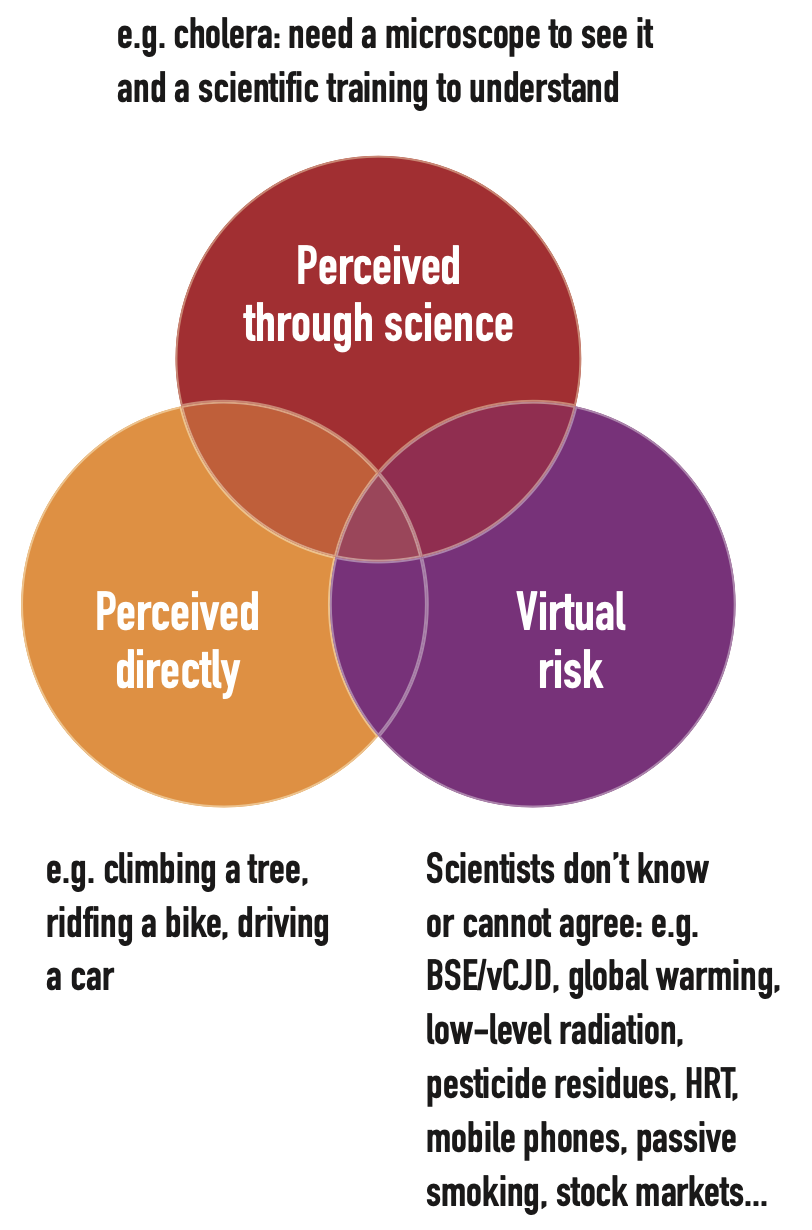
Figure 1 is proffered in the hope of clearing away some unnecessary arguments.
Figure 1.
Directly perceived risk (much operational risks) are dealt with using judgement – a combination of instinct intuition and experience. One does not undertake a formal, probabilistic, risk assessment before crossing the road. Crossing the road in the presence of traffic involves prediction based on judgement. One must judge vehicle speeds, the gaps in traffic, one’s walking speed, and hope one gets it right, as most of us do most of the time.
Most of the published literature on risk management falls into the category of risk perceived through science. Here one finds not only biological scientists in lab coats peering through microscopes, but physicists, chemists, engineers, doctors, statisticians, actuaries, epidemiologists and numerous other categories of scientist who have helped us to see risks that are invisible to the naked eye. Collectively they have improved enormously our ability to manage risk – as evidenced by the huge increase in average life spans that has coincided with the rise of science and technology.
But where the science is inconclusive we are thrown back on judgement. We are in the realm of virtual risk. These risks are culturally constructed – when the science is inconclusive people are liberated to argue from, and act upon, pre-established beliefs, convictions, prejudices and superstitions. Such risks may or may not be real but they have real consequences. In the presence of virtual risk what we believe depends on whom we believe, and whom we believe depends on whom we trust.
A participant at the conference on terrorism was one of the world’s foremost experts on turbulence, notoriously the most intractable problem in science. In the mythology of physics Werner Heisenberg is reported as saying:
“When I meet God, I am going to ask him two questions: Why relativity? And why turbulence? I really believe he will have an answer for the first.”
I would trust the physicist I met at the conference to tell me the truth about turbulence, so far as he knew it. But the problems he is studying are simple compared to those of the risk manager, because the clouds do not react to what the weatherman or physicist says about them.
We are all risk managers. Whether buying a house, crossing the road, or considering whether or not to have our child vaccinated, our decisions will be influenced by our judgement about the behaviour of others, and theirs by their judgements about what we might do. The world of the risk manager is infinitely reflexive. In seeking to manage the risks in our lives we are confronted by a form of turbulence unknown to natural science, in which every particle is trying to second guess the behaviour of every other. Will the vendor accept less in a falling market? Will the approaching car yield the right of way? Will enough other parents opt for vaccination so that my child can enjoy the benefits of herd immunity while avoiding the risks of vaccination? And, increasingly, if things go wrong, who might sue me? Or whom can I sue? The risk manager is dealing with particles with attitude.
Another participant at the conference, alert to the strict limits of natural science in the face of such turbulence, warned that we were in danger of becoming the drunk looking for his keys, not in the dark where he dropped them, but under the lamp post where there was light by which to see.
This caution prompted the re-drawing of Figure 1. Figure 2 is an attempt to highlight the strict limits to the ability of science to foretell the future.
Fig. 2. Three types of risk (re-draw). An attempt to highlight the strict limits to the ability of science to foretell the future.
In the area lit by the lamp of science one finds risk management problems that are potentially soluble by science. Such problems are capable of clear definition relating cause to effect and characterized by identifiable statistical regularities. On the margins of this area one finds problems framed as hypotheses and methods of reasoning, such as Bayesian statistics, which guide the collection and analysis of further evidence. As the light grows dimmer the ratio of speculation to evidence increases. In the outer darkness lurk unknown unknowns. Here lie problems with which, to use Medawar’s word, we are destined to “grapple”.
As the light of science has burned brighter most of the world has become healthier and wealthier and two significant changes have occurred in the way in which we grapple with risk. We have become increasingly worried about more trivial risks, and the legal and regulatory environments in which we all must operate as individual risk managers have become more turbulent. As the likelihood of physical harm has decreased the fear, and sometimes the likelihood, of being sued has increased.
As the light of science has burned brighter most of the world has become healthier and wealthier and two significant changes have occurred in the way in which we grapple with risk. We have become increasingly worried about more trivial risks, and the legal and regulatory environments in which we all must operate as individual risk managers have become more turbulent.
Perhaps the clearest demonstration of this can be found in the increase in the premiums that doctors must pay for insurance, and the way this varies according to the type of medicine practiced. The Medical Protection Society of Ireland has four categories of risk: low, medium, high and obstetricians. Between 1991 and 2000 the premium charged to those in the low category increased by 360 percent to €9854, and that charged to obstetricians increased by 560 percent to € 54567.
Measured in terms of its impact on peri-natal mortality rates, obstetrics and gynecology can claim a major share of the credit for the huge increases in average life expectancy over the last 150 years. This most successful medical discipline is now the most sued – so successful that almost every unsuccessful outcome now becomes a litigious opportunity. I don’t know of any risk assessment that predicted that.
There is a distinction, frequently insisted upon in the literature on risk management, between “hazard” and “risk”. A hazard is defined as something that could lead to harm, and a risk as the product of the probability of that harm and its magnitude; risk in this literature is hazard with numbers attached. So, relating this terminology to Figures 1 and 2, it can be seen that risk can be placed in the circle “perceived through science” while the other two circles represent different types of hazard.
Typing “hazard management” into Google at the time of writing yielded 70,000 hits; “risk management” 12 million. The number of potential harms in life to which useful numbers can be attached is tiny compared to the number through which we must navigate using unquantified judgement. The Kelvinist, rocket-science approach to virtual risks, with its emphasis on the quantitatively soluble, threatens to divert attention from larger, more complicated, more urgent problems with which we ought to be grappling.
Bibliography
Adams, J. (2007). Risk Management: It’s Not Rocket Science – It’s Much More Complicated, Public Risk Forum, Edition May 2007, pp. 9-11.
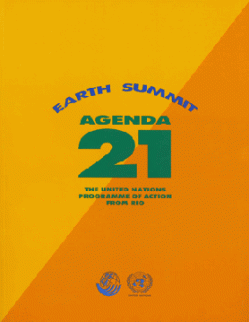
Agenda 21 is a voluntary action plan developed by the United Nations and national governments at the “Earth Summit” in Rio de Janeiro, Brazil 1992. At the Summit, governmental leaders worldwide agreed on the need to become more sustainable—to meet today’s needs without sacrificing our future.
Agenda 21 presents a vision for how all levels of government—especially in the developing world—can take voluntary action to combat poverty and pollution, conserve natural resources and develop in a sustainable manner. One-hundred-seventy-eight nations, including the United States under the Bush Administration, adopted the agenda.
Preamble
“1.1 Humanity stands at a defining moment in history. We are confronted with a perpetuation of disparities between and within nations, a worsening of poverty, hunger, ill health and illiteracy, and the continuing deterioration of the ecosystems on which we depend for our well-being. However, integration of environment and development concerns and greater attention to them will lead to the fulfilment of basic needs, improved living standards for all, better protected and managed ecosystems and a safer, more prosperous future. No nation can achieve this on its own; but together we can – in a global partnership for sustainable development.”
Agenda 21 is not a treaty or legally binding document and does not infringe upon the sovereignty of any nation, state, or local government. Agenda 21 does not advocate for abolishing private property or have any bearing on U.S. local and state land-use decisions. In other words, it isn’t being forced on anybody, anywhere, by any organisation.
A chapter within Agenda 21 introduces the concept of a “Local Agenda 21” and offers a vision for how local governments can develop their own sustainability initiatives.
28.1. Because so many of the problems and solutions being addressed by Agenda 21 have their roots in local activities, the participation and cooperation of local authorities will be a determining factor in fulfilling its objectives. Local authorities construct, operate and maintain economic, social and environmental infrastructure, oversee planning processes, establish local environmental policies and regulations, and assist in implementing national and subnational environmental policies. As the level of governance closest to the people, they play a vital role in educating, mobilizing and responding to the public to promote sustainable development.
A key theme with Agenda 21 was local self-determination and community engagement: “Each local authority should enter into a dialogue with its citizens, local organisations and private enterprises. Through consultation and consensus-building, local authorities would learn from citizens and local, civic, community, business and industrial organisations and acquire the information needed for formulating the best strategies. The process of consultation would increase household awareness of sustainable development issues.”
The Organisation for Economic Co-operation and Development (OECD) | 1979
Following an initiative by the Government of Japan in May 1975, a major new research project was established within the framework of the OECD on 1st January, 1976, to study “the future development of advanced industrial societies in harmony with that of developing countries”. The project, now referred to as INTERFUTURES ran for a period of three years to 31st December 1978.
Mastering the Probable and Managing the Unpredictable.
The primary purpose of the project, as laid down at the outset by the OECD Council, was: “to provide de OEDC Member Governments an assessment of alternative patterns of longer-term world economic development in order to clarify there implications for the strategic policy choices open to them in the management of their own economies, in relationships among them, and in their relationships with developing countries”.
p. 10: “The publication in 1972 of the Report of the Club of Rome on The Limits of Growth stimulated a decades-old debate, one which is essential for mankind and can be summed up in a single question:
Will the growth in population and in the world economy be helped in the relatively near future by the constraints resulting from the limited availability of the earth’s natural resources or the absorptive capacities of the ecosystem?
If this were to be the case, then efforts would have to be made at once to find ways of achieving another kind of growth which would be more economical in non-renewable resources and less harmful to the physical environment.”
Final chapter p. 423
“A starting point
If the many challenges which the advanced industrial societies will have to meet in the next half-century are to be progressively mastered, nothing is more vital than the establishment in the foremost societies of a solid political leadership capable of taking into account both the long-term issues and the interdependence between the various areas.
Yet the fact has to be faced that in today’s democracies the plans which pay quick dividends have more chance of being carried out than other, more important ones whose benefits are long-term. In election campaigns the long-term issues are often pushed into the background or not mentioned at all, since politicians are convinced, perhaps rightly, that voters look no further than their own private interests and their immediate environment. Things will probably continue this way until the political leaders succeed in producing a vision of long-term objectives that will win the deep conviction of the majority of citizens, but conversely, those same political leaders will need an essential minimum of support from the population in order to embark on this course.
The possible futures described in this report show not only the importance of political dialogue in the democracies of the developed countries, but also the value of informing the public very extensively about trends in the world as a whole.
Scientific circles, the education system and the media should help in this priority task.
Where the scientists are concerned, it is not a question of their setting up as specialists in fields other than their own, but of helping as objectively as possible to inform the public of the contribution which the physical, biological or social sciences can make to an understanding of world issues.
The education system is a key element of modern democratic societies. In a world of growing interdependence, a knowledge of foreign countries, different cultures and other languages is as crucial for the continental nations like the United States as for the small OECD countries. Furthermore, in societies where the challenges of the future are liable to be political, economic and social, it is probably necessary to think again about how to combine the sound and precise technical training that international competition demands with the outward orientation necessary for a citizen of a democratic country.
Finally, the mass media have a responsibility in regard to dissemination of information, critical assessment of policies and introduction of constructive proposals. Often they have simply picked on the sensational aspects of the issues of the future, be it to announce the end of the world or to reassure the uneasy, but they need to do more than disseminate futurological trivia. They must contribute to a realisation by the citizens of developed countries of the tasks that await them and the problems they will have to resolve.
The democratic systems of industrial societies have deep and secure roots. Despite their inadequacies, they should show themselves to be able to face up to the possibilities the future holds. They can ensure that no ageing, sclerosis or withdrawal process threatens those societies in their coexistence with the young societies of the Third World and the socialist world of East Europe.
This report will have achieved its aim if it succeeds in convincing the main active forces in the developed countries to undertake extensive efforts to spread the word about the challenges of the future. Not to develop a resignation to the inevitable but to generate creative responses. Even if many questions remain unanswered or if some of the points of view expressed are debatable, the work of INTERFUTURES should be the starting point for increased allowance for the long term in the policies of governments. For this, which things are necessary:
Based on this report, each country looks searchingly into the specific long-term issues with which it will be confronted and then undertakes the necessary additional studies.
That the OECD countries then consult one another on the policy conclusions they have drawn from this vast investigation of the long term.”
The Organisation for Economic Co-operation and Development (OECD) | 2003
What is new about major risks in the 21st century? Recent years have witnessed a host of large-scale disasters of various kinds throughout the world: hugely damaging windstorms and flooding in Europe and ice storms in Canada; new diseases infecting both humans (AIDS, the Ebola virus) and animals (BSE); terrorist attacks such as those of 11 September 2001 in the United States and the Sarin gas attack in Japan; major disruptions to critical infrastructures caused by computer viruses or simply technical failure.
These are just some of the extremely costly disasters that have struck over the past few years. And yet, it is not just the nature of major risks that seems to be changing, but also the context within which they appear and society’s capacity to manage them. The forces shaping these changes are many and varied. For example, weather conditions appear to be becoming increasingly extreme.


 PRIMO Res Publica