Duidelijkheid voor de Eerste Overheid

Raad voor het Openbaar Bestuur | februari 2024

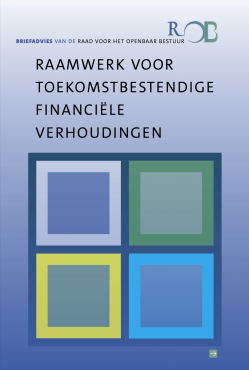
Vandaag komt de Raad voor het Openbaar Bestuur (ROB) met een advies aan het Ministerie van Binnenlandse Zaken en Koninkrijksrelaties: ‘Een raamwerk voor toekomstbestendige financiële verhoudingen’.

Today, the Council for Public Administration (ROB) advises the Ministry of the Interior and Kingdom Relations: ‘A framework for future-proof financial relations’.

Vanuit het Europese netwerk van UDITE en PRIMO Europe van met name beleidsmakers, managers en gemeentesecretarissen komt al decennialang het beeld naar voren dat landelijke overheden hun tekorten structureel afwenden op de lagere overheden, de gemeenten. Europees breed. Een patroon. De vlag is vaak ‘decentralisatie van taken’ of ‘taken dichter bij de burger brengen’.

From UDITE and PRIMO European network of, in particular, policymakers, managers and municipal secretaries /city managers, a picture has emerged for decades that national governments have been structurally shifting their deficits to lower authorities, the municipalities. European wide. A pattern. The flag is often ‘decentralisation of tasks’ or ‘bringing tasks closer to the citizen’.

Lees verder “Duidelijkheid voor de Eerste Overheid”

SF x MF x IP = R

Jack Kruf and Hans Redert * | February 2024

Based on interviews with directors and managers in the public domain, we have developed the following ‘simple’ formula to determine the likelihood of the result of governance. The formula is developed from our position and role as city manager in the heart of the province, region, city, village, district, neighbourhood or street public domain.

At the start, of course, there is always a preliminary Issue to be resolved. After all, otherwise, there is nothing to govern. In the highly politically driven landscape of the public domain, the example of issues can be found in the daily headlines of papers and magazines. We do not elaborate on this, but we faced many issues in our interviews where the formula was ‘launching’ itself.
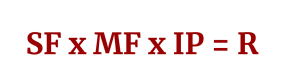
The formula has three determinants, distilled with extreme care, which occur in multiplication and determine the final outcome. The formula explained:

SF = Stimulating Frames

Explaining the path or task ahead to the entire playing field of involved organisations and citizens is essential. This insight proves crucial to be able and willing to act in a focused and coordinated way.  Leadership in this respect is value-driven, stimulating, giving incentives, and herding.

MF = Management Force

The result can only be achieved if a force of management is present and available. This is a balanced set where knowledge, skills, styles and characters are aligned.  

IP = Investment Power

This is basic. Calculating what is needed regarding budget, time, and capacity requires sound knowledge and extreme care in applying the right legal and financial instruments.

R = Result

This is the outcome of all the efforts aimed at resolving or at least being able to acceptably change the Issue. 

The math

The peculiarity of the formula is that the result of an effort to tackle an issue can be estimated relatively quickly and precisely. With a targeted and open enquiry among stakeholders, any politician, director, manager, or employee can do the math.

Interviewees pointed out that in the grammar of this formula, it emerges that if one of the determinants is zero, the outcome, the Result, is also zero. In other words, all determinants should be ‘on’ simultaneously.

Application

In evaluating the application of the formula, the inventors Kruf and Redert conclude that it can lead to adequate and quick diagnosis and encourages openness and dialogue.

The formula, at the same time, is also, in daily practice, perceived as awkward, uncomfortable or confrontational because it brings forward directly where the project, strategy, policy or effort is hampering or can be blocked.  It can even weaken the position or credibility of the involved players in advance.

‘Denial’ of the obvious is a phenomenon that occurs very regularly in politics and management. With the application of this formula upfront, it is barely possible. Using the formula is helpful for authentic leadership with an open mind. It encourages the discussion, dialogue and co-creation necessary for success. 

* Read here the Dutch article.

Pleidooi voor betere besturing

Sharon Dijksma en Leonard Geluk | februari 2024

Een opiniestuk aan de formateur van de hand van de voorzitter én van de algemeen directeur van de Vereniging van Nederlandse Gemeenten. Het stuk is compact maar levert veel informatie vanuit de gemeentelijke praktijk voor een beter te besturen Nederland. Het bevat een iconisch tijdsbeeld hoe het er nu aan toegaat en een wensbeeld hoe het straks eraan toe zou moeten gaan met onze besturing. Het is een oproep voor verandering.

A plea for better governance. An opinion piece related to the formation of a new government by the chairman and managing director of the Association of Netherlands Municipalities. The piece is compact but provides much information from municipal practice for a better governable country of The Netherlands. It contains an iconic image of the current situation and a desirable image of the future of our government. It is a call for change. Lees verder “Pleidooi voor betere besturing”

Blind voor mens en recht

Tweede Kamer der Staten-Generaal, Parlementaire enquêtecommissie Fraudebeleid en Dienstverlening | februari 2024

In een verhard politiek en maatschappelijk klimaat zijn de drie staatsmachten in Nederland blind geweest voor mens en recht, waardoor levens van mensen zijn vermorzeld. Het is pijnlijk dat juist het systeem van sociale zekerheid en toeslagen dat bedoeld is om mensen te ondersteunen, diezelfde mensen in de vernieling heeft geholpen.

In a hardened political and social climate, the three state powers in The Netherlands have been blind to people and justice, crushing people’s lives. It is painful that the very system of social security and allowances meant to support people has destroyed those very people. Lees verder “Blind voor mens en recht”

Toekomstgericht beleid

Wetenschappelijke Raad voor het Regeringsbeleid (WRR) | January 2024

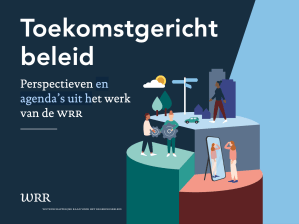
Met de publicatie Toekomstgericht beleid: Perspectieven en agenda’s uit het werk van de WRR benadrukt de WRR het belang van toekomstgericht beleid. De publicatie is opgesteld voor de leden van de onlangs aangetreden Tweede Kamer, maar is ook te gebruiken voor volksvertegenwoordigers en bestuurders van gemeenten, provincies en waterschappen.

With the publication ‘Future-oriented policy: Perspectives and agendas from the WRR’s work’, the WRR emphasises the importance of future-oriented policies. The publication has been prepared for the recently appointed members of the House of Representatives. Still, it can also be used by elected representatives and administrators of municipalities, provinces, and water boards. Lees verder “Toekomstgericht beleid”

Global Risks Report 2024

World Economic Forum, in partnership with Marsh McLennan and Zurich Insurance Group | January 2024, en nl

The Global Risks Report explores some of the most severe risks we may face over the next decade against rapid technological change, economic uncertainty, a warming planet and conflict. As cooperation comes under pressure, weakened economies and societies may only require the smallest shock to overcome the tipping point of resilience. Het Global Risks Report verkent een aantal van de grootste risico’s waarmee we de komende tien jaar geconfronteerd kunnen worden: snelle technologische veranderingen, economische onzekerheid, een opwarmende planeet en conflicten. Terwijl samenwerking onder druk komt te staan, hebben verzwakte economieën en samenlevingen misschien maar de kleinste schok nodig om het omslagpunt van veerkracht te overwinnen. 

The report summarises a mix of trends and developments that can possibly influence the quality of life for citizens, society and natural ecosystems. These will impact local communities and deserve a place in the orientation and diagnosis. Het rapport geeft een overzicht van een mix van trends en ontwikkelingen die mogelijk van invloed zijn op de kwaliteit van leven voor burgers, de samenleving en natuurlijke ecosystemen. Deze zullen van invloed zijn op lokale gemeenschappen en verdienen een plaats in de oriëntatie en diagnose.
Lees verder “Global Risks Report 2024”

KNMI’23-klimaatscenario’s

Het KNMI maakt klimaatscenario’s voor een mogelijk toekomstig klimaat voor Nederland. Het rapport KNMI’23-klimaatscenario’s is gepubliceerd en vervangen de KNMI’14-klimaatscenario’s.

De KNMI-klimaatscenario’s zijn een vertaling van de wereldwijde klimaatprojecties van het IPCC – het klimaatpanel van de Verenigde Naties – naar Nederland. De vier nieuwe scenario’s schetsen hoe het toekomstige klimaat in Nederland eruit kan zien. Ze vormen de basis voor onderzoek naar de effecten van klimaatverandering en adaptatie aan die verandering.

Toekomstige stijging van het zeeniveau (p.34)

Afhankelijk van de hoeveelheid broeikasgassen die nog wordt uitgestoten, wordt voor de Nederlandse kust rond 2050 een verdere zeespiegelstijging verwacht van 16­34 cm in het lage, en tot 19­38 cm in het hoge uitstootscenario. Rond 2100 zal de stijging in het lage uitstootscenario 26­73 cm bedragen, en 59­124 cm in het hoge uitstootscenario (figuur 25). De bovengrens van de zeespiegelstijging rond 2100 kan tot 2,5 m oplopen als onzekere processen, zoals het instabiel worden van de Antarctische IJskap, al vóór 2100 optreden.

De ijskappen op Groenland en Antarctica slinken steeds sneller (figuur 26). Tussen 2009 en 2018 was het massaverlies respectievelijk zeven en vier keer zo groot als tussen 1992 en 2001. Bij een wereldgemiddelde opwarming van meer dan 2°C wordt de toekomst van Antarctica erg onzeker. De drijvende ijsplaten die het landijs van Antarctica omringen, zullen dan deze eeuw grotendeels verdwijnen, waarna het landijs sneller naar de kust beweegt en er meer afkalft.

Omdat het smelten van de Groenland IJskap relatief weinig bijdraagt aan de zeespie- gelstijging voor de Nederlandse kust, wordt het zeeniveau in onze regio in de verre toekomst vrijwel volledig bepaald door de snelheid waarmee de Antarctische IJskap massa verliest. Volgens het hoge uitstootscenario bedraagt de zeespiegelstijging rond 2300 2 tot 6 meter. Als ook onzekere ijskap­processen op Antarctica worden meegenomen, kan dit oplopen tot meer dan 17 meter (figuur 25).”

Download KNMI’23-klimaatscenario’s.