Rising above water

Marta Jiménez | Utrecht University

Sea levels are rising, and the rate of rise is accelerating. All over the world, many of today’s dikes, sea walls and flood barriers won’t be enough to hold back the water in the future. This will be particularly a problem in countries that lack the resources to maintain or fund extensive engineering projects to protect their citizens. But we can all learn from alternative, more affordable and flexible approaches that adapt to the rising water currently emerging all around the world.

Rather than only battling to keep ever-rising seas out, these natural solutions aim to help rebuild land above sea level. Researchers from Utrecht University are testing which of these strategies will work for specific regions to help tame the tide. And they’re also thinking ahead: how can we minimise the damage and ensure people have somewhere safe to go when the water does come?

Ransomware: An insurance market perspective

Source: Geneva Association

  • New Geneva Association report highlights the important role of private re/insurers, alongside governments, in boosting society’s resilience to ransomware and ensuring the full benefits of digitalisation can be realised.
  • The report explores the significant value add of cyber insurance beyond risk transfer, amid ongoing debate on whether to ban ransom payments or associated insurance coverage.
  • Governments should do more to counter ransomware attacks: disrupt cybercriminal business models, fight illicit use of cryptocurrencies and promote cyber hygiene throughout business and society.

ZURICH, 20 July 2022 – The frequency of ransomware attacks, a form of cyber extortion, is increasing, along with the size and nature of ransom demands. Cybercriminals are deploying more sophisticated approaches to target governments, businesses and individuals, with serious and costly effects. The growth of the ransomware-as-a-service (RaaS) business model has also enabled threat actors with limited technical skills to launch highly disruptive attacks.

Cyber insurance provides vital financial protection and operational support in the event of an attack, but ransomware has contributed to the recent deterioration in cyber insurers’ underwriting performance. Ransomware accounted for 75% of all cyber insurance claims in 2020 (AM Best) and is also likely to have been the costliest loss event category in 2021 (WTW).

Lees verder “Ransomware: An insurance market perspective”

Public-Private Sector Risk Management: is there a difference?

Peter Young | February 2007, Public Risk Forum

Are there differences between risk management in the public and private sectors? As a professor who has spent time in both public administration and business administration programs, I have had several opportunities to think about both sides of the debate. 

On one side, we have those who argue that management is management and that differences in the public and private sectors are modest (“if only government were run like a business”). Opponents of the “management is management” point of view argue that the public sector is so different from the private sector that it is a distinctly separate thing and, thus, requires different knowledge and management skills.

For a very long time, I tended to believe that “management was management.” Politics exist in private and public organisations, and both have multiple stakeholders. Some large private organisations have dispersed authority, while some public institutions have fairly focused authority. Some private organisations are very process-oriented and some public entities emphasize outputs. Further, it is difficult to draw demarcation lines between public and private sectors. What would we call, for instance, an arrangement where a private transportation company is contracted to a nonprofit care facility for disabled individuals, which in turn is under contract with a local authority?

“Indeed, we might say that if a risk is able to be managed privately, there is a reasonable chance it is not – by definition – a public risk” 

In recent years, however, I have begun to change my views on public vs. private risk management, and I now believe that while there are important similarities, the “public” aspect of public management does present some important distinctions. I would like to address those distinctions in this essay.

Public sector risk management differs from its private sector counterpart because:

  • Governmental entities, as social institutions, present an exposure to risk that is substantively different from a private entity. 
  • The characteristics of public risks present a set of risk management issues not fully present in the private sector, including:
  • Inability of government to avoid responsibility for risks within its purview.
  • Frequent absence of markets as a risk management tool.
  • Complexity of relationships between risks.
  • The interaction of risks with governmental purposes.
  • The breadth of the government’s exposure to risk.

Being in the public sector does present public risk managers with a set of distinct challenges. Notably, this means that government involvement in public affairs commonly arises when private behaviors (and markets) are somehow unable to deliver the good or service efficiently, if at all, or to manage a risk. Although we know there are degrees of government intervention, risks, goods, and services that meet the test of government intervention have done so because of characteristics that are not “market manageable.” 

They exhibit characteristics of high complexity and high uncertainty (often), they are market-failure inducing, and their effects on the public are diffuse. Also, the effects of these risks may call into question matters of fairness and social adequacy and thus may be impervious to tests of economic efficiency. 

So, one distinction between private and public risk management is that the risks are substantially different. Indeed, we might say that if a risk is able to managed privately, there is a reasonable chance it is not – by definition – a public risk. Additionally, the nature of government and its authority and responsibility is different. Whereas government might privatize garbage collection, or a health care delivery, or prisons, government’s responsibility and authority for those activity areas remains. Operating in the public sector makes the risks different, and it makes exposure different too. 

“…we need to be reminded that public organisations may have responsibility for organisational and social risks, and that traditional risk management skims the surface and fails to attack risk comprehensively”

I think the preceding discussion suggests some other relevant lessons for risk management. The typical risk manager has responsibilities for a set or risks that can be characterized generally as falling within the “organisational risk” domain — property loss exposures, legal liability-based risks, workers’ compensation exposures, and so on. While all these areas are important, we need to be reminded that public organisations may have responsibility for organisational and social risks, and that traditional risk management skims the surface and fails to attack risk comprehensively. A broader framework for thinking about risk management is necessary. We call this broader framework enterprise risk management (ERM). 

Second, by raising the possibility that the management of social risks is part of public risk management, we extend the accumulated knowledge of the risk management field into the public policy arena, where it has been woefully absent. For example, the systematic and critical analysis that risk managers apply to complex property and liability risks would be a breath of fresh air in the debate over public investment in alternative energy development. It is sad to say that today’s risk managers are rarely involved in public policy planning and execution, but this must change and there is evidence, if fact, that it is. 

The Risk of Leadership

A plea for a new search for ‘responsible-in-the-end’ leadership: stewardship

Jack Kruf | 10 March 2017

Of course, we have our democratic system, a great set of principles and values that serve as equipment for good public governance. Public leadership, concerning both public organisations and the public domain of society, is embedded in this system, at least it should be. You may expect excellent results because the democratic system traces back to the Greek δημοκρατία in 508 BC and has been tested and challenged over and over again. Over the millennia, it has developed to this point.

Considering the present state of society and of natural ecosystems, you may be surprised by the results of this period of 2525 years of development. The Global Risks Reports, published by the World Economic Forum since 2005, tell the story of how critical the state of the Earth is. Reading these reports, I had a flashback to 1972, when the Club of Rome presented facts, findings, and figures in its report, The Limits to Growth. For at least five decades (i.e., half a century!), we know what is going on and where many generations of leadership have brought us.

Lees verder “The Risk of Leadership”

Handreiking Risicobeheersing voor Raadsleden

nl•[en/fr]

VNG | 30 juni 2022

Raadsleden moeten lastige afwegingen maken over grote projecten. Wat is het risico voor de gemeente? Welke maatschappelijke meerwaarde levert het op? Om raadsleden op weg te helpen in risicobeheer, is er nu de Handreiking Risicobeheersing voor Raadsleden. De handreiking is een gezamenlijk product van VNG Risicobeheer, de Nederlandse Vereniging voor Raadsleden en het ministerie van BZK. Het idee is dat risicobeheer reële verwachtingen oplevert en erkende (on)zekerheden. Met als doel een gedeeld besef van hoe er kan worden (bij)gestuurd, ook als zaken anders lopen dan verwacht.

en • Council members have to make difficult decisions about major projects. What is the risk for the municipality? What is the social added value? To help councillors with their risk management, there is now a Risk Management Guide for Councillors. The guide is a joint product of VNG Risk Management, the Dutch Association for Councillors and the Ministry of the Interior and Kingdom Relations. The idea is that risk management generates realistic expectations and acknowledged (un)certainties. The goal is a shared awareness of how to steer, even when things go differently than expected.

fr • Les membres du conseil doivent prendre des décisions difficiles sur des projets majeurs. Quel est le risque pour la municipalité ? Quelle est la valeur ajoutée sociale ? Pour aider les conseillers dans leur gestion des risques, il existe désormais un guide de gestion des risques pour les conseillers. Ce guide est le fruit d’une collaboration entre VNG Risk Management, l’association néerlandaise des conseillers municipaux et le ministère de l’Intérieur et des Relations au sein du Royaume. L’idée est que la gestion des risques génère des attentes réalistes et des (non-)certitudes reconnues. L’objectif est de parvenir à une prise de conscience commune de la manière de s’orienter, même lorsque les choses ne se déroulent pas comme prévu. [Deeple]

Grip op projecten / Grip on projects / Maîtriser les projets

De handreiking kan raadsleden helpen om op praktisch niveau beeld te brengen waar je op moet letten en of de gemaakte keuzes bijdragen aan maatschappelijke oplossingen. In projecten gaat het erom het financiële resultaat in beeld te krijgen, maar ook of de afweging van voor- en nadelen bijdraagt aan een betere samenleving,’ zegt directeur Henk Bouwmans van de Nederlandse Vereniging voor Raadsleden. 45% van alle raadsleden in de nieuwe periode is nieuw. ‘Ze moeten zich verdiepen in allerlei onderwerpen en worden overspoeld met informatie. Raadsleden steken gemiddeld 16 uur per week in het raadswerk. We zijn blij met deze handreiking omdat die helpt grip te krijgen op de risico’s van projecten en activiteiten.

en • The guide can help councillors to see at a practical level what they need to look out for and whether the choices made contribute to social solutions. In projects, it is about getting the financial result in view, but also about whether the weighing up of advantages and disadvantages contributes to a better society,’ says Henk Bouwmans, director of the Dutch Association of Councillors. 45% of all councillors in the new period are new. They have to immerse themselves in all kinds of subjects and are inundated with information. Council members put in an average of 16 hours a week into their council work. We are pleased with this guide because it helps them to get a grip on the risks of projects and activities.

fr • Le guide peut aider les conseillers à voir, à un niveau pratique, ce à quoi ils doivent faire attention et si les choix effectués contribuent à des solutions sociales. Dans les projets, il s’agit d’avoir en vue le résultat financier, mais aussi de savoir si la pesée des avantages et des inconvénients contribue à une meilleure société”, déclare Henk Bouwmans, directeur de l’association néerlandaise des conseillers. 45 % des conseillers municipaux sont nouveaux. Ils doivent se plonger dans toutes sortes de sujets et sont inondés d’informations. Les conseillers consacrent en moyenne 16 heures par semaine à leur travail au sein du conseil. Nous sommes satisfaits de ce guide car il les aide à appréhender les risques des projets et des activités. [Deeple]

Brede blik / broad perspective /grande perspective

Concern controller Tom Noordermeer van de gemeente Zevenaar werkte mee aan de handreiking namens het Risico Platform Overheden (RPO). Hij vindt het belangrijk dat de handreiking een brede kijk geeft op risicobeheersing. ‘Het gaat in de gemeenteraad vaak om het ratiogetal in de weerstandsparagraaf. Maar de vraag is: draagt die ratio bij aan een goed besluit of belemmert die dat juist?’ De weerstandsparagraaf is op zichzelf een goed instrument, maar het is aan actualisering toe, vind Noordermeer. ‘De focus moet niet eenzijdig financieel zijn, in gemeenten is het aspect van publieke waarde net zo belangrijk. Het ratiogetal suggereert een exactheid die er in feite niet is.’ De handreiking is een bijdrage aan een bredere kijk op risicobeheersing.

en • Corporate controller Tom Noordermeer of Zevenaar municipality contributed to the guide on behalf of the Risk Platform Governments (RPO). He believes it is important that the guide provides a broad perspective on risk management. The municipal council is often concerned with the ratio in the section on resistance. But the question is: does this ratio contribute to a good decision or does it in fact hinder one? The paragraph on resistance in itself is a good instrument, but it needs to be updated, Noordermeer thinks. The focus should not be exclusively on finance; the aspect of public value is just as important in municipalities. The ratio number suggests an exactness that is in fact not there. The guide is a contribution to a broader view of risk management.

fr • Le contrôleur d’entreprise Tom Noordermeer, de la municipalité de Zevenaar, a contribué à la rédaction du guide au nom de la Risk Platform Governments (RPO). Il estime qu’il est important que le guide offre une large perspective sur la gestion des risques. Le conseil municipal est souvent préoccupé par le ratio dans la section sur la résistance. Mais la question est de savoir si ce ratio contribue à une bonne décision ou s’il l’entrave au contraire. Le paragraphe sur la résistance est en soi un bon instrument, mais il doit être actualisé, estime M. Noordermeer. L’accent ne doit pas être mis exclusivement sur les finances ; l’aspect de la valeur publique est tout aussi important dans les municipalités. Le nombre de ratios suggère une exactitude qui n’existe pas en réalité. Le guide est une contribution à une vision plus large de la gestion des risques. [Deeple]

____

Original language: Nederlands/Dutch

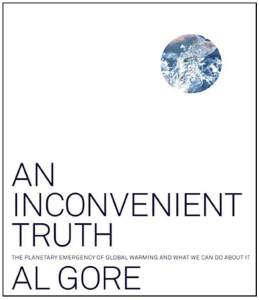
An Inconvenient Truth

The Planetary Emergency of Global Warming and What We Can Do About It

Al Gore | 2006

In his best-selling book, An Inconvenient Truth, former Vice President Al Gore argues against the climate crisis and argues that it is imperative that we solve it.

Our climate crisis may, at times, appear to be happening slowly, but it is happening very quickly and has become a true planetary emergency. The Chinese expression for crisis consists of two characters. The first is a symbol of danger; the second is a symbol of opportunity.

Lees verder “An Inconvenient Truth”

The environment and bilateral development aid

Brian Johnson and Robert O. Blake | 1979

Since January 1977, the International Institute for Environment and Development (IIED) has been conducting a research program on the environmental policies and programs of major development aid organizations. The first of IIED’s studies in this field, a report on environmental procedures and practices in nine multilateral development agencies, was completed in 1978 and published in book form as “Banking on the Biosphere?” (Lexington Books, New York, 1979).

This study aroused considerable interest and IIED, as a result, decided to conduct a parallel policy review in relation to six bilateral aid agencies. This “assessment project” began in May 1978 with the agreement and support of the aid agencies of Canada, the Federal Republic of Germany, the Netherlands, Sweden and the United States.

The study’s aim was:

    • To assess the extent to which policies, procedures and programs of the six bilateral agencies promote sustainable, environ­mentally sound development.
    • To examine the constraints to improved environmental performance in these agencies, that might be necessary to remove or substantially reduce these constraints.

At the end of a decade (The Seventies, ed.) in which international concern has arisen sharply at the depletion, misuse and overuse of world resources, there is a high level of public and official interest in the impact of aid programs on developing countries’ environmental resources. This new interest caused the development aid agencies of Canada, the Federal Republic of Germany, the Netherlands, Sweden, the United Kingdom and the United States to sponsor the present study.

The IIED and the six national research teams that carried out this study found that there is general consensus in the aid agencies studied as to the meaning of “environment” in the context of development problems. This represents a major change from the confused position of only three or four years ago.


In the minds of most (but not all) of the officials of these agencies, it is clear that a broad, “holistic” interpretation of the concept is not only acceptable but necessary.1 This recognition by officers of the holistic nature of the concept “environment” is an important step ahead.2

We also found growing recognition of the importance of emphasizing the interconnectedness of all facets of development and of rejecting any notion that the “environmental concerns” can merely be considered one more “add-on” to be planned for in the economic development process.

The term environment as used in this report is synonymous with human environment: the biological and physical components which exist and processes which operate on the earth’s surface and in its atmosphere, and which have direct or indirect influence on humans. The phrase environmental effect: a change in the environment resulting from human action. Environmental impact: the net change
in human well-being resulting from an environmental effect; the environmental impact of a development scheme is the difference in well-being between implementation and non-implementation of the scheme.

2 Almost all “environmental” problems can be defined under other headings, especially resource use, public health and amenity. What gives the word “environment” relevance is its meaning of total surroundings implying inter-connectedness. Thus, the word “environment” means, a dam or a housing project.


The most important feature of this consensus is that environment is now beginning to be seen not as an additional subject, the examination of which has to be added woodenly on to traditional development considerations. Rather this is increasingly seen as a whole new approach to development which gives greater weight to the sustainability of results and to the costs of destructive side effects of projects.

However, one major finding of this study is that this new view, however widely accepted theoretically, has still made too little impact on the orientation and design of the projects or practical development policies of the agencies studied.

Recognizing that each nation’s aid program is bound to have particular priorities which reflect that country’s broad political, economic and socio-cultural relations with recipients of its aid, the comparative report finds that:

    1. There is a need to define more thoroughly environmental and natural resource objectives and concerns in the context of aid programs as a whole.
    2. The most urgent attention should be given to helping developing countries build up their own capacity to study and manage their own environmental problems. This effort should be closely related to donor efforts aimed at fostering greater environmental concern in these countries.
    3. There is a need to encourage and fund a much higher level of consideration and rehabilitation projects commensurate with the rapidly increasing needs of recipient countries.
    4. Policy documents which are produced in each agency project design and execution frequently lack adequate attention to environmental implications.
    5. In only three of the agencies studied was there a clearly focal point for environmental responsibility. A framework for systematically checking on environmental implications is essential.
    6. Procedures to ensure that projects are systematically for environmental impact and where necessary subjected to environmental examination are also needed.
    7. There is a strong case for greater multilateral cooperation in the utilization of donor country resources in these areas.

This report belongs to the selected and used sources of the Brundtland Report.