Today, the framework has near-universal membership. The 198 countries ratified the Convention are called Parties to the Convention. The ultimate aim of the UNFCCC is to prevent “dangerous” human interference with the climate system.
The Convention recognized that there was a problem. The UNFCCC borrowed an essential line from one of the most successful multilateral environmental treaties in history (the Montreal Protocol, in 1987): it bound member states to act in the interests of human safety despite scientific uncertainty.
Rules order almost every aspect of our lives. They set our work hours, dictate how we drive and set the table, tell us whether to offer an extended hand or cheek in greeting, and organise life’s rites, from birth through death. We may chafe under the rules we have and yearn for ones we don’t, yet no culture could do without them. •Regels bepalen bijna elk aspect van ons leven. Ze bepalen onze werktijden, dicteren hoe we rijden en de tafel dekken, vertellen ons of we een uitgestoken hand of wang moeten geven ter begroeting en organiseren de rituelen van het leven, van geboorte tot dood. We kunnen ons ergeren aan de regels die we hebben en verlangen naar de regels die we niet hebben, maar toch zou geen enkele cultuur zonder deze regels kunnen.
In Rules, historian Lorraine Daston traces rules’ development in the Western tradition and shows how they have evolved from ancient to modern times. Drawing on a rich trove of examples, including legal treatises, cookbooks, military manuals, traffic regulations, and game handbooks, Daston demonstrates that while rules’ content is dazzlingly diverse, their forms are surprisingly few and long-lived. •In ‘Regels’ traceert historica Lorraine Daston de ontwikkeling van regels in de westerse traditie en laat ze zien hoe ze van de oudheid tot de moderne tijd zijn geëvolueerd. Aan de hand van een rijke schat aan voorbeelden, waaronder juridische verhandelingen, kookboeken, militaire handleidingen, verkeersregels en spelhandboeken, laat Daston zien dat terwijl de inhoud van regels duizelingwekkend divers is, hun vormen een verrassend beperkt scala hebben en langlevend zijn.
Global warming is likely to reach 1.5°C as early as 2030, with current climate action falling short of meeting the Paris Agreement goals and a mounting risk of tipping beyond the ability of human societies to adapt.
Building on broader OECD work on climate, this report proposes a new OECD territorial climate indicator framework. It demonstrates that different territories have different potential to mitigate greenhouse gas emissions, adapt to climate impacts, and address vulnerabilities.
Ecological mutation has organized the political landscape for the last thirty years. This could explain the deadly cocktail of exploding inequalities, massive deregulation, and the conversion of the dream of globalization into a nightmare for most people.
What connects these three phenomena is the conviction, shared by some influential people, that the ecological threat is accurate and that the only way for them to survive is to abandon any pretence of sharing a common future with the rest of the world. Hence, their flight offshore and their massive investment in climate change denial.
The Left has been slow to turn its attention to this new situation. It is still organized along an axis that goes from investment in local values to the hope of globalization, just as people dissatisfied with the ideal of modernity are returning to protecting national or even ethnic borders everywhere.
This is why it is urgent to shift sideways and define politics as leading toward the Earth rather than toward the global or national. Belonging to a territory is the phenomenon most needing rethinking and careful redescription; learning new ways to inhabit the Earth is our biggest challenge. Bringing us down to earth is the task of politics today.
Table of Contents
A hypothesis as political fiction: the explosion of inequalities and the denial of climate change are one and the same phenomenon.
Thanks to America’s abandonment of the climate agreement, we now know clearly what war has been declared.
The question of migrations now concerns everyone, offering a new and very wicked universality: finding oneself deprived of ground.
One must take care not to confuse globalization-plus with globalization-minus.
How the globalist ruling classes have decided to abandon all the burdens of solidarity, little by little.
The abandonment of a common world leads to epistemological delirium.
The appearance of a third pole undoes the classical organization of modernity torn between the first two poles, the Local and the Global.
The invention of “Trumpism” makes it possible to identify a fourth attractor, the Out-of-This-World.
In identifying the attractor we can call Terrestrial, we identify a new geopolitical organization.
Why the successes of political ecology have never been commensurate with the stakes.
Why political ecology has had so much trouble breaking away from the Right/Left opposition.
How to ensure the relay between social struggles and ecological struggles.
The class struggle becomes a struggle among geosocial positions.
The detour by way of history makes it possible to understand how a certain notion of “nature” has immobilized political positions.
We must succeed in breaking the spell of “nature” as it has been pinned down by the modern vision of the Left/Right opposition.
A world composed of objects does not have the same type of resistance as a world composed of agents.
The sciences of the Critical Zone do not have the same political functions as those of the other natural sciences.
The contradiction between the system of production and the system of engendering is heating up.
A new attempt at describing dwelling places in France’s ledgers of complaints as a possible model.
A personal defense of the Old Continent.
Acknowledgements, Figures, Notes
BibliographyLatour, B. (2018). Down to Earth: Politics in the New Climatic Regime. Camebridge, UK: Polity.
The book Silent Spring (1962) by Rachel Carson has been selected and given a crucial place in the Value/Risk Canon. In my view, this selection is where public values not only meet public risks (as ‘possible harmse of something of value’) but hav already crossed the line of ‘risk’ and entered the domain of actual harm and loss.
This beautiful essay by Maria Popova, owner and publisher of the website The Marginalian, explores the background of this book, this moment in time, and the author’s life and convictions. It is also enriched with hyperlinks to her own studies.
“Her lyrical writing rendered her not a mere translator of the natural world, but an alchemist transmuting the steel of science into the gold of wonder. The message of her iconic Silent Spring rippled across public policy and the popular imagination — it led to the creation of the Environmental Protection Agency, inspired generations of activists, and led Joni Mitchell to write lyrics as beloved as Hey farmer farmer — / Put away the DDT / Give me spots on my apples, / but leave me the birds and the bees. / Please!” (Redactie: from the song is Big Yellow Taxi from album Ladies of the Canyon)
The 100 Resilient Cities (100RC) initiative was pioneered by The Rockefeller Foundation in 2013, as part of its Global Centennial Initiative. The initiative was built on a substantial investment from The Rockefeller Foundation, which enabled cities to hire a Chief Resilience Officer (CRO), develop a resilience strategy, access pro bono services from private-sector and NGO partners, and share ideas, innovations, and knowledge through the global network of CROs.
Over years of deep engagement with city leaders, communities and the private sector, this initiative enabled transformational change in cities by supporting resilience plans and early implementation of projects.
In popular imagination, rocket science is the totemic example of scientific complexity. As Britain’s leading academic expert on risk, I will argue here that risk management is in fact much more complex. To put it another way, the scientist studying turbulence “the clouds do not react to what the weatherman or physicist says about them”. The risk manager must, however, deal not only with risk perceived through science, but also with virtual risk – risks where the science is inconclusive and people are thus “liberated to argue from, and act upon, pre-established beliefs, convictions, prejudices and superstitions.”
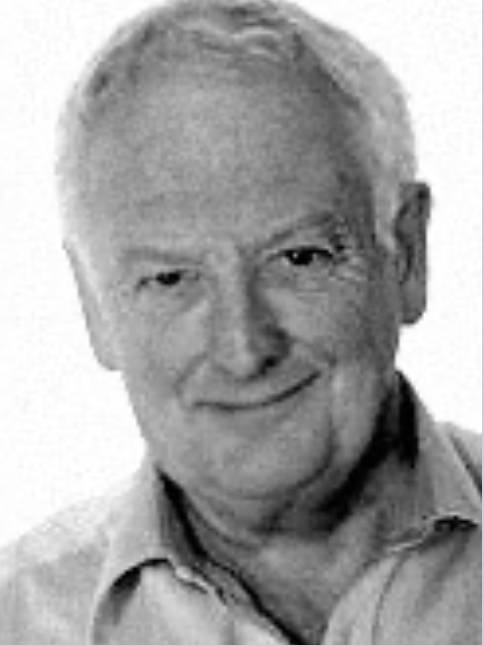
Professor John Adams
The affluent world is drowning in risk assessments. Almost everyone now has a “duty of care” to identify formally all possible risks to themselves, or that they might impose on others, and to demonstrate that they have taken all reasonable steps to “control” them. It is not clear that those imposing this duty of care appreciate the magnitude and difficulty of the task they have set.
In 2004 I participated in a conference on terrorism, World Federation of Scientists’ International Seminar on Terrorism, Erice, Sicily. Most of the other participants were eminent scientists, and I found myself in a workshop entitled Cross-disciplinary challenges to the quantification of risk. Lord Kelvin famously said:
“Anything that exists, exists in some quantity and can therefore be measured.”
This dictum sits challengingly alongside that of another famous scientist, Peter Medewar who observed:
“If politics is the art of the possible, research is the art of the soluble. Both are immensely practical minded affairs. Good scientists study the most important problems they think they can solve [my emphasis]. It is, after all, their professional business to solve problems, not merely to grapple with them.”
Terrorism undoubtedly exists, and some of its consequences can be quantified. One can count the numbers killed and injured. With the help of insurance companies one can have a stab at the monetary value of property destroyed and, for those with business continuity insurance, the value of business lost. But what units of measurement might be invoked to calculate the impact of the terror that pervades and distorts the daily life of someone living in Chechnya, or Palestine, or Darfur or …. ? Or the loss of civil liberties resulting from the anti-terrorism measures now being imposed around the world.
The problem becomes more difficult when one moves on to the challenge of quantifying the risk of terrorism. Risk is a word that refers to the future. It has no objective existence. The future exists only in the imagination. There are some risks for which science can provide useful guidance to the imagination. The risk that the sun will not rise tomorrow can be assigned a very low probability by science. And actuarial science can estimate with a high degree of confidence that the number of people killed in road accidents in Britain next year will be 3500, plus or minus a hundred or so. But these are predictions, not facts. Such predictions rest on assumptions; that tomorrow will be like yesterday; that next year will be like last year; that future events can be foretold by reading the runes of the past. Sadly, the history of prediction contains many failures – from those of stock market tipsters to those of vulcanologists seeking to predict eruptions, earthquakes and tsunamis.
Type “risk” into an Internet search engine and you will get over 100 million hits. You need sample only a small fraction to discover many unnecessary, and often acrimonious, arguments. Risk is a word that means different things to different people. It is a word that engenders a sense of urgency because it alludes to the probability of adverse, sometimes catastrophic, outcomes. Much of the acrimonious urgency, or the urgent acrimony, that one uncovers searching for “risk” on Google, stems from a lack of agreement about the meaning of the word. People are using the same word, to refer to different things, and shouting past each other.
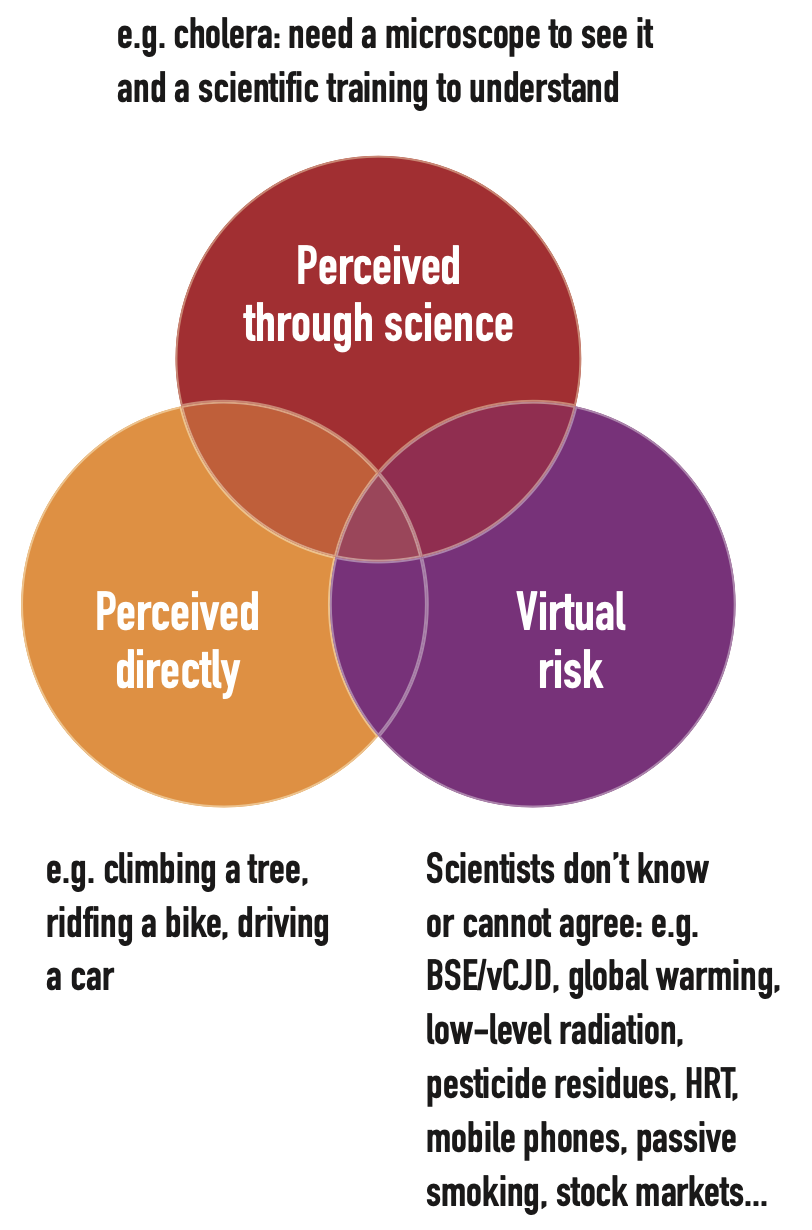
Figure 1 is proffered in the hope of clearing away some unnecessary arguments.
Figure 1.
Directly perceived risk (much operational risks) are dealt with using judgement – a combination of instinct intuition and experience. One does not undertake a formal, probabilistic, risk assessment before crossing the road. Crossing the road in the presence of traffic involves prediction based on judgement. One must judge vehicle speeds, the gaps in traffic, one’s walking speed, and hope one gets it right, as most of us do most of the time.
Most of the published literature on risk management falls into the category of risk perceived through science. Here one finds not only biological scientists in lab coats peering through microscopes, but physicists, chemists, engineers, doctors, statisticians, actuaries, epidemiologists and numerous other categories of scientist who have helped us to see risks that are invisible to the naked eye. Collectively they have improved enormously our ability to manage risk – as evidenced by the huge increase in average life spans that has coincided with the rise of science and technology.
But where the science is inconclusive we are thrown back on judgement. We are in the realm of virtual risk. These risks are culturally constructed – when the science is inconclusive people are liberated to argue from, and act upon, pre-established beliefs, convictions, prejudices and superstitions. Such risks may or may not be real but they have real consequences. In the presence of virtual risk what we believe depends on whom we believe, and whom we believe depends on whom we trust.
A participant at the conference on terrorism was one of the world’s foremost experts on turbulence, notoriously the most intractable problem in science. In the mythology of physics Werner Heisenberg is reported as saying:
“When I meet God, I am going to ask him two questions: Why relativity? And why turbulence? I really believe he will have an answer for the first.”
I would trust the physicist I met at the conference to tell me the truth about turbulence, so far as he knew it. But the problems he is studying are simple compared to those of the risk manager, because the clouds do not react to what the weatherman or physicist says about them.
We are all risk managers. Whether buying a house, crossing the road, or considering whether or not to have our child vaccinated, our decisions will be influenced by our judgement about the behaviour of others, and theirs by their judgements about what we might do. The world of the risk manager is infinitely reflexive. In seeking to manage the risks in our lives we are confronted by a form of turbulence unknown to natural science, in which every particle is trying to second guess the behaviour of every other. Will the vendor accept less in a falling market? Will the approaching car yield the right of way? Will enough other parents opt for vaccination so that my child can enjoy the benefits of herd immunity while avoiding the risks of vaccination? And, increasingly, if things go wrong, who might sue me? Or whom can I sue? The risk manager is dealing with particles with attitude.
Another participant at the conference, alert to the strict limits of natural science in the face of such turbulence, warned that we were in danger of becoming the drunk looking for his keys, not in the dark where he dropped them, but under the lamp post where there was light by which to see.
This caution prompted the re-drawing of Figure 1. Figure 2 is an attempt to highlight the strict limits to the ability of science to foretell the future.
Fig. 2. Three types of risk (re-draw). An attempt to highlight the strict limits to the ability of science to foretell the future.
In the area lit by the lamp of science one finds risk management problems that are potentially soluble by science. Such problems are capable of clear definition relating cause to effect and characterized by identifiable statistical regularities. On the margins of this area one finds problems framed as hypotheses and methods of reasoning, such as Bayesian statistics, which guide the collection and analysis of further evidence. As the light grows dimmer the ratio of speculation to evidence increases. In the outer darkness lurk unknown unknowns. Here lie problems with which, to use Medawar’s word, we are destined to “grapple”.
As the light of science has burned brighter most of the world has become healthier and wealthier and two significant changes have occurred in the way in which we grapple with risk. We have become increasingly worried about more trivial risks, and the legal and regulatory environments in which we all must operate as individual risk managers have become more turbulent. As the likelihood of physical harm has decreased the fear, and sometimes the likelihood, of being sued has increased.
As the light of science has burned brighter most of the world has become healthier and wealthier and two significant changes have occurred in the way in which we grapple with risk. We have become increasingly worried about more trivial risks, and the legal and regulatory environments in which we all must operate as individual risk managers have become more turbulent.
Perhaps the clearest demonstration of this can be found in the increase in the premiums that doctors must pay for insurance, and the way this varies according to the type of medicine practiced. The Medical Protection Society of Ireland has four categories of risk: low, medium, high and obstetricians. Between 1991 and 2000 the premium charged to those in the low category increased by 360 percent to €9854, and that charged to obstetricians increased by 560 percent to € 54567.
Measured in terms of its impact on peri-natal mortality rates, obstetrics and gynecology can claim a major share of the credit for the huge increases in average life expectancy over the last 150 years. This most successful medical discipline is now the most sued – so successful that almost every unsuccessful outcome now becomes a litigious opportunity. I don’t know of any risk assessment that predicted that.
There is a distinction, frequently insisted upon in the literature on risk management, between “hazard” and “risk”. A hazard is defined as something that could lead to harm, and a risk as the product of the probability of that harm and its magnitude; risk in this literature is hazard with numbers attached. So, relating this terminology to Figures 1 and 2, it can be seen that risk can be placed in the circle “perceived through science” while the other two circles represent different types of hazard.
Typing “hazard management” into Google at the time of writing yielded 70,000 hits; “risk management” 12 million. The number of potential harms in life to which useful numbers can be attached is tiny compared to the number through which we must navigate using unquantified judgement. The Kelvinist, rocket-science approach to virtual risks, with its emphasis on the quantitatively soluble, threatens to divert attention from larger, more complicated, more urgent problems with which we ought to be grappling.
Bibliography
Adams, J. (2007). Risk Management: It’s Not Rocket Science – It’s Much More Complicated, Public Risk Forum, Edition May 2007, pp. 9-11.






 PRIMO Res Publica