
The Destruction of America’s First National Park
Alston Chase | 1987, Harper Collins
Beavers have disappeared, and their prime food, aspen and willow, has drastically declined. Cougars, bobcats, and wolves are no longer here, victims of predator control from earlier times. Deer, moose, and bighorn sheep are scarce; visitors seldom see black bears, and the grizzly is threatened with extinction. Meanwhile, bison and elk flourish to the detriment of rangeland.
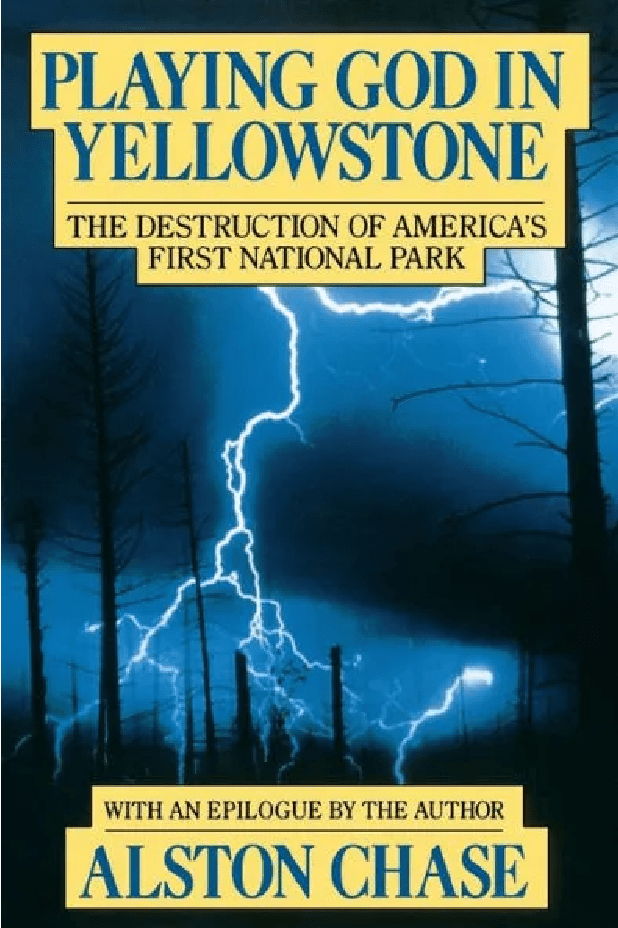
Wildlife management in Yellowstone has been criticized for decades. Chase reviews the park’s history and examines the vacillating policies and political pressures that affect its management.
He finds that attracting visitors is the overriding priority; their safety is the guiding philosophy, and rangers are mere policemen. Chase tells the story of Grant Village, a development site in prime grizzly habitat; he discusses the friction between rangers and naturalists and the exclusion of university biologists (though geologists are welcome).
Current wildlife policy stresses the “intact ecosystem,” i.e., no interference with nature; consequently, bison infected with brucellosis and sheep with “pink-eye” go untreated and stranded animals are left to die. Major environmental groups support this policy.
Chase, who heads an education program at Yellowstone, has written an explosive study. The first serial was for the Atlantic and Outside magazine. (March 24)
Read the review by Donald C. Baur
Bibliography
Chase, A. (1987) Playing God in Yellowstone: The Destruction of America’s First National Park. New York: Harper Collins.
 PRIMO Res Publica