
Nørby Committee’s Report

Copenhagen Stock Exchange | 2001

Following the release of the Cadbury Report in 1992, Denmark formulated their recommendations for good corporate governance. In 2001 The Nørby Committee’s Report on Corporate Governance in Denmark was published.

“Over the past 15-20 years, the international arena has witnessed a significant public debate about which major principles should be employed to govern companies. The general term for these principles is corporate governance, a concept that is difficult to translate into Danish. In our opinion the concept can be defined as:

“The goals, according to which a company is managed, and the major principles and frameworks which regulate the interaction between the company’s managerial bodies, the owners as well as other parties, who are directly influenced by the company’s dispositions and business (in this context jointly referred to as the company’s stakeholders). Stakeholders include employees, creditors, suppliers, customers and the local community.””

Lees verder “Nørby Committee’s Report”
The UK Government Resilience Framework

HM Government, Cabinet Office | 2022

The professionalism and commitment of the people who contribute to the UK’s resilience is extraordinary, and we have a well-established framework for civil protection in the UK. But the last few years have exposed the need to build on these solid foundations and strengthen our resilience to prevent, mitigate, respond to and recover from the nation’s risks.

That is why the UK Government committed, in the Integrated Review, to a new Resilience Strategy: The UK Government Resilience Framework (pdf) or online.

Lees verder “The UK Government Resilience Framework”

Rethinking Public Governance

Jacob Torfing* | 2023, Edward Elgar Publishing

In this innovative book, Jacob Torfing, a leading scholar, critically evaluates emerging ideas, practices and institutions, transforming how public governance is perceived, theorised and conducted in practice.

A novel rethinking of how current societies are governed, this book will inspire students, scholars and practitioners of political science, public policy, regulation and governance, and public administration management to reconsider how public governance and administration may be organised in the future to present innovative solutions to societal problems.

Identifying cutting-edge developments in public governance, this incisive book analyses new forms of political leadership, public management, public organisation, administrative steering, cross-boundary collaboration, public regulation and societal problem-solving. Examining some of the most significant instances of public governance transformation, chapters explore the effects of transformations from sovereign to interactive political leadership, from national to multi-level governance, and from hard to soft power.

Lees verder “Rethinking Public Governance”

The Big Beautiful Municipality?

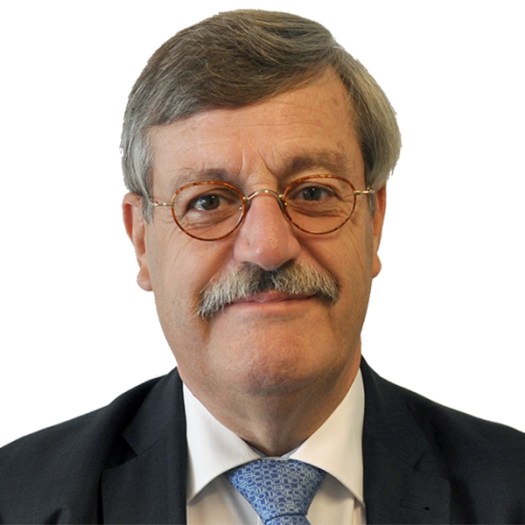
Harrie Scholtens* | 2013

Times are changing. This will happen in every society and has to be recognised. However difficult it is to say goodbye to the past, we must realise that the past is behind us. Of course, we have to learn from it, but we must also look forward and prepare society for the constantly changing future. Of course, this also happens in governmental structures—slowly, but it does happen.

Harrie Scholtens

The responsibilities of the governmental levels will change throughout the years as a result of changes in society, the needs and questions of inhabitants, new technologies, et cetera. All of these changes, therefore, require more expertise from governmental organisations: expertise which can be found in cooperation, but also, for instance, in the merging of municipalities and their organisations of civil servants. Larger organisations will offer more opportunities for civil servants to invest in their knowledge and skills. These aspects, including the talents of the other category of civil servants, are needed to handle the changes in these larger organisations.

Lees verder “The Big Beautiful Municipality?”

Third-Party Risk Policies in The Netherlands

A Historical Sketch 

Ben Ale | April 2023, Cambridge Scholars Publishing

It is not easy to keep the population safe in a country that is one of the most densely populated in the world, a hub of international transport over land and water and through the air, about one-third of which lies below sea level.

.

Third-party risk policies developed gradually in The Netherlands but became acute in the late 20th century as various industries increased their use and production of hazardous materials.

The Dutch government, considering its constitutional responsibility to protect the life, health and well-being of its people, must resolve the ongoing debate between the general population, who are exposed to these risks, and those profiting from the creation of said risks-the resultant policies are a product of this balancing act.

Lees verder “Third-Party Risk Policies in The Netherlands”

Resilience Thinking

Sustaining Ecosystems and People in a Changing World

Brian Walker and David Salt | 2006

Increasingly, cracks are appearing in the capacity of communities, ecosystems, and landscapes to provide the goods and services that sustain our planet’s well-being. The response from most quarters has been for “more of the same” that created the situation in the first place: more control, more intensification, and greater efficiency. It is published by Island Press.

“Resilience thinking” offers a different understanding of the world and a new resource management approach. It embraces human and natural systems as complex entities continually adapting through cycles of change. It seeks to understand the qualities of a system that must be maintained or enhanced to achieve sustainability. It explains why greater efficiency alone cannot solve resource problems and offers a constructive alternative that opens up options rather than closing them down.

Lees verder “Resilience Thinking”

Creating Public Value

John O’Dea* | April 2014

Public value is defined as “using government assets to produce a good and just society”. The term was first mooted in 1995 by Mark H. Moore – Hauser Professor of Non-Profit Organisations at the Harvard Kennedy School of Government – in his book Creating Public Value (Harvard University Press). Public value in public sector management is the equivalent of shareholder value in private sector organisations. Shareholder value is a business term which implies that the ultimate measure of a company’s success is the extent to which it enriches its shareholders (owners) by paying dividends and/or causing its stock price to increase in value.

John O’Dea

By the same token, the ultimate measure of a government’s success is the extent to which it enriches society as a whole. The difference between public and private entities is that in the former, citizens are both the shareholders (as taxpayers) and the clients (as recipients of public services). Public services are distinctive because they are characterised by claims of rights by citizens that have been authorised and funded through a democratic process.

Lees verder “Creating Public Value”