Prospect Theory

An analysis of decision under risk

Daniel Kahneman and Amos Tversky | 1979

This paper presents a critique of expected utility theory as a descriptive model of decision making under risk, and develops an alternative model, called prospect theory.

Choices among risky prospects exhibit several pervasive effects that are inconsistent with the basic tenets of utility theory. In particular, people underweight outcomes that are merely probable in comparison with outcomes that are obtained with certainty. This tendency, called the certainty effect, contributes to risk aversion in choices involving sure gains and to risk seeking in choices involving sure losses.

In addition, people generally discard components that are shared by all prospects under consideration. This tendency, called the isolation effect, leads to inconsistent preferences when the same choice is presented in different forms.

An alternative theory of choice is developed, in which value is assigned to gains and losses rather than to final assets and in which probabilities are replaced by decision weights.

The value function is normally concave for gains, commonly convex for losses, and is generally steeper for losses than for gains.

Decision weights are generally lower than the corresponding probabilities, except in the range of low probabilities. Overweighting of low probabilities may contribute to the attractiveness of both insurance and gambling.

Bibliography

Kahneman, D. and Tversky, A. (1979) ‘Prospect Theory: An Analysis of Decision Under Risk’. Econometrica, 47, 263-291.

Download essay.
AR6 Synthesis Report Climate Change 2023

IPCC | 2023

Interlaken, Switzerland, March 20, 2023 — There are multiple, feasible and effective options to reduce greenhouse gas emissions and adapt to human-caused climate change, and they are available now, said scientists in the latest Intergovernmental Panel on Climate Change (IPCC) report released today.

“Mainstreaming effective and equitable climate action will not only reduce losses and damages for nature and people, it will also provide wider benefits,” said IPCC Chair Hoesung Lee. “This Synthesis Report underscores the urgency of taking more ambitious action and shows that, if we act now, we can still secure a liveable sustainable future for all.”

In 2018, IPCC highlighted the unprecedented scale of the challenge required to keep warming to 1.5°C. Five years later, that challenge has become even greater due to a continued increase in greenhouse gas emissions. The pace and scale of what has been done so far, and current plans, are insufficient to tackle climate change.

Lees verder “AR6 Synthesis Report Climate Change 2023”

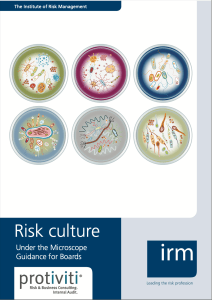
Risk Culture

Under the Microscope Guidance for Boards

The Institute of Risk Management | 2012

Richard Anderson, Chairman of The Institute of Risk Management: “For over 25 years, the Institute of Risk Management has provided leadership and guidance to the emerging risk management profession with a unique combination of academic excellence and practical relevance. The Institute’s profile continues to grow internationally with heightened interest in the management of risk across government, public, and business domains.

This board guidance on risk culture is our latest contribution to thought leadership in the field. Although essential, the continuing parade of organisational catastrophes (and some notable successes) demonstrates that frameworks, processes and standards for risk management are insufficient to ensure that organisations reliably manage their risks and meet their strategic objectives. What is missing is the behavioural element: why do individuals, groups and organisations behave the way they do, and how does this affect all aspects of the management of risk?

Lees verder “Risk Culture”

The new Danish guide on Risk Leadership

Lars Løkke Rasmussen and Jesper Hjort | May 2007

In January 2007, PRIMO Danmark launched its national guide on (public) risk management, Risikoledelse – En Kommunal Opgave. The guide was endorsed by the Danish Minister of Interior, Lars Løkke Rasmussen, who wrote the first part of the preface to the guide.

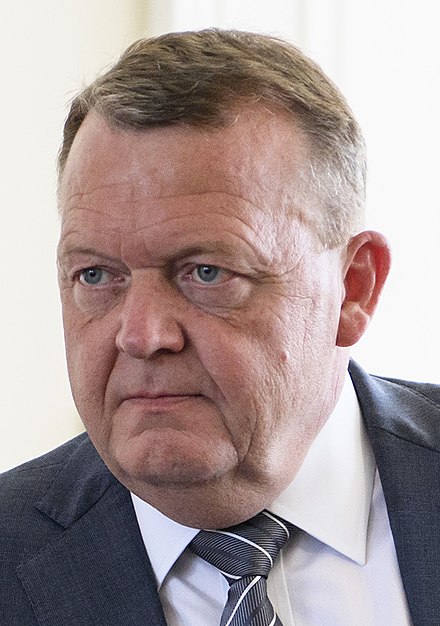
Lars Løkke Rasmussen (source: Wikipedia)

Rasmussen: “Every day, local authority managers make decisions involving risks; that is, decisions involving significant uncertainty. It is important to note that these may be risks facing citizens, local communities or the local authority organisation itself.

Risk is simply a condition of life when the future is uncertain. To put it in another way: making important decisions on an uncertain foundation is also part of overall management. Executives can never be entirely certain about the foundations of their decisions. However, if entirely risk-proof decisions were possible, nothing would happen.

So, for executives, the whole secret is – in the words of Kierkegaard – to take upon one self this uncertainty. Executives in the public sector should, therefore, work systematically on minimizing the negative sides of risks and on maximising the positive sides.

Lees verder “The new Danish guide on Risk Leadership”

“Long history of corporate governance puts UK in the lead”

Interview with Dr. Lynn Drennan, CEO of ALARM, about risk management

Great Britain is the European example of well-developed risk management in the public sector. In a country where you can insure yourself against almost anything, governments and other public organisations appear to do a lot to eliminate and limit risks.

Dr. Lynn Drennan

ALARM (Association of Local Authority Risk Managers) has grown into a national public sector risk management forum with over 1,800 participating organisations— a conversation with Dr. Lynn Drennan, ALARM chief executive.

She has only been in office since August this year, but Lynn Drennan has been active in risk management for many years. She was affiliated with Glasgow Caledonian University, ‘the only university in Europe that offers a university degree in risk management,’ says Drennan. “And that since 1982. Many of our graduates now work as risk managers in the corporate world, for consultants such as Marsh and Aon and for public organisations.”

Lees verder ““Long history of corporate governance puts UK in the lead””

The Power of Organizations

A New Approach to Organizational Theory: How organizations developed in history, how they operate, and how research on them has evolved.

Heather A. Haveman | 2022

Organizations are all around us: government agencies, multinational corporations, social-movement organizations, religious congregations, scientific bodies, sports teams, and more. Immensely powerful, they shape all social, economic, political, and cultural life. They are critical for planning and coordinating every activity, from manufacturing cardboard boxes to synthesizing new drugs and reducing greenhouse gas emissions. To understand our world, we must understand organizations.

The Power of Organizations defines the features of organizations, examines how they operate, traces their rise throughout a millennium, and explains how research on organizations has evolved from the mid-nineteenth century to today.

Heather Haveman shows how almost all contemporary research on organizations fits into three general perspectives: demographic, relational, and cultural. She offers constructive criticism of existing research, showing how it can be remade to be both more interesting and influential. She examines how we can use existing theories to understand the changes wrought by digital technologies, and she argues that organizational scholars can and should alter the impact that organizations have on society, particularly societal and global inequality, formal politics, and environmental degradation.

The Power of Organizations demonstrates the benefits and dangers of these ubiquitous foundations of modern society.

Bibliography

Haveman, H. (2022). The Power of Organizations: A New Approach to Organizational Theory. Princeton University Press.

A Research Agenda for Governance

Guy Peters, Jon Pierre, Eva Sørensen, Jacob Torfing* | 2022

This incisive Research Agenda for Governance, published by Edward Elgar Publishing**, draws together unique contributions from leading scholars to examine the two distinct models of governance: the traditional model, based on the state and exercise of control through law and bureaucracy, and an alternative model centred on the collaboration of public and private sector actors.

Introducing the essential principles and rationale of these alternative models of governance, both of which can be seen operating at all levels of government in democratic as well as non-democratic regimes, the chapters evaluate the strengths and weaknesses of the two systems. Drawing conclusions from critical areas of inquiry, including multi-level governance, the nature of governance in democratic and authoritarian regimes, and digital innovations in governance, the book offers a richly detailed insight into the respective workings of the models of governing by control and by collaboration.

Lees verder “A Research Agenda for Governance”