Met zekerheid in onzekerheid

Over innovatie en het nemen van innovatierisico’s.  Afscheidsrede van Prof. dr. ir. J.I.M. Halman, University of Twente 

Joop Halman | oktober 2018

“In het jaar voorafgaande aan dit afscheidscollege heb ik met enige regel- maat gemijmerd wat het afscheid nemen van mijn werk aan de universiteit voor mij zou betekenen. Ik kon mij daar eerlijk gezegd nog niet veel bij voorstellen. Ik voelde en voel mij in een prima conditie, waarom zou je dan stoppen terwijl je het gevoel hebt dat je net goed op stoom bent?”

Prof. dr. ir. J.I.M. Halman

De afscheidsrede gaat onder meer in op de categorisering van risico’s, op de concrete risico’s in innovatieprojecten en bevat een uitgebreide lijst met gezaghebbende referenties en publicaties. De afscheidsrede bevat een verhandeling (p.15-p.27) inzake innovatie en het nemen van risico’s in innovatieprojecten.

“Het begrip risico, kom je in verschillende disciplines tegen:

  • In de gezondheidswetenschappen, onder andere bij het doen van epidemisch onderzoek naar gezondheidsrisico’s.
  • In de psychologie, waar men onderscheid maakt tussen objectieve versus cognitieve risico’s.
  • In de economie, bij investeringsvraagstukken, waar er een kans bestaat op een negatief maar ook op een positief resultaat.
  • In de veiligheidskunde, bij het afwegen van toelaatbaar geachte risico’s zoals bijvoorbeeld bij het al dan niet verstevigen of ophogen van een dijk In de verzekeringskunde, bij het vaststellen van de door ons te betalen premies. 
  • In de wiskunde, bij het ontwikkelen van methodieken ter kwantificering van risico’s.
  • En in de bedrijfskunde, waar men een onderscheid maakt tussen het korte termijn versus het lange termijn succes van een onderneming of van een innovatieproject.
Lees verder “Met zekerheid in onzekerheid”

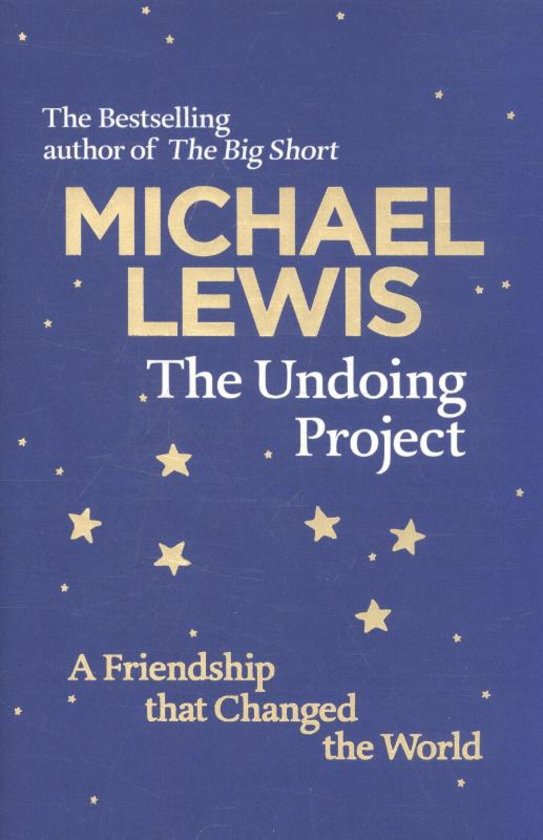
The Undoing Project

A Friendship that Changed the World

Michael Lewis | 2017, W.W. Norton & Company

This is the extraordinary story of the two men whose ideas changed the world. Daniel Kahneman and Amos Tversky met in war-torn 1960s Israel. Both were gifted young psychology professors: Kahneman, a rootless son of Holocaust survivors who saw the world as a problem to be solved, and Tversky, a voluble, instinctual blur of energy.

In this breathtaking new book, Michael Lewis tells the extraordinary story of a relationship that became a shared mind: one which created the field of behavioural economics, revolutionising everything from Big Data to medicine, from how we are governed to how we spend, from high finance to football.

Lees verder “The Undoing Project”

Sources of Power

How People Make Decisions

Gary Klein | 1999, MIT Press

Anyone who watches the television news has seen images of firefighters rescuing people from burning buildings and paramedics treating bombing victims. How do these individuals make the split-second decisions that save lives? Most studies of decision-making based on artificial tasks assigned in laboratory settings view people as biased and unskilled.

Gary Klein is one of the developers of the naturalistic decision-making approach, which views people as inherently skilled and experienced. It documents human strengths and capabilities that have been downplayed or ignored so far.

Lees verder “Sources of Power”

Judgment under Uncertainty: Heuristics and Biases

Biases in judgments reveal some heuristics of thinking under uncertainty

Amos Tversky and Daniel Kahneman | 1974

This article described three heuristics that are employed in making judgments under uncertainty: (i) representativeness, which is usually employed when people are asked to judge the probability that an object or event A belongs to class or process B; (ii) availability of instances or scenarios, which is often employed when people are asked to assess the frequency of a class or the plausibility of a particular development; and (iii) adjustment from an anchor, which is usually employed in numerical prediction when a relevant value is available.

These heuristics are highly economical and usually effective, but they lead to systematic and predictable errors. A better understanding of these heuristics and the biases they lead to could improve judgments and decisions in situations of uncertainty.

Lees verder “Judgment under Uncertainty: Heuristics and Biases”

Morele ambitie

Stop met het verspillen van je talent en maak werk van je idealen

Rutger Bregman | 2024, de Correspondent

Iedere carrière duurt 2.000 werkweken. Hoe je die tijd besteedt, is een van de belangrijkste beslissingen van je leven. Toch zitten miljoenen mensen vast in suffe, nutteloze of zelfs schadelijke banen. De grootste verspilling van onze tijd is de verspilling van talent.

Het medicijn tegen deze verspilling? Morele ambitie. De wil om bij de besten te horen, maar met andere maatstaven van succes. Geen dik salaris, deftige titel of corner office, maar een carrière die is gewijd aan de beste oplossingen voor de grootste wereldproblemen.

Lees verder “Morele ambitie”

Thinking, Fast and Slow

Daniel Kahneman | 2013

In this fascinating treatise by a giant in the field of decision research, the mind is a hilariously muddled compromise between incompatible modes of thought.

Psychologist Kahneman positions a brain governed by two clashing decision-making processes. The largely unconscious System 1, he contends, makes intuitive snap judgments based on emotion, memory, and hard-wired rules of thumb and the painfully conscious System 2 laboriously checks the facts and does the math but is so “lazy” and distractible that it usually defers to System 1.

Kahneman uses this scheme to frame a scintillating discussion of his findings in cognitive psychology and behavioural economics and of the ingenious experiments that tease out the irrational, self-contradictory logics that underlie our choices.

All the factors described play a direct and indirect role in public governance. All public leaders and managers should be aware of the thoroughly described systems of our brains and behaviour. They make things clear and understandable. The book is an epiphany.

Bibliography

Kahneman, D. (2013) Thinking, Fast and Slow. New York: Farrar, Straus and Giroux