Mercy Mercy Me (The Ecology)

Marvin Gaye | 1971

Woah, ah, mercy, mercy me
Ah, things ain’t what they used to be (ain’t what they used to be)
Where did all the blue skies go?
Poison is the wind that blows
From the north and south and east

(Listen to song on Apple Music or Spotify)

Woah, ah, mercy, mercy me
Ah, things ain’t what they used to be (ain’t what they used to be)
Where did all the blue skies go?
Poison is the wind that blows
From the north and south and east

Woah, mercy, mercy me, yeah
Ah, things ain’t what they used to be (ain’t what they used to be)
Oil wasted on the ocean and upon our seas
Fish full of mercury

Oh Jesus, yeah, mercy, mercy me, ah
Ah, things ain’t what they used to be (ain’t what they used to be)
Radiation underground and in the sky
Animals and birds who live nearby are dying

Hey, mercy, mercy me, oh
Hey, things ain’t what they used to be
What about this overcrowded land?
How much more abuse from man can she stand?

Oh, na, na, na
Oh, oh, oh, oh, oh
Hey, ooh, woo

Bibliography

Gaye, M. (1971) Mercy Mercy Me (The Ecology). Album: What’s Goin on. Detroit: Motown.

UN High Seas Treaty

This evening more than 100 nations finally have reached a historic agreement to protect the world’s oceans following 10 years of negotiations. The High Seas Treaty places 30% of the seas into protected areas by 2030, aiming to safeguard and recuperate marine nature. The negotiations had been held up for years over disagreements on funding and fishing rights.

The existing agreement of 1982 established an area called the high seas – international waters where all countries have a right to fish, ship and do research – but only 1.2% of these waters are protected. Marine life living outside of these protected areas has been at risk from climate change, overfishing and shipping traffic.

The legally binding agreement to conserve and ensure the sustainable use of ocean biodiversity was agreed after five rounds of protracted United Nations-led negotiations that ended in New York on Saturday, a day after the original deadline, as reported by Reuters.

UN delegates reach historic agreement on protecting marine biodiversity in international waters.

Read UN press release

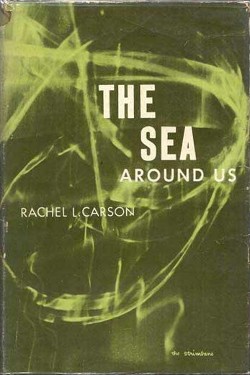
The Sea Around Us

Rachel Carson | July 1951

Here is the strange story of the seas – how they were born, how life emerged from them, and the marine world within them. Rachel Carson’s writing teems with images – the newly-formed Earth cooling beneath an endlessly overcast sky; volcanic action throwing up huge masses on the ocean floor to create immense mountains and desolate canyons; giant squid battling sperm whales hundreds of fathoms below the surface.

A new chapter by Jeffrey Levinton brings the science of “The Sea Around Us” up to date. Levinton incorporates the most recent thinking on continental drift, coral reefs, the spread of the ocean floor, the deterioration of the oceans, the mass extinction of sea life, and many other topics. First published in 1951, this work won the 1952 National Book Award.

“Published in 1951, The Sea Around Us is one of the most remarkably successful books ever written about the natural world. Rachel Carson’s rare ability to combine scientific insight with moving, poetic prose catapulted her book… It inspired an Academy Award-winning documentary and won the 1952 National Book Award and the John Burroughs Medal. This classic work remains as fresh today as when it first appeared.”

Today, with the oceans endangered by the dumping of medical waste and ecological disasters such as the Exxon oil spill in Alaska, this illuminating volume provides a timely reminder of both the fragility and the importance of the ocean and the life that abounds within it. Anyone who loves the sea, or who is concerned about our natural environment, will want to read this classic work.

Bibliography

Carlson, R. (1951) The Sea Around Us. Oxford: Oxford University Press