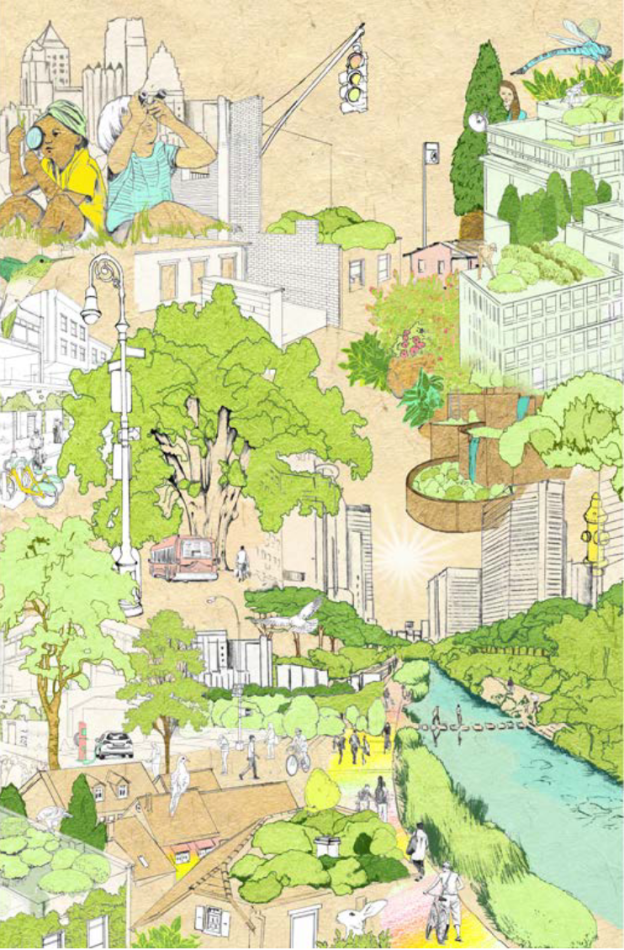
A City within a Forest

Jack Kruf | May 2024

This is a strong reminder to us all of how it actually all began. It’s time for reflection. After reading through the many articles on LinkedIn this morning, I sensed a need for change.

Scientists and practitioners of all kinds speak out that we must change. It is the most often used word in all contributions and opinions, must. In short, a kaleidoscope of paradigm shifts is proposed. There is no doubt in many minds that ‘must’ needs to change into ‘will’ or ‘can’. It is all about navigation towards a better world.

Lees verder “A City within a Forest”

Nature’s Temples

A Natural History of Old-Growth Forests Revised and Expanded

Joan Maloof | 2023

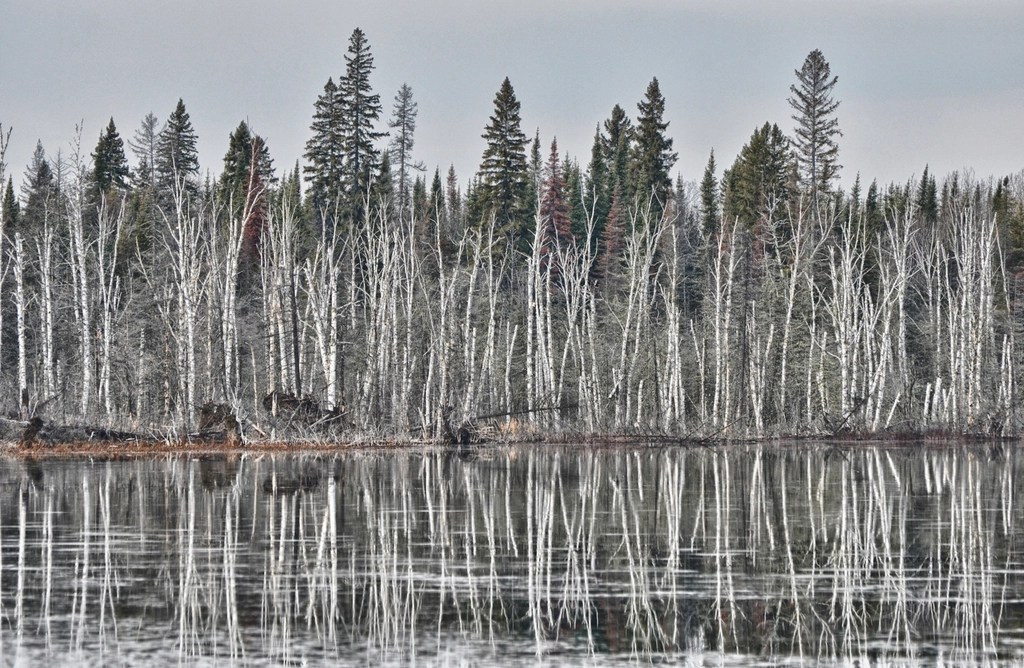
Standing in an old-growth forest, you can instinctively sense how it differs from forests shaped by humans. These ancient, undisturbed ecosystems are increasingly rare and largely misunderstood. Nature’s Temples explores the science and alchemy of old-growth forests and makes a compelling case for their protection.

Many foresters advocate forest management, while ecologists and conservation biologists believe that the healthiest forests are those we leave alone. Joan Maloof combines scientific data about old-growth forests, drawing on diverse fields of study to explain the ecological differences among forests of various ages.

Lees verder “Nature’s Temples”

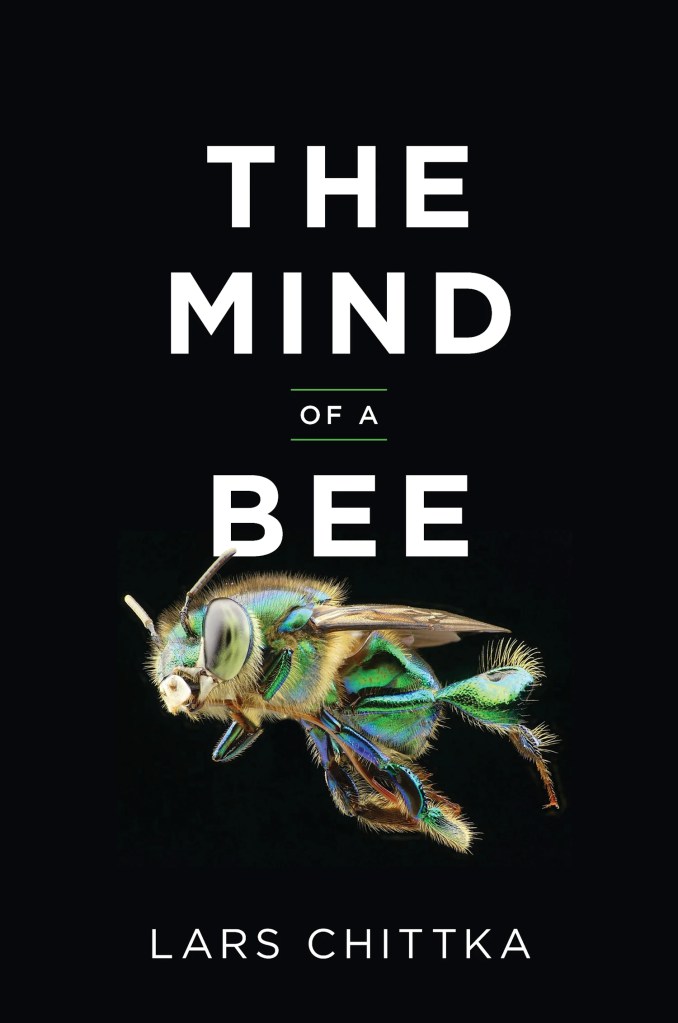
The Mind of a Bee

Lars Chittka | 2022

Most of us know the hive mind—the power of bees as a fantastic collective. But do we know how uniquely intelligent bees are as individuals?

In The Mind of a Bee, scientist and author Lars Chittka draws from decades of research, including his pioneering work, to argue that bees have remarkable cognitive abilities. He shows they are profoundly smart, have distinct personalities, can recognize flowers and human faces, exhibit basic emotions, count, use simple tools, solve problems, and learn by observing others. They may even possess consciousness.

Taking readers deep into the sensory world of bees, Chittka illustrates how bee brains are unparalleled in the animal kingdom in terms of how much sophisticated material is packed into their tiny nervous systems. He looks at their innate behaviours and how their evolution as foragers may have contributed to their keen spatial memory. Chittka also examines the psychological differences between bees and the ethical dilemmas that arise in conservation and laboratory settings because bees feel and think. Throughout, he touches on the fascinating history behind studying bee behaviour.

Exploring an insect whose sensory experiences rival those of humans, The Mind of a Bee reveals the singular abilities of some of the world’s most incredible creatures.

Bibliography

Chittka, L. (2022) The Mind of a Bee. Princeton, USA: Princeton University Press.

Nature-Based Solutions for Cities

Edited by Timon McPhearson, Nadja Kabisch and Niki Frantzeskaki  | 2023, Edward Elgar Publishing

Nature-based solutions (NBS) are increasingly being adopted to address climate change, health, and urban sustainability, yet ensuring they are effective and inclusive remains challenging. This book advances the science of NBS in cities through chapters by leading experts in the global south and north contexts. It discusses the frontiers for next-generation urban NBS.

NBS are fundamentally inter- and transdisciplinary approaches that require systems thinking and multilevel governance. Focusing on cities’ multiple challenges, from heat and air pollution to stormwater and threats to human health, this book proposes diverse ideas for embracing complexity in mainstreaming NBS and inspiring new approaches to creating the ecological urban futures we need.

Lees verder “Nature-Based Solutions for Cities”

The Latest on the World’s Forests

The Forest Pulse draws on the most recent data and analysis to reveal the latest global forest loss and deforestation trends.

World Resources Institute, Global Forest Review |  April 4, 2024

Between 2022 and 2023, Brazil and Colombia experienced a remarkable 36% and 49% decrease in primary forest loss, respectively. Yet despite these dramatic reductions, the rate of tropical primary forest loss in 2023 remained stubbornly consistent with recent years.

Forests are experiencing a huge decline in quality and quantity.

As some countries show political will to reduce forest loss and others do not, the frontiers of forest loss are shifting. The notable reductions in Brazil and Colombia were counteracted by sharp increases in forest loss in Bolivia, Laos, and Nicaragua, as well as more modest increases in other countries.

Lees verder “The Latest on the World’s Forests”

The Story Behind ‘Silent Spring’

The book Silent Spring (1962) by Rachel Carson has been selected and given a crucial place in the Value/Risk Canon. In my view, this selection is where public values not only meet public risks (as ‘possible harmse of something of value’) but hav already crossed the line of ‘risk’ and entered the domain of actual harm and loss.

This beautiful essay by Maria Popova, owner and publisher of the website The Marginalian, explores the background of this book, this moment in time, and the author’s life and convictions. It is also enriched with hyperlinks to her own studies.

Her lyrical writing rendered her not a mere translator of the natural world, but an alchemist transmuting the steel of science into the gold of wonder. The message of her iconic Silent Spring rippled across public policy and the popular imagination — it led to the creation of the Environmental Protection Agency, inspired generations of activists, and led Joni Mitchell to write lyrics as beloved as Hey farmer farmer — / Put away the DDT / Give me spots on my apples, / but leave me the birds and the bees. / Please!(Redactie: from the song is Big Yellow Taxi from  album Ladies of the Canyon)

Environmental Protection Agency (EPA)

US Government | December 1970

This organisation was founded as an independent executive agency of the United States federal government tasked with environmental protection matters. Beginning in the late 1950s and through the 1960s, US Congress reacted to increasing public concern about the impact that human activity could have on the environment.

Logo by Chermayeff & Geismar Associates

In 1959 congress passed the Resources and Conservation Act to establish a Council on Environmental Quality in the Executive Office of the President and declared a national environmental policy, which required the preparation of an annual environmental report. The groundwork for the Environment Protection Agency was laid.

Lees verder “Environmental Protection Agency (EPA)”