Andrew Healy, Loyola Marymount University, and Neil Malhotra, Stanford University | 2009
In our democratic system, citizens vote for their representative politicians, elected councils, public leaders, governors, and governing councils. But what about citizens’ perceptions of how risks are handled by their leaders, and what about citizens’ appreciation of proactive thinking by councillors related to public risks when it comes to voting?
Quote: “Do voters effectively hold elected officials accountable for policy decisions? Using data on natural disasters, government spending, and election returns, we show that voters reward the incumbent presidential party for delivering disaster relief spending, not investing in disaster preparedness spending. These inconsistencies distort the incentives of public officials, leading the government to underinvest in disaster preparedness, thereby causing substantial public welfare losses.”
“We estimate that $1 spent on preparedness is worth about $15 in terms of the future damage it mitigates.”
“By estimating both the determinants of policy decisions and the consequences of those policies, we provide more complete evidence about citizen competence and government accountability.”
Bibliography
Healy, A. and Malhotra, N. (2009) Myopic Voters and Natural Disaster Policy. American Political Science Review: Vol. 103, No. 3 August
In the years following her role as the lead author of the International bestseller Limits to Growth– the first book to show the consequences of unchecked growth on a finite planet – Donella Meadows remained a pioneer of environmental and social analysis until her untimely death in 2001.
“So, what is a system? A system is a set of things—people, cells, molecules, or whatever—interconnected in such a way that they produce their own pattern of behavior over time. The system may be buffeted, constricted, triggered, or driven by outside forces. But the system’s response to these forces is characteristic of itself, and that response is seldom simple in the real world.”
– Donella Meadows (2008)
Thinking in Systems is a concise and crucial book offering insight into problem-solving from personal to global scales. Edited by the Sustainability Institutes Diana Wright, this essential primer brings systems thinking out of the realm of computers and equations and into the tangible world, showing readers how to develop the systems-thinking skills that thought leaders across the globe consider critical for 21st-century life.
Some of the biggest problems facing the world, including war, hunger, poverty, and environmental degradation, are system failures. They cannot be solved by fixing one piece in isolation from the others because even seemingly minor details have enormous power to undermine the best efforts of too-narrow thinking. While readers will learn the conceptual tools and systems thinking methods, the book’s heart is grander than the methodology.
“Managers are not confronted with problems that are independent of each other, but with dynamic situations that consist of complex systems of changing problems that interact with each other. I call such situations messes. . . . Managers do not solve problems, they manage messes.”
– Russel L. Ackoff (1979)
Donella Meadows was known as much for nurturing positive outcomes as she was for delving into the science behind global dilemmas. She reminds readers to pay attention to what is important, not just what is quantifiable, to stay humble, and to stay a learner. In a world growing ever more complicated, crowded, and interdependent, Thinking in Systems helps readers avoid confusion and helplessness, the first step toward finding proactive and effective solutions.
Bibliography
Ackoff, R. (1979) ‘The Future of Operational Research Is Past’. Journal of the Operational Research Society 30, no. 2: 93–104.
Meadows, D. (Wright, D. ed) (2008) Thinking in Systems. Vermont, US: Chelsea Green Publishing Co.
This gem of a book introduces the extraordinary world of systems thinking and its ‘Dean’, Russell L. Ackoff, to curious and enquiring managers, teachers, business people – anyone, anywhere who works in an organisation.
Finished just before Professor Ackoff’s death late in 2009, “Systems Thinking for Curious Managers” opens the door to a joined-up way of thinking about things that have profoundly influenced thinkers and doers in the fields of business, politics, economics, biology, and psychology.
Stichting Civitas Naturalis bevordert het denken én handelen vanuit integrale en holistische principes van publieke sturing. Kennis over en inzicht in het begrip ‘resilience’ – van organismen en levende systemen – is daarbij essentieel.
Het begrip resilience wordt in het raamwerk Cinetone® gehanteerd om diagnose te kunnen stellen van een vraagstuk. Daarbij wordt het systeem van betrokken organisaties bestudeerd. Resilience wordt als volgt gedefinieerd:
Resilience is het vermogen van een organisme om na stress te herstellen in de oorspronkelijke toestand.
Het begrip dient volgens de stichting te allen tijde te worden gebruikt als volgt: ‘resilience van wat voor wat’. Bijvoorbeeld: ‘resilience van een samenleving in lager gelegen gebieden voor de stijging van de zeespiegel’, ‘resilience van een individuele mens voor Covid-19’, ‘resilience van een gemeenschap voor het verlies van dierbaren’, ‘resilience van een natuurgebied voor de constante instroom van stikstof’, ‘resilience van het bodemleven voor het gebruik van kunstmest en bestrijdingsmiddelen’,’resilience van een koraalrif om stijgende temperatuur van het oceaanwater het hoofd te bieden’, ‘resilience van een gemeente om financiële tegenvallers op te kunnen vangen’, ‘resilience van een stad om op economische bedreigingen te kunnen pareren voor de eigen welvaart’.
Het is in resilience waar interne krachten van het systeem en externe invloeden elkaar ontmoeten. Resilience is één van de wezenskenmerken van elk levend systeem. Het is daarin uniek.
Het begrip resilience verbindt het wezen van een levend systeem met dat van haar context, zijnde het krachtenveld vanuit haar omgeving.
Het is duidelijk dat er grenzen zijn aan de resilience van elk systeem. Soms zijn de externe invloeden zo groot en de interne krachten voor weerstand zo klein dat het systeem door het omslagpunt heengaat en overgaat in een andere fase. Sommigen systemen vallen gewoon om, storten in of verdwijnen. Tegen de grootschalige kap door de mens is geen regenwoud opgewassen. Het verdwijnt. Herstel kan wel bij bijvoorbeeld bij bossen In West-Europa, maar de tijd voor herstel is lang. De regeneratie tot een oorspronkelijk bos duurt dan 900 tot 1000 jaar.
De stichting presenteert een tweetal eenvoudige grafische impressies om het wezen van ‘resilience’ te duiden. Deze werken gaan over de stad als organisme, beschouwd als een ecosysteem. De rode stip symboliseert de stad.
Het zwarte deel is het innerlijk deel van het systeem dat weerstand biedt, zoals bijvoorbeeld, een goede geografische ligging, grote bestuurskracht, cohesie in de samenleving, goede infrastructuur of een sterk financieel weerstandsvermogen.
Het witte deel vorm het geheel van krachten en invloeden van buitenaf, die inwerken op de stad, zoals stormen, grootschalige immigratie, temperatuurstijgingen, epidemieën of overstromingen.
De werken zijn als fine art print leverbaar in diverse formaten. De opbrengst ervan gaat volledig naar de stichting. Neem contact met ons op, indien u hiervoor belangstelling heeft.
We think we know what failure looks like. Products don’t get purchased. Reorganizations make things worse. Shipments aren’t delivered. Speeches don’t get applauded. Things explode. These are the emergencies and disasters that we have nightmares about.
“Every day, there’s a line (sometimes 10 minutes long) to use the ladies’ room at Grand Central in New York. This is a failure.”
We think that failure is the opposite of success, and we optimize our organizations to avoid it. We install layers and layers of management to eliminate risk and prevent catastrophes. Read more
Colours play an important role in navigation. Here are some, chosen for the ‘Pantone Color of the Year’ with philosophy and arguments. They tell us exactly were we are in time and place and hint at speed and direction
These colours has become part of our common history and function as orientating points from which to navigate. They shine in our cloths, apparels, furniture, walls, interiors and objects as silent beacons for the public domain of society and nature.
They speak in fact a language which could be embraced by the world of public administration and governance. They could generate energy, creativity and innovation. It is the language of navigation.
Civitas Naturalis selected the chosen colours between 2017 and 2023. All related text are quotes from Pantone® presentations.
“The Pantone’s Color of the Year 2023, Viva Magenta 18-1750, vibrates with vim and vigor. It is a shade rooted in nature descending from the red family and expressive of a new signal of strength. Viva Magenta is brave and fearless, and a pulsating color whose exuberance promotes a joyous and optimistic celebration, writing a new narrative.
This year’s Color of the Year is powerful and empowering. It is a new animated red that revels in pure joy, encouraging experimentation and self-expression without restraint, an electrifying, and a boundaryless shade that is manifesting as a stand-out statement. The color welcomes anyone and everyone with the same verve for life and rebellious spirit. It is a color that is audacious, full of wit and inclusive of all.”
“In this age of technology, we look to draw inspiration from nature and what is real. PANTONE 18-1750 Viva Magenta descends from the red family, and is inspired by the red of cochineal, one of the most precious dyes belonging to the natural dye family as well as one of the strongest and brightest the world has known. Rooted in the primordial, PANTONE 18-1750 Viva Magenta reconnects us to original matter. Invoking the forces of nature, PANTONE 18-1750 Viva Magenta galvanizes our spirit, helping us to build our inner strength.”
“The Pantone Color of the Year 2022 Very Peri PANTONE 17-3938 displays a carefree confidence and a daring curiosity that animates our creative spirit, inquisitive and intriguing helps us to embrace this altered landscape of possibilities, opening us up to a new vision as we rewrite our lives.
Rekindling gratitude for some of the qualities that blue represents complemented by a new perspective that resonates today, PANTONE 17-3938 Very Peri places the future ahead in a new light.”
“As we move into a world of unprecedented change the selection of PANTONE 17-3938Very Peri brings a novel perspective and vision of the trusted and beloved blue color family, encompassing the qualities of the blues, yet at the same time with its violet red undertone, PANTONE 17-3938 Very Peri displays a spritely, joyous attitude and dynamic presence that encourages courageous creativity and imaginative expressions.”
“The Pantone Color of the Year 2021 actually is a marriage of two colors, being PANTONE 17-5104 Ultimate Gray and PANTONE 13-0647 Illuminating. These are two independent colors that highlight how different elements come together to support one another. They best express the mood for Pantone Color of the Year 2021. Practical and rock solid but at the same time warming and optimistic, the union of both colors is one of strength and positivity. It is a story of color that encapsulates deeper feelings of thoughtfulness with the promise of something sunny and friendly.
As people look for ways to fortify themselves with energy, clarity, and hope to overcome the continuing uncertainty, spirited and emboldening shades satisfy our quest for vitality. PANTONE 13-0647 Illuminating is a bright and cheerful yellow sparkling with vivacity, a warming yellow shade imbued with solar power. PANTONE 17-5104 Ultimate Gray is emblematic of solid and dependable elements which are everlasting and provide a firm foundation.”
“The union of an enduring Ultimate Gray with the vibrant yellow Illuminating expresses a message of positivity supported by fortitude. Practical and rock solid but at the same time warming and optimistic, this is a color combination that gives us resilience and hope. We need to feel encouraged and uplifted; this is essential to the human spirit.”
“The Pantone Color of the Year 2020 Classic Blue PANTONE 19-4052 is a timeless and enduring blue hue and elegant in its simplicity. Suggestive of the sky at dusk, the reassuring qualities of the thought-provoking colour highlight our desire for a dependable and stable foundation on which to build as we cross the threshold into a new era.
Imprinted in our psyches as a restful color, PANTONE 19-4052 Classic Blue brings a sense of peace and tranquility to the human spirit, offering refuge. Aiding concentration and bringing laser like clarity, re-centers our thoughts. A reflective blue tone, Classic Blue fosters resilience.”
“We are living in a time that requires trust and faith. It is this kind of constancy and confidence that is expressed by PANTONE 19-4052 Classic Blue, a solid and dependable blue hue we can always rely on. Imbued with a deep resonance, Classic Blue provides an anchoring foundation. A boundless blue evocative of the vast and infinite evening sky, Classic Blue encourages us to look beyond the obvious to expand ourthinking; challenging us to think more deeply, increase our perspective and open the flow of communication.”
“The Pantone Color of the Year 2019 PANTONE 16-1546 Living Corai is vibrant, yet mellow and embraces us with warmth and nourishment to provide comfort and buoyancy in our continually shifting environment. In reaction to the onslaught of digital technology and social media increasingly embedding into daily life, we are seeking authentic and immersive experiences that enable connection and intimacy.
Sociable and spirited, the engaging nature of this color welcomes and encourages lighthearted activity. Symbolizing our innate need for optimism and joyful pursuits, it embodies our desire for playful expression.”
“Color is an equalizing lens through which we experience our natural and digital realities and this is particularly true for Living Coral. With consumers craving human interaction and social connection, the humanizing and heartening qualities displayed by the convivial PANTONE Living Coral hit a responsive chord.”
“The Pantone Color of the Year 2018 PANTONE 18-3838 Ultra Violet is a dramatically provocative and thoughtful purple shade. It communicates originality, ingenuity, and visionary thinking that points us toward the future. Complex and contemplative, Ultra Violet suggests the mysteries of the cosmos, the intrigue of what lies ahead, and the discoveries beyond where we are now. The vast and limitless night sky is symbolic of what is possible and continues to inspire the desire to pursue a world beyond our own.
Enigmatic purples have also long been symbolic of counterculture, unconventionality, and artistic brilliance. Musical icons Prince, David Bowie, and Jimi Hendrix brought shades of Ultra Violet to the forefront of western pop culture as personal expressions of individuality. Nuanced and full of emotion, the depth of this color symbolizes experimentation and non-conformity, spurring individuals to imagine their unique mark on the world, and push boundaries through creative outlets.”
“We are living in a time that requires inventiveness and imagination. It is thiskind of creative inspiration that is indigenous to PANTONE 18-3838 Ultra Violet, a blue-based purple that takes our awareness and potential to a higher level. From exploring new technologies and the greater galaxy, to artistic expression and spiritualreflection, intuitive Ultra Violet lights the way to what is yet to come.”
“The Pantone Color of the Year 2017 Pantone 15-0343 Greenery is a fresh and zesty yellow-green shade that evokes the first days of spring when nature’s greens revive, restore and renew. Illustrative of flourishing foliage and the lushness of the great outdoors, the fortifying attributes of Greenery signals consumers to take a deep breath, oxygenate and reinvigorate.
Greenery is nature’s neutral. The more submerged people are in modern life, the greater their innate craving to immerse themselves in the physical beauty and inherent unity of the natural world. This shift is reflected by the proliferation of all things expressive of Greenery in daily lives through urban planning, architecture, lifestyle and design choices globally. A constant on the periphery, Greenery is now being pulled to the forefront – it is an omnipresent hue around the world.”
“Greenery bursts forth in 2017 to provide us with the reassurance we yearn for amid a tumultuous social and political environment. Satisfying our growing desire to rejuvenate and revitalize, Greenery symbolizes the reconnection we seek with nature, one another and a larger purpose.”
In popular imagination, rocket science is the totemic example of scientific complexity. As Britain’s leading academic expert on risk, I will argue here that risk management is in fact much more complex. To put it another way, the scientist studying turbulence “the clouds do not react to what the weatherman or physicist says about them”. The risk manager must, however, deal not only with risk perceived through science, but also with virtual risk – risks where the science is inconclusive and people are thus “liberated to argue from, and act upon, pre-established beliefs, convictions, prejudices and superstitions.”
Professor John Adams
The affluent world is drowning in risk assessments. Almost everyone now has a “duty of care” to identify formally all possible risks to themselves, or that they might impose on others, and to demonstrate that they have taken all reasonable steps to “control” them. It is not clear that those imposing this duty of care appreciate the magnitude and difficulty of the task they have set.
In 2004 I participated in a conference on terrorism, World Federation of Scientists’ International Seminar on Terrorism, Erice, Sicily. Most of the other participants were eminent scientists, and I found myself in a workshop entitled Cross-disciplinary challenges to the quantification of risk. Lord Kelvin famously said:
“Anything that exists, exists in some quantity and can therefore be measured.”
This dictum sits challengingly alongside that of another famous scientist, Peter Medewar who observed:
“If politics is the art of the possible, research is the art of the soluble. Both are immensely practical minded affairs. Good scientists study the most important problems they think they can solve [my emphasis]. It is, after all, their professional business to solve problems, not merely to grapple with them.”
Terrorism undoubtedly exists, and some of its consequences can be quantified. One can count the numbers killed and injured. With the help of insurance companies one can have a stab at the monetary value of property destroyed and, for those with business continuity insurance, the value of business lost. But what units of measurement might be invoked to calculate the impact of the terror that pervades and distorts the daily life of someone living in Chechnya, or Palestine, or Darfur or …. ? Or the loss of civil liberties resulting from the anti-terrorism measures now being imposed around the world.
The problem becomes more difficult when one moves on to the challenge of quantifying the risk of terrorism. Risk is a word that refers to the future. It has no objective existence. The future exists only in the imagination. There are some risks for which science can provide useful guidance to the imagination. The risk that the sun will not rise tomorrow can be assigned a very low probability by science. And actuarial science can estimate with a high degree of confidence that the number of people killed in road accidents in Britain next year will be 3500, plus or minus a hundred or so. But these are predictions, not facts. Such predictions rest on assumptions; that tomorrow will be like yesterday; that next year will be like last year; that future events can be foretold by reading the runes of the past. Sadly, the history of prediction contains many failures – from those of stock market tipsters to those of vulcanologists seeking to predict eruptions, earthquakes and tsunamis.
Type “risk” into an Internet search engine and you will get over 100 million hits. You need sample only a small fraction to discover many unnecessary, and often acrimonious, arguments. Risk is a word that means different things to different people. It is a word that engenders a sense of urgency because it alludes to the probability of adverse, sometimes catastrophic, outcomes. Much of the acrimonious urgency, or the urgent acrimony, that one uncovers searching for “risk” on Google, stems from a lack of agreement about the meaning of the word. People are using the same word, to refer to different things, and shouting past each other.
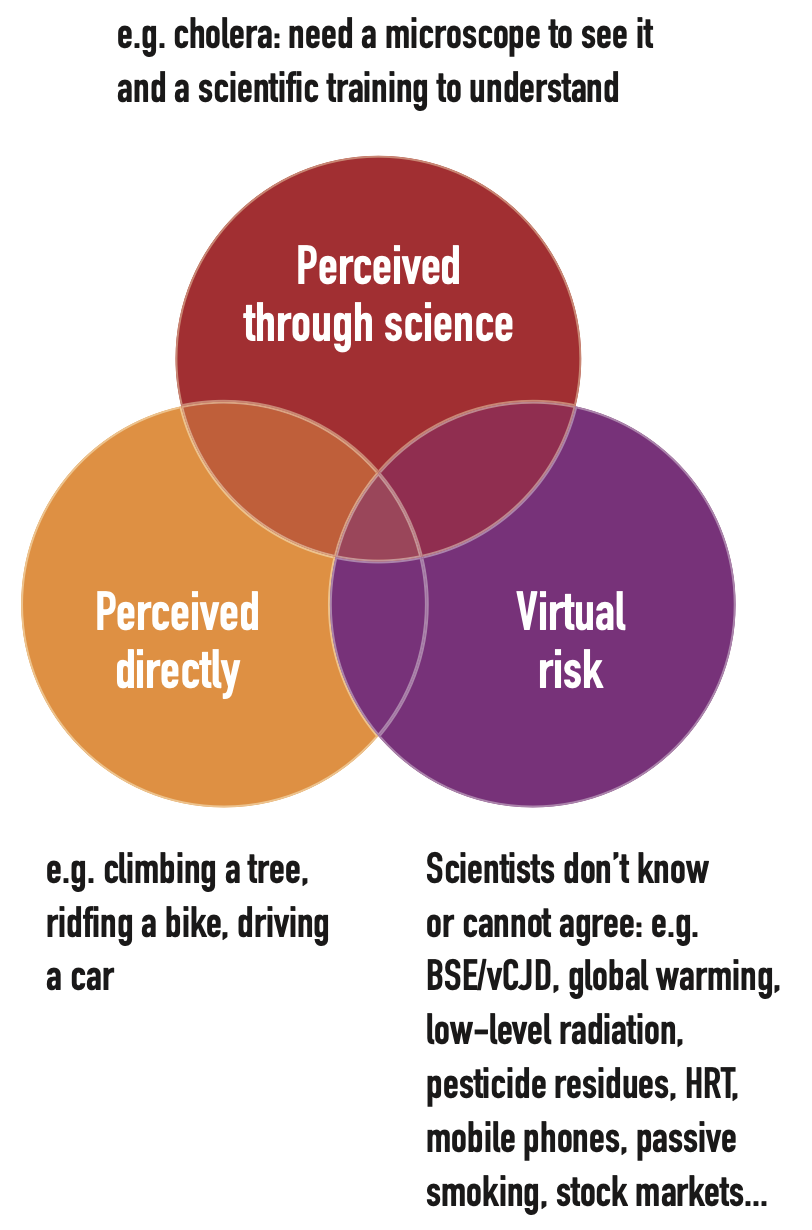
Figure 1 is proffered in the hope of clearing away some unnecessary arguments.
Figure 1.
Directly perceived risk (much operational risks) are dealt with using judgement – a combination of instinct intuition and experience. One does not undertake a formal, probabilistic, risk assessment before crossing the road. Crossing the road in the presence of traffic involves prediction based on judgement. One must judge vehicle speeds, the gaps in traffic, one’s walking speed, and hope one gets it right, as most of us do most of the time.
Most of the published literature on risk management falls into the category of risk perceived through science. Here one finds not only biological scientists in lab coats peering through microscopes, but physicists, chemists, engineers, doctors, statisticians, actuaries, epidemiologists and numerous other categories of scientist who have helped us to see risks that are invisible to the naked eye. Collectively they have improved enormously our ability to manage risk – as evidenced by the huge increase in average life spans that has coincided with the rise of science and technology.
But where the science is inconclusive we are thrown back on judgement. We are in the realm of virtual risk. These risks are culturally constructed – when the science is inconclusive people are liberated to argue from, and act upon, pre-established beliefs, convictions, prejudices and superstitions. Such risks may or may not be real but they have real consequences. In the presence of virtual risk what we believe depends on whom we believe, and whom we believe depends on whom we trust.
A participant at the conference on terrorism was one of the world’s foremost experts on turbulence, notoriously the most intractable problem in science. In the mythology of physics Werner Heisenberg is reported as saying:
“When I meet God, I am going to ask him two questions: Why relativity? And why turbulence? I really believe he will have an answer for the first.”
I would trust the physicist I met at the conference to tell me the truth about turbulence, so far as he knew it. But the problems he is studying are simple compared to those of the risk manager, because the clouds do not react to what the weatherman or physicist says about them.
We are all risk managers. Whether buying a house, crossing the road, or considering whether or not to have our child vaccinated, our decisions will be influenced by our judgement about the behaviour of others, and theirs by their judgements about what we might do. The world of the risk manager is infinitely reflexive. In seeking to manage the risks in our lives we are confronted by a form of turbulence unknown to natural science, in which every particle is trying to second guess the behaviour of every other. Will the vendor accept less in a falling market? Will the approaching car yield the right of way? Will enough other parents opt for vaccination so that my child can enjoy the benefits of herd immunity while avoiding the risks of vaccination? And, increasingly, if things go wrong, who might sue me? Or whom can I sue? The risk manager is dealing with particles with attitude.
Another participant at the conference, alert to the strict limits of natural science in the face of such turbulence, warned that we were in danger of becoming the drunk looking for his keys, not in the dark where he dropped them, but under the lamp post where there was light by which to see.
This caution prompted the re-drawing of Figure 1. Figure 2 is an attempt to highlight the strict limits to the ability of science to foretell the future.
Fig. 2. Three types of risk (re-draw). An attempt to highlight the strict limits to the ability of science to foretell the future.
In the area lit by the lamp of science one finds risk management problems that are potentially soluble by science. Such problems are capable of clear definition relating cause to effect and characterized by identifiable statistical regularities. On the margins of this area one finds problems framed as hypotheses and methods of reasoning, such as Bayesian statistics, which guide the collection and analysis of further evidence. As the light grows dimmer the ratio of speculation to evidence increases. In the outer darkness lurk unknown unknowns. Here lie problems with which, to use Medawar’s word, we are destined to “grapple”.
As the light of science has burned brighter most of the world has become healthier and wealthier and two significant changes have occurred in the way in which we grapple with risk. We have become increasingly worried about more trivial risks, and the legal and regulatory environments in which we all must operate as individual risk managers have become more turbulent. As the likelihood of physical harm has decreased the fear, and sometimes the likelihood, of being sued has increased.
As the light of science has burned brighter most of the world has become healthier and wealthier and two significant changes have occurred in the way in which we grapple with risk. We have become increasingly worried about more trivial risks, and the legal and regulatory environments in which we all must operate as individual risk managers have become more turbulent.
Perhaps the clearest demonstration of this can be found in the increase in the premiums that doctors must pay for insurance, and the way this varies according to the type of medicine practiced. The Medical Protection Society of Ireland has four categories of risk: low, medium, high and obstetricians. Between 1991 and 2000 the premium charged to those in the low category increased by 360 percent to €9854, and that charged to obstetricians increased by 560 percent to € 54567.
Measured in terms of its impact on peri-natal mortality rates, obstetrics and gynecology can claim a major share of the credit for the huge increases in average life expectancy over the last 150 years. This most successful medical discipline is now the most sued – so successful that almost every unsuccessful outcome now becomes a litigious opportunity. I don’t know of any risk assessment that predicted that.
There is a distinction, frequently insisted upon in the literature on risk management, between “hazard” and “risk”. A hazard is defined as something that could lead to harm, and a risk as the product of the probability of that harm and its magnitude; risk in this literature is hazard with numbers attached. So, relating this terminology to Figures 1 and 2, it can be seen that risk can be placed in the circle “perceived through science” while the other two circles represent different types of hazard.
Typing “hazard management” into Google at the time of writing yielded 70,000 hits; “risk management” 12 million. The number of potential harms in life to which useful numbers can be attached is tiny compared to the number through which we must navigate using unquantified judgement. The Kelvinist, rocket-science approach to virtual risks, with its emphasis on the quantitatively soluble, threatens to divert attention from larger, more complicated, more urgent problems with which we ought to be grappling.
Bibliography
Adams, J. (2007). Risk Management: It’s Not Rocket Science – It’s Much More Complicated, Public Risk Forum, Edition May 2007, pp. 9-11.




 PRIMO Res Publica