A Research Agenda for Governance

Guy Peters, Jon Pierre, Eva Sørensen, Jacob Torfing* | 2022

This incisive Research Agenda for Governance, published by Edward Elgar Publishing**, draws together unique contributions from leading scholars to examine the two distinct models of governance: the traditional model, based on the state and exercise of control through law and bureaucracy, and an alternative model centred on the collaboration of public and private sector actors.

Introducing the essential principles and rationale of these alternative models of governance, both of which can be seen operating at all levels of government in democratic as well as non-democratic regimes, the chapters evaluate the strengths and weaknesses of the two systems. Drawing conclusions from critical areas of inquiry, including multi-level governance, the nature of governance in democratic and authoritarian regimes, and digital innovations in governance, the book offers a richly detailed insight into the respective workings of the models of governing by control and by collaboration.

This Research Agenda will be an invaluable resource for academics and graduate students of public policy, regulation and governance, and public administration management. Its measured consideration of the possibilities for enhancing public innovation via alternative models of governance will also be of significant interest to employees within the public sector.

Contents

  1. Foundations for thinking about governance
  2. State-centric governance
  3. The rise of collaborative governance
  4. Metagovernance
  5. How does collaboration function in multilevel governance?
  6. What is good governance and how good is it?
  7. How collaborative governance can make political systems more democratic and effective
  8. The promise, perils and pitfalls of digital governance
  9. Is global governance possible?
  10. Measuring governance
  11. The quest for public innovation
  12. Conclusion: the implications of control and collaboration in public governance Index

A quote from chapter 1. Foundations for thinking about governance

“Although governance has become a very popular term in political science over the past several decades, it is a very old term. It was used as early as the fourteenth century in a manner somewhat like it is presently to cover the acts of ruling, governing, commanding. That meaning of governance was, however, focused almost entirely on hierarchical governance through the state, while, today, the coverage of the term has been expanded to include the activities of other actors who also are able to exercise control and influence over others, and therefore to govern.

In this book, we will be conceptualizing governance most fundamentally as steering the economy and society toward collective goals (see Pierre and Peters, 2016). Unlike the original use of the term, this mode of thinking about governance does not privilege the state and official government actors, although they may certainly still be involved in governance. This definition leaves open the actors who may do the steering. It also leaves open the instruments that will be used to steer. Whereas the older conceptions of governance focused on the hierarchical authority of the state, steering objectives can also be achieved through the incentives, the use of voluntary standards, the production of norms and values, pluricentric coordination, delegation of authority, collaborative problem-solving, and so on.

And as old as the term is, the practice of governance is even older. The pharaohs of Egypt, the Chinese dynasties, and the rulers of the Mali Empire were all engaged in governance, although the term was unknown to them. Most governance historically was autocratic and hierarchical but did clearly involve attempts to steer toward some collective goals. Those goals may have been military conquest of others and increasing the wealth of the rulers, but they were still goals that involved the use of collective resources through some form of government or another (Finer, 1997).

The idea of collective goals that will motivate governance also may require some clarification. We are writing this book from the perspective of democratic governance, and assume that the goals of society should – everything else being equal – be selected through a democratic process that includes as much of the public as possible in open discussions about the form and content of societal goals. But governance does still occur in autocratic regimes in which the goals to be pursued are not selected by open and democratic means, and the instruments used to attain those goals may be more intrusive than might be acceptable in liberal, democratic regimes.”


Bibliography 

Peters, G., Pierre, J., Sørensen, A. and  Torfing, J. (2022) A Research Agenda for Governance. Cheltenham, Glos, United Kingdom: Edward Elgar Publishing

* Guidance about the authors:

  • B. Guy Peters, Maurice Falk Professor of Government, Department of Political Science, University of Pittsburgh, US.
  • Jon Pierre, Professor of Political Science, Department of Political Science, University of Gothenburg, Sweden.
  • Eva Sørensen, Professor, Department of Social Sciences and Business, Roskilde University, Denmark and Professor, Nord University, Norway.
  • Jacob Torfing, Professor of Politics and Institutions, Department of Social Sciences and Business, Roskilde University, Denmark and Professor, Faculty of Social Sciences, Nord University, Norway.

** Elgar Research Agendas outline the future of research in a given area. Leading scholars are given the space to explore their subject in provocative ways, and map out the potential directions of travel. They are relevant but also visionary.
Change is here to stay

5 essentiële principes voor succesvol besturen in crisistijd

Alinda van Bruggen | juni 2020

Sinds het uitbreken van de Corona-pandemie bevinden we ons in een nieuwe werkelijkheid. Een werkelijkheid die we nog maar beperkt kennen en doorgronden. Maar waarbij één ding wel zeker is: er komt nog meer in beweging dan we nu kunnen voorzien.

Alinda van Bruggen

De fase van de acute crisis is voorbij, gelukkig, maar daarmee wordt het niet in alle opzichten gemakkelijker. Er mag en kan weer meer – maar daarmee wordt het moeilijker de collectieve focus op ‘zorg dragen voor wat er echt toe doet’,  die in de eerste periode zoveel veerkracht en saamhorigheid bracht, vast te houden. Nadat de eerste dreiging het hoofd geboden is, zal in de komende tijd steeds meer zichtbaar en voelbaar worden wat daarvan de prijs is. Het leiderschap dat in de acute fase verwelkomd werd, zal in deze fase een andere vorm moeten vinden om de collectieve energie en creativiteit van velen te aan te boren om de nieuwe werkelijkheid in te richten.

Voor bijna iedereen – individuen, bedrijven, zorg, onderwijs en overheidsorganisaties – geldt dat een andere manier van werken en samenwerken nodig is. Daarnaast moeten veel organisaties nadenken over hoe zij de economische impact van de crisis gaan hanteren. In veel gevallen geldt ook dat wat van ons gevraagd wordt anders is dan voorheen, zonder dat we al precies weten hoe dat er uit gaat zien.

Lees verder “Change is here to stay”

Een pluridisciplinaire benadering

Bij de diagnose van een voorliggend vraagstuk – groot of klein, dat maakt niet uit – is het uitgangspunt van het raamwerk Cinetone® om diverse perspectieven tegelijk te hanteren. Dus niet slechts vanuit dat ene gezichtspunt, het eigen beleidsveld, het voorliggende belang of de vertrouwde wetenschap.

De stichting is geïnspireerd door het werk van prof. dr. ir. Roelof A.A. Oldeman (1974a). Hij ontwikkelde in de afgelegen tropische bossen van Frans-Guyana deze unieke en door topwetenschappers geroemde (summa cum laude) methode om op nauwkeurige wijze complexe bosecosystemen vast te leggen in transecten, te beschrijven en te begrijpen. Het unieke is dat ook de indianen, die er leefden, zijn transecten konden lezen, begrijpen en de habitats en niches feilloos konden duiden. Zijn weg van diagnose is er een, die ook de stichting volgt. Het is de weg van de pluridisciplinaire diagnose.

Pluridisciplinariteit (letterlijk: meerdere, is meervoud van ‘plus’, Latijn) houdt in het combineren van kennis en inzicht vanuit een samenstelling van diverse disciplinaire domeinen (vakgebieden, wetenschappen, beleidsvelden, expertises, systeemlagen).

Oldeman combineerde de kennis vanuit diverse wetenschappen tegelijkertijd om tot begrip en inzicht te komen, om de diagnose van staat, fase en krachtenveld te kunnen stellen en daarbij, belangrijk, de rol van de onderdelen, de componenten, in hun samenhang specifiek te duiden. Maatschappelijke vraagstukken in het ecosysteem stad vereisen dan ook een open dialoog tussen een rijk samengestelde groep van deskundigen, om de juiste diagnose te kunnen stellen.

“Uit dit onderzoek is gebleken dat het mogelijk is bos te verklaren en de diepgaande verschillen erbinnen te begrijpen… Dit werk, dat getuigt van een zeer vindingrijke en creatieve geest, roept een grote weerklank op.”

George Mangenot, Honorary Botanist Neuchâtel University and Sorbonne University (Oldeman, 1974a)

De pluridisciplinaire benadering omvat architectuur (bomen, eco-units, mozaïeken), ecologie (het systeem), design (gestalt, inclusief geometrie), populatie-dynamica (aantallen, soorten, diversiteit), fysiologie (de innerlijke werking van soorten en eco-units op een hoger systeemniveau) en morfogenese (groei- en regeneratiepatronen). Zijn werk was begin jaren zeventig een ware doorbraak in de diagnose van bosecosystemen. Oldeman zette een nieuwe toon in het verbinden van wetenschappen, de nauwgezetheid van metingen en het inbrengen van de factor tijd. Terugkijken en vooruitkijken werd mogelijk door kennis te combineren. Voor diagnose is de factor tijd essentieel. Het geeft immers betekenis en verdieping in waar wij ons thans bevinden. De benadering om meerdere perspectieven toe te laten, te wegen en te hanteren past de stichting ook toe om een maatschappelijk vraagstuk, project, programma, uitvoeringstaak of plan binnen het ecosysteem stad te diagnosticeren. In het ecosysteem stad worden organisaties beschouwd als de componenten, de organismen.   Deze benadering vereist bij diagnose rondom een maatschappelijk vraagstuk, het stellen én in onderling verband beantwoorden van de volgende vragen:
  • Hoe zit het bouwwerk (zij- én bovenaanzicht) van betrokken organisaties eruit?
  • Wat is de plaats van dit bouwwerk in het bredere ecosysteem van de samenleving?
  • Hoe zijn de betrokken organisaties ontworpen (beoogd doel, organisatorisch, juridisch) ?
  • Wat zijn hun aantallen, gewichten, fasen, rollen en relaties?
  • Wat is de ‘corporate’ werking van de organisaties, wat hun eigenschappen, DNA?
  • Welke vorm nemen zij aan, hoe ontwikkelen zij zich, planten zich voort, herstellen?
Kennis die de laatste jaren is ingezet bij dialogen komt onder meer vanuit de wetenschappen van antropologie, architectuur, bestuurskunde, communicatie, corporate governance, ecologie, ethiek, filosofie, management, personeel- en organisatiekunde, politicologie, rechtsgeleerdheid, sociale psychologie, sociologie, staatkunde, stadsbeheer en wiskunde. Het palet van vragen kon het best beantwoord worden door een combinatie van functies (bestuurder, manager, beleidsmaker, controller, dienstverlener en uitvoerder) bijeen te brengen. Daarbij hanteerde de stichting het uitgangspunt om de opleidingsniveaus van de deelnemers te allen tijde als gelijkwaardig te beschouwen en hun inbreng als gelijk te wegen. Onze les bij diagnose van maatschappelijke vraagstukken is tamelijk voor de hand liggend: de diverse invalshoeken en benaderingen toelaten, hen combineren en verbinden. Pluridisciplinariteit is het woord, het is de weg.
Bibliografie Oldeman, R.A.A. (1974a, 2nd ed.). L’architecture de la forêt guyanaise. Mémoires ORSTOM, 73. https://lnkd.in/dMqJhEY

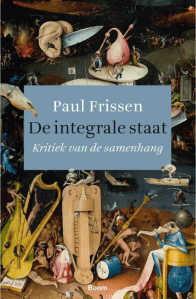
De integrale staat

Kritiek van de samenhang

Paul Frissen | 2023, Boom Uitgevers

Bestuurskundige Paul Frissen* laat overtuigend zien hoe het alomtegenwoordige verlangen naar samenhang onze rechtstaat bedreigt. Het verlangen naar samenhang is even begrijpelijk als gevaarlijk. In politiek en bestuur komt het streven naar samenhang al decennialang tot uiting in integraal beleid.

Er zijn integrale aanpakken, integrale plannen, integrale programma’s en integrale akkoorden. De term is onveranderd positief en er gaat een grote vanzelfsprekendheid van uit. Wie kan er nu tegen integraliteit zijn?

In De integrale staat laat bestuurskundige Paul Frissen overtuigend zien dat deze houding niet alleen theoretisch problematisch is, maar ook politiek gevaarlijk. Als de staat samenhang wil opleggen aan de wereld, bepaalt de politieke meerderheid wat die samenhang moet zijn, en daarmee welk verschil er wél en vooral ook welk verschil er niet mag zijn.

Frissen bekritiseert ook het hedendaagse streven naar diversiteit en inclusie: deze begrippen zijn met elkaar in tegenspraak. Inclusie wil al het gelijke insluiten, maar sluit het niet-gelijke daarmee juist uit.

Een door de staat opgelegde samenhang is politiek-filosofisch strijdig met de gebrokenheid van de wereld. De wereld is onvoltooid, onbepaald en onvolmaakt. En ze moet dat vooral ook blijven.

In het artikel ‘De staat is een heel gevaarlijke institutie’ gaat journalist Martijn Delaere in op de context van het boek en de drives van de auteur. “Vanuit de illusie dat de wereld maakbaar is, legt de staat de burgers steeds meer regels op. Pervers, vindt Paul Frissen.”


Bibliografie

Frissen, P. (2023) De integrale staat: Kritiek van de samenhang. Amsterdam: Boom Uitgevers.

*Paul Frissen (1955) is decaan en bestuursvoorzitter van de Nederlandse School voor Openbaar Bestuur in Den Haag en emeritus hoogleraar bestuurskunde aan Tilburg University. Eerder publiceerde hij onder meer De staat van verschil (2007), De fatale staat (2013), Het geheim van de laatste staat (2016) en Staat en taboe (2018).

Is het einde van risicomanagement nabij?

Tijd voor een collectieve herbezinning!

Marinus de Pooter | 2014

Voor wie zijn oor te luisteren legt in uiteenlopende sectoren doemt spoedig het beeld op dat risicomanagement in de praktijk maar beperkt aanslaat. En dat ondanks alle gedane investeringen en de energie die er in de afgelopen jaren in is gestoken. Als risicomanagement inderdaad zoveel goeds brengt (zoals gewoonlijk wordt beweerd), hoe kan het dan dat lijnmanagers niet massaal afkomen op trainingen en congressen? Waarom staan zij niet in de rij om meer te leren over al die prachtige concepten en instrumenten (inclusief de vele indrukwekkende software applicaties)? Is het als managementsysteem zo slecht verkocht of kan het gewoon niet waar maken wat er wordt beloofd? Wellicht is het een combinatie van beide. 

Marinus de Pooter

Het is tijd voor iets beters. Wat mij betreft is het einde van conventioneel risicomanagement nabij. Ik doel op de instrumentele benadering vanuit een aparte staffunctie. Het beperkte enthousiasme voor deze gebruikelijk opzet komt volgens mij door meerdere factoren. Ik noem een aantal observaties vanuit de adviespraktijk.

Lees verder “Is het einde van risicomanagement nabij?”

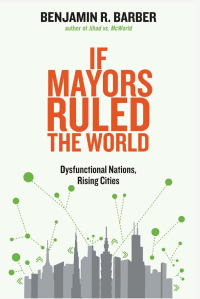
If Mayors Ruled the World

Benjamin R. Barber | 2013

The world’s nations seem paralysed by the challenges of our time—climate change, terrorism, poverty, and the trafficking of drugs, guns, and people. The problems are too big, entrenched, and divisive for the nation-state. Is the nation-state, once democracy’s best hope, dysfunctional and obsolete today? According to Benjamin R. Barber, author of this book, the answer is yes.

Barber asserts that cities, and the mayors that run them, offer the best new forces of good governance: “Why cities? Cities already occupy the commanding heights of the global economy. They are home to more than half of the world’s population, a proportion which will continue to grow.

They are the primary incubator of the cultural, social, and political innovations which shape our planet. And most importantly, they are unburdened with the issues of borders and sovereignty which hobble the capacity of nation-states to work with one another.”

In his TedTalk in Edinburg, Scotland, he outlines his argument for this new approach.

“Democracy is in trouble. No question about that. And it comes in part from a deep dilemma in which it is embedded.  It is increasingly irrelevant to the kind of decisions we face that have to do with global pandemics (a cross-border problem), with HIV (a transnational problem with markets in immigration, something that goes beyond national borders), with terrorism, with war. All now cross-border problems all now. In fact we live in a 21st century world of interdependence and interdependent approval, interdependent problems.

And when we look for solutions in politics and democracy we are faced with political institutions designed four hundred years ago. Autonomous, sovereign nation-states with jurisdictions and territories separate from one another, each claiming to be able to solve the problem of its own people—21st Century transnational world of problems and challenges the seventeenth century world of political institutions.

In that dilemma lies the central problem of democracy. And like many others, I’ve been thinking about what can one do about this. This asymmetry between 21st-century challenges and archaic and increasingly dysfunctional political institutions like nation-states.”

Bibliography

Barber, B. (2013) If Mayors Ruled the World: Dysfunctional Nations, Rising Cities. New Haven, US: Yale University Press.

Multi-level governance

Jack Kruf

Multi-level governance is an essential part of the navigation within the public domain. Like in nature, there are influences going upwards and downwards between the layers of the ecosystem. As city manager, I experienced the coming and going, for example, of national policy plans, rules and legislation downwards and financial and political influences upwards, as well as the cooperation between different layers of government on complex projects or programmes. But what exactly is multi-level governance? Where does the term come from? How is it used? A short study.

It is an approach in political science and public administration theory that originated from studies on European integration. According to Piattoni (2001), political scientists Liesbet Hooghe and Gary Marks developed the concept of multi-level governance in the early 1990s.

It has become one of the critical processes for good public governance in the international context. In fact, it always was but never defined or considered as such. The link between all levels of governance in every ecosystem is essential to its effective and efficient functioning.

The layering of governance seems, in general, to follow the principles of the ecological pyramid in natural ecosystems so that some logic can be derived. It must be said, though, that from the perspective of city management, there is a wide range of opinions, feelings, views, and thoughts. It exists but is not generally accepted as the best way forward. What is multi-level governance?

Multi-level (or multilevel) governance is a term used to describe how power is spread vertically between many levels of government and horizontally across multiple quasi-government and non-governmental organizations and actors. – Cairney et al. (2019)

This situation develops because many countries have multiple levels of government, including local, regional, state, national or federal, and many other organisations with interests in policy decisions and outcomes. International governance also operates based on multi-level governance principles.Wikipedia

In 1996, Hooghe edited a sustained study of cohesion policy in the European Union. The central question was how policymakers could develop a standard European policy while giving attention to the variation in practice, institutions, and players in the member states.

Later, in 2001, Hooghe et al. (2001) explained why multi-level governance has taken place and how it shapes conflict in national and European political arenas and goes into the dual process of centralization and decentralization. At the same time, that authority in many policy areas has shifted to the supranational level of the European Union, so national governments have given subnational regions within countries more say over the lives of their citizens.

At the forefront of scholars who characterize this dual process as multi-level governance, Liesbet Hooghe and Gary Marks argue that its emergence in the second half of the twentieth century was a watershed in the political development of Europe. According to the authors, it gives expression to the idea that there are many interacting authority structures at work in the emergent global political economy:

“… illuminates the intimate entanglement between the domestic and international levels of authority”.


Bibliography

Cairney, P., Heikkila, T. and Wood, M. (2019) Making Policy in a Complex World (1 ed.). Cambridge: Cambridge University Press.

Hooghe, L. (ed.) (1996) Cohesion Policy and European Integration: Building Multi-level Governance. Wotton-under-Edge: Clarendon Press Oxford.

Hooghe, L. and Marks, G. (2001) Multi-Level Governance and European Integration. Lanham: Rowman & Littlefield Publishers.

Piattoni, S. (2009) Multi-level Governance: a Historical and Conceptual Analysis. European Integration. 31. 2: 163–180.

Wikipedia (2020) Multi-level governance, consulted in September 2020 https://en.wikipedia.org/wiki/Multi-level_governance.