
The Forest Pulse draws on the most recent data and analysis to reveal the latest global forest loss and deforestation trends.
World Resources Institute, Global Forest Review | April 4, 2024
Between 2022 and 2023, Brazil and Colombia experienced a remarkable 36% and 49% decrease in primary forest loss, respectively. Yet despite these dramatic reductions, the rate of tropical primary forest loss in 2023 remained stubbornly consistent with recent years.
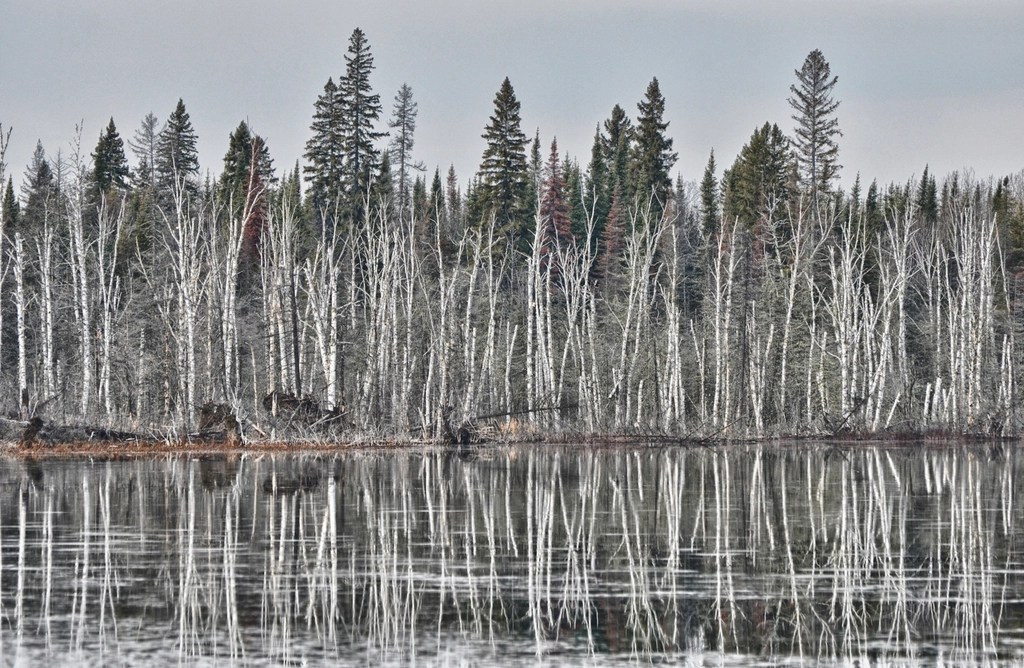
Forests are experiencing a huge decline in quality and quantity.
As some countries show political will to reduce forest loss and others do not, the frontiers of forest loss are shifting. The notable reductions in Brazil and Colombia were counteracted by sharp increases in forest loss in Bolivia, Laos, and Nicaragua, as well as more modest increases in other countries.
Total tropical primary forest loss in 2023 totalled 3.7 million hectares, the equivalent of losing almost ten football (soccer) fields of forest per minute. While this represents a 9% decrease from 2022, the rate in 2023 was nearly identical to that of 2019 and 2021. All this forest loss produced 2.4 gigatonnes (Gt) of carbon dioxide emissions in 2023, equivalent to almost half of the United States’ annual fossil fuel emissions.
Politics
[Quote] “The reduction in forest loss coincides with the transition of government leadership from President Jair Bolsonaro to President Luiz Inácio Lula da Silva, known as Lula, at the beginning of 2023. During Bolsonaro’s tenure, his administration eroded environmental protections and gutted enforcement agencies. In contrast, Lula has pledged to end deforestation in the Amazon and other biomes by 2030, and already had a proven track record on this issue from his previous administration.
Since his reelection, President Lula has taken action to reduce forest loss, including revoking anti-environmental measures, recognizing new Indigenous territories, and bolstering law enforcement efforts (though some enforcement employees are currently on strike, saying they are overworked and under-compensated). These changes appear to be having an impact on the rate of forest loss, though it still remains higher than its low point in the early 2010s.” [Unquote]
Running out of time
There are just six years remaining until 2030, by which time leaders of 145 countries promised to halt and reverse forest loss. While the declines in forest loss in Brazil and Colombia show promise towards that commitment, it’s clear that the world is falling far short of its targets.
Bibliography
‘Tropical Forest Loss Drops Steeply in Brazil and Colombia, but High Rates Persist Overall.’ Global Forest Review, updated April 4, 2024. Washington, DC: World Resources Institute. Available online at https://research.wri.org/gfr/latest-analysis-deforestation-trends.
 PRIMO Res Publica